
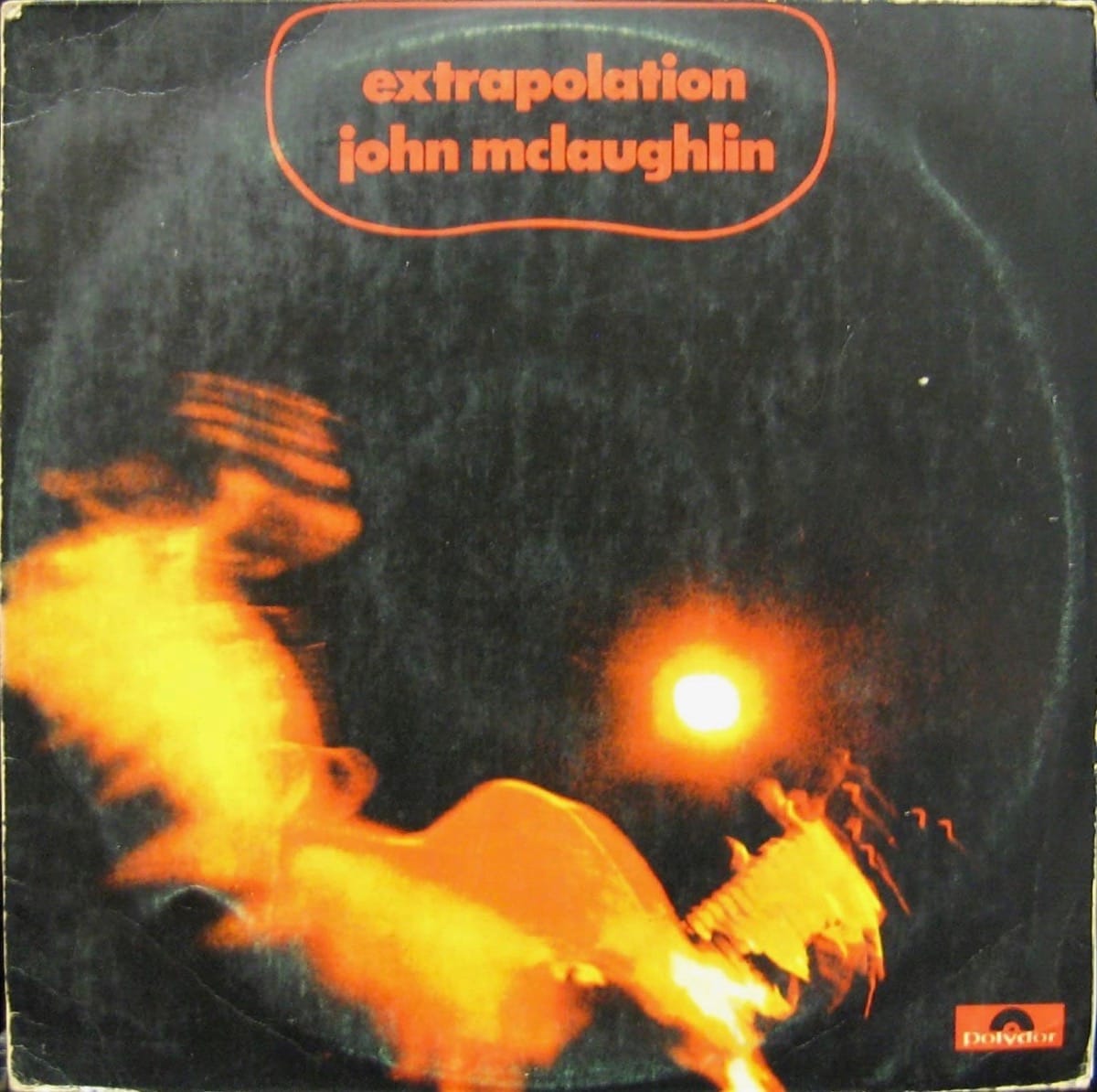
It’s significant that John McLaughlin has spent so much time with Miles Davis since this album was recorded, since it reflects the trumpeter’s influence in many ways, not only because its emotional climate is similar to Miles’ pre-rock LPs (Dave lllingworth compared it to ‘E.S.P.’ in his review of this album’s first issue exactly a year ago, but I would have thought ‘Miles Smiles’ was nearer the mark) but also because it displays a textural unity and group cohesion such as Miles always imposes on his sessions.
It would be difficult to imagine this record without any one of its participants, and the group feel is most important, but the solo work is consistently excellent too; the mighty Surman plays some rumblingly powerful baritone and contributes some wistful, Trane-ish soprano on It’s Funny, while McLaughlin (who is I suppose, an ‘avant garde’ guitarist – I certainly can’t think of any other guitarist I could compare him to) really makes his instrument sing.
There are I know a lot of people who wouldn’t regard this LP as jazz at all, but bearing in mind the diversity of personal tastes, I’d unhesitatingly recommend ‘Extrapolation’ as one of the best British jazz records I’ve heard.
Discography
Extrapolation; It’s Funny; Argen’s Bag; Pete The Poet; This Is For Us To Share (20 min) – Spectrum; Binky’s Beam; Really You Know; Two For Two; Peace Piece (20 min)
John McLaughlin (acoustic & electric guitar); John Surman (bari/sop); Brian Odges (bs): Tony Oxley (dm). 1969.
(Polydor 2343012 Standard 29s 10d)