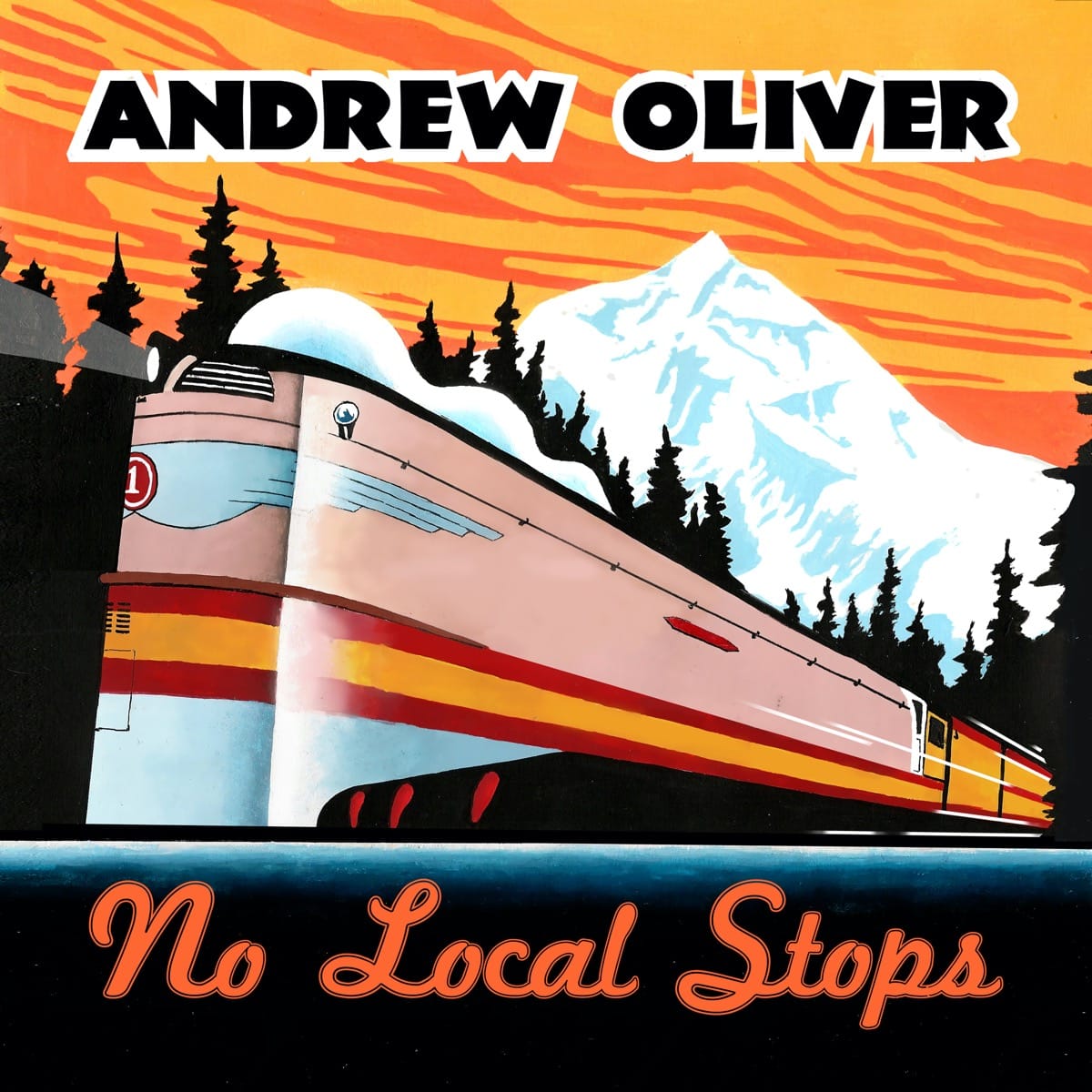
American pianist Andrew Oliver has lived in London since 2013, sharing with clarinettist David Horniblow a dedication to authentic-styled recreations of classic vintage jazz. His new solo album features spirited, colourful and thoughtfully planned performances which show confident technical command and grasp of the idiom.
He ranges across the piano styles of classic ragtime, early jazz and blues and 30s stride, with a particular personal interest in Jelly Roll Morton, and the tango rhythms of his “Spanish tinge” concept. Following on from his recent and acclaimed Morton Project album with Horniblow, he includes six of Jelly Roll’s compositions here.
Whilst keeping close to the style and essential feel of Morton’s playing, Oliver sensibly sidesteps pointless close reproduction, and offers some compatible elements of creative re-interpretation.Thus, The Pearls is based on Morton’s later, slower 1938 version for Alan Lomax, the lively Perfect Rag (later retitled Sporting House Rag) draws on both the 1923 and 1938 versions, and the very fine and longer interpretation here of Creepy Feeling was also inspired by the 1938 Library Of Congress recordings. For added interest, the final track was recorded by Oliver acoustically through a large recording horn directly on to a 78 rpm disc, to give an idea how Morton might have sounded if he’d recorded this tune at Gennett in 1923.
Oliver understandably enthuses about the vintage Edwardian era Hamburg Steinway “A” piano used on the album. The low register response is unusually full, dark-toned and sonorous, effectively boosting for example the “tuba” line in The Pearls and adding density to harmonic structures. In effective contrast, the brightly ringing percussive quality in higher register adds clarity and definition to melody statement.
Oliver’s informative track-by-track notes shed helpful and interesting light on the several off-the-beaten track tunes and artists represented on the album. No Local Stops, seldom played, was written by New York stride maestro Willie “The Lion” Smith, Joseph Lamb’s elegant Ethiopia Rag (1909) and Cottontail Rag (1959, surprisingly late), Arthur Schutt’s tricky and attractive Piano Puzzle, Sphinx (based on the 1919 ODJB recording) and Oliver’s own Spanish tinge offering, The Aether, are all particularly interesting. Fellow vintage-style specialist Nicholas Ball adds effective percussive assistance on three tracks.
Thoughtfully planned and very well performed, this welcome tribute to the formative years of jazz piano is highly recommended.
Discography
(1) The Pearls; No Local Stops; Sentimental Blues; (2) Five O’Clock Stomp; (1) Ethiopia Rag; Piano Puzzle; Creepy Feeling; You Don’t Understand; (2) Freakish; (1) Cottontail Rag; Perfect Rag; Mamanita; Sphinx; Someday Sweetheart; (2) Jelly Roll Stomp; (1)The Aether; Carolina Shout; (3) Bert Williams (61.12)
(1) Andrew Oliver (p). London, 3 and 27 September, 19 November 2019.
(2) As (1). Add Nicholas D. Ball (d) London, 3 September 2019.
(3) Oliver (p). Austin, Texas 14 January 2020.
Rivermont BSW-2253