Ray Charles: The Genius Of Ray Charles
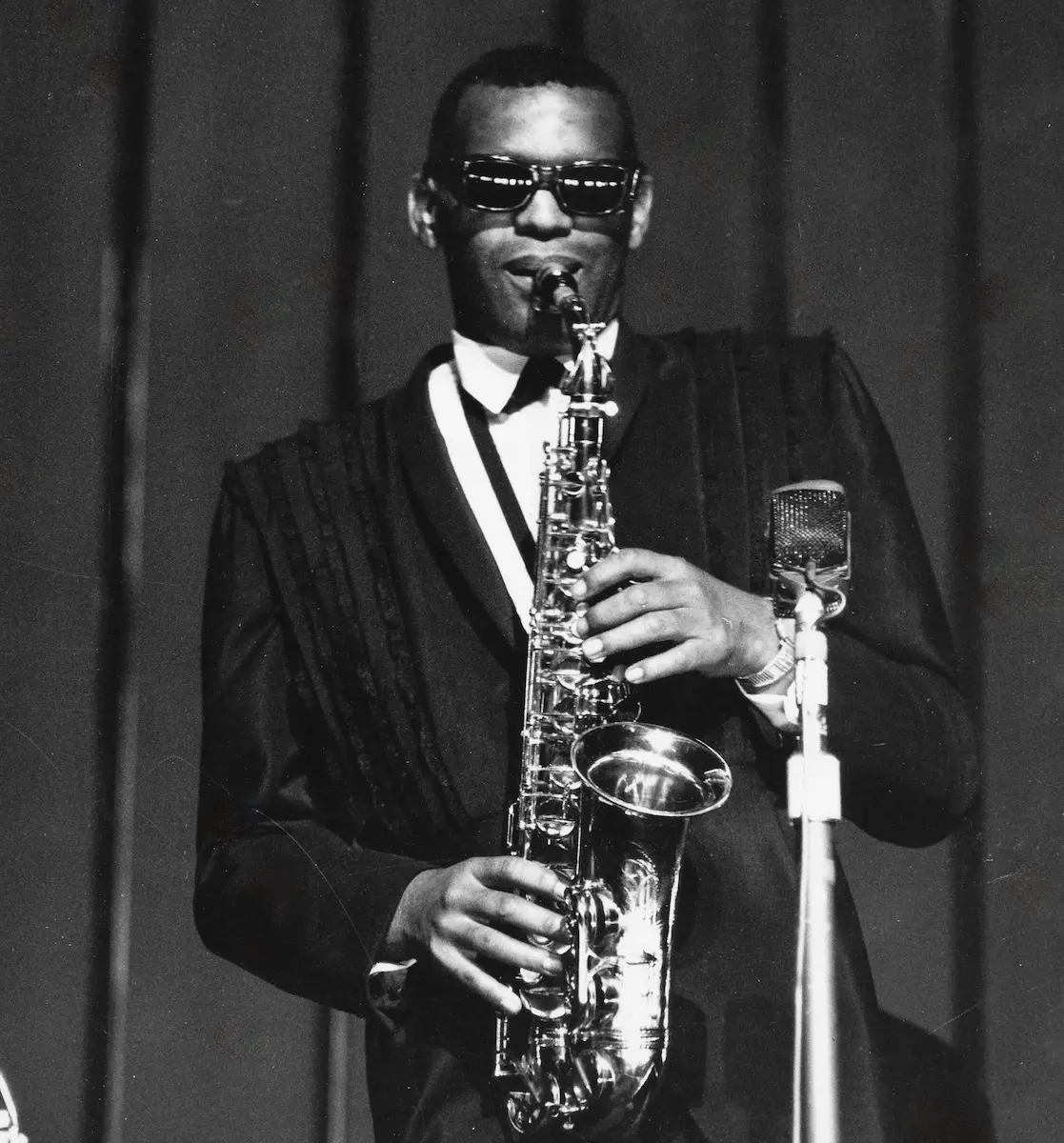
Brian Morton’s sleeve-note questions whether Ray Charles was a jazz singer, an R&B singer or a pop singer. He was clearly all of those but several of the albums he recorded during the 50s and early 60s really established his jazz credentials: The Genius After Hours (1956), Soul Brothers with Milt Jackson (1957), Ray Charles at Newport – where he played some unexpected bebop alto on The Spirit Feel – (1958), The Genius Of Ray Charles (1959) and Genius + Soul = Jazz (1960). His soulful timbre on these releases could plumb the lower depths of his rich baritone then soar to a perfectly controlled falsetto. He was of course very influential and David Clayton Thomas the singer with the hugely popular Blood Sweat & Tears could at times sound more like Ray Charles than Ray Charles did.
The first six titles here were arranged by Quincy Jones with members of Charles’s own big band supplemented by ringers from the Basie and Ellington bands. The sleeve does not identify the soloists but it’s David Newman on Let The good Times Roll, When Your Lover Has Gone and ’Deed I Do. Marcus Belgrave is heard on Alexander’s Ragtime Band and the serpentine chromaticism of Paul Gonsalves’ tenor illuminates Two Years Of Torture. Charles is equally at home on the balance of the album which has lush strings and woodwinds conducted by Ralph Burns. With his inimitable approach as a song stylist he makes these selections all his own especially the soulful Georgia On My Mind. It was a big hit for both The Mills Brothers and Bing Crosby but despite over 1200 recordings listed in Tom Lord’s Jazz Discography, Ray Charles probably delivered the definitive version of this Hoagy Carmichael classic right here.
Discography
(1) Let The Good Times Roll; It Had To Be You; Alexander’s Ragtime Band; Two Years Of Torture; When Your Lover Has Gone; ’Deed I Do; (2) Georgia On My Mind; Just For A Thrill; You Won’t Let Me Go; Tell Me You’ll Wait For Me; Don’t Let The Sun Catch You Cryin’; Am I Blue; Come Rain Or Come Shine; Hit The Road Jack (43.47)
Charles (v) with:
(1) Selected personnel: Marcus Belgrave (t); Quentin Jackson (tb); Marshall Royal (as); David Newman, Paul Gonsalves (ts); Charlie Fowlkes (bar); Eddie Jones (b); Charlie Persip (d). New York, 23 June 1959.
(2) Bob Brookmeyer (vtb); Wendell Marshall (b) plus woodwinds and strings. New York, 6 May 1959.
20th Century Masterworks LP
Clifford Brown-Max Roach Quintet: Brown and Roach Inc.
The first edition of this celebrated quintet featured Sonny Stitt on tenor in 1954. He lasted a mere six weeks and his replacement Teddy Edwards’ stay was equally short. He remained long enough to appear on the group’s first recording at the Pasadena Civic Auditorium in Los Angeles that year. Harold Land was then hired and he remained with the group until late 1955 when Sonny Rollins took over in Chicago. He had been alternating with John Coltrane in the Miles Davis group and was more than happy to take Land’s place as a regular member of the quintet. He was present on perhaps the group’s finest recording – Clifford Brown and Max Roach at Basin Street. One month later in March 1956 the quintet recorded its final studio album with Rollins as the leader on the date – Sonny Rollins + 4. It introduced his Pent-Up House and the delightful Valse Hot.
The titles on this vinyl reissue come from the quintet’s first studio date. Sweet Clifford is a contrafact of Sweet Georgia Brown, taken at a blistering tempo of 80 bpm, which the group handle with aplomb. The easy-paced Stompin’ At The Savoy, with its call and response routine, is a perfect vehicle for the group and Brown’s use of sub-tone in his lower register is very impressive. The tricky I Get A Kick Out Of You, with its mixed metres, is a veritable tour-de-force for Max Roach.
The Clifford Brown-Max Roach quintet, along with Art Blakey’s Jazz Messengers, really defined the hard-bop era and for those with deep pockets, The Complete Emarcy Recordings Of Clifford Brown is recommended. It has 10 CDs with most of the quintet recordings including Brown’s string date and the sessions with Sarah Vaughan and Helen Merrill.
Discography
(1) Sweet Clifford; I Don’t Stand A Ghost Of A Chance; Stompin’ At The Savoy; (2) Come Rain Or Come Shine; (1) I’ll String Along With You; Mildama; Darn That Dream; I Get A Kick Out Of You; (2) It Might As Well Be Spring (49.08)
Brown (t) with:
(1) Harold Land (ts); Richie Powell (p); George Morrow (b); Max Roach (d). Hollywood, August 1954.
(2) Henri Renaud (p); Pierre Michelot (b); Benny Bennett (d). Paris, October 1953.
WaxTime 772376
John Lee Hooker: The Big Soul Of John Lee Hooker
John Lee Hooker, who is recognised as one of the giants of the Mississippi delta blues scene, had a big influence on British R&B groups in the 60s. Georgie Fame, Zoot Money, The Animals, The Yardbirds, The Rolling Stones and Pete Townsend of The Who have all acknowledged him. Mose Allison, who was born in Tallahatchie County, Mississippi (immortalised by Bobbie Gentry’s 1967 hit Ode To Billy Joe), was another who had fallen under the spell of John Lee Hooker. Allison’s Baby Please Don’t Go, which had long been associated with Hooker, was released as a single in 1960 by Columbia. (Just as an aside, when The Who recorded Young Man Blues from Allison’s Back Country Suite, it made him “more money than all my other royalties put together”.)
John Lee Hooker also found favour with Miles Davis. Who can forget their collaboration on the 1998 film The Hot Spot, where they recorded Harry And Dolly and Sawmill? Ian Carr’s Miles Davis biography quotes Miles telling Hooker at the time “You (are) the funkiest man alive in the blues. The mud’s up to your neck.”
All this material was composed by John Lee Hooker, who was definitely one of a kind as a singer. With his earthy, very husky delivery, he often seems to be talking rather than singing and You Know I Love You, Take A Look At Yourself, I Love Her and No One Told Me, often over a repeated vamp, are all good examples of his idiosyncratic approach. Mary Wilson, who was with the Supremes at the time, sings backing vocals with the band who were known as the Funk Brothers. They were on numerous Motown hits and Let’s Make It has a tenor solo by Henry Cosby, who often appeared on Stevie Wonder’s recordings.
Discography
San Francisco; Take A Look At Yourself; Send Me Your Pillow; She Shot Me Down; I Love Her; Old Time Shimmy; What Do You Say; Let’s Make It; You Know I Love You; Big Soul; Good Rocking Mama; Onions; No One Told Me; Boom Boom; Thelma; Process (37.05)
John Lee Hooker (v, elg) with: Henry Cosby (ts); Andrew “Mike” Terry (bar); Joe Hunter (p, org); Larry Veeder (elg); James Jamerson (b); Benny Benjamin (d); Mary Wilson & The Andantes (v). Chicago, 1962.
WaxTime 772380