Siril Malmedal Hauge & Kjetil Mulelid: I Remember Oranges
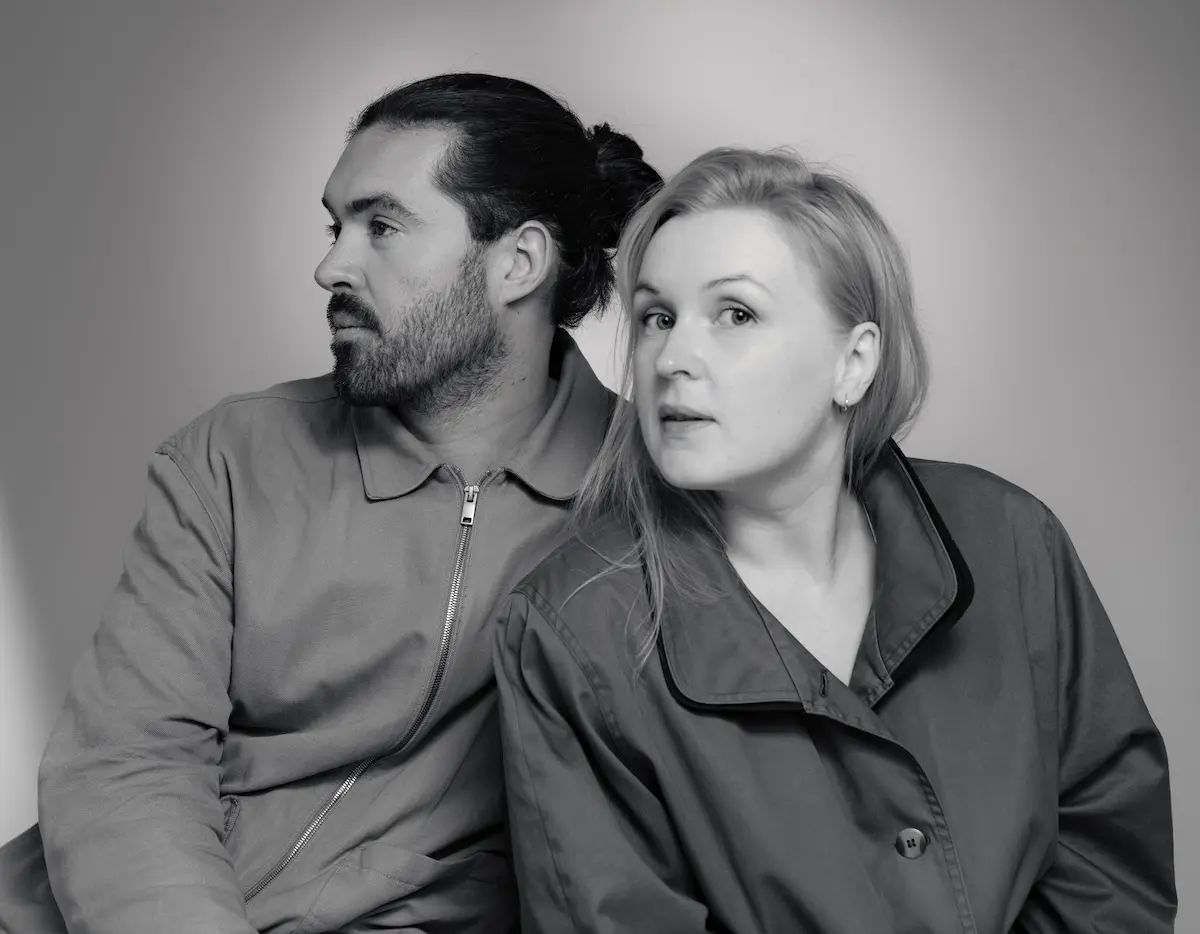
Not everyone can be Simon and Garfunkel; duos are a tricky thing. Vocalist Siril Malmedal Hauge once more joins with pianist Kjetil Mulelid on I Remember Oranges. The Norwegian pair have worked together, and it shows, as an old friendship shows to a stranger. Filled with originals and a few carefully chosen covers, the release is a coming together of two musicians who understand international flavours, but who both have the expertise to narrow the overall sound down nicely.
Some tracks start with vocals, like I Remember, and others begin with piano, such as Ventetid. With such a small cast on the tracks it is important to create a variety of styles and textures so as not to appear overly monotonous (though, of course, there are those who don’t mind sticking to a single tone or mood). The duo’s obvious choice would be to have an intimate and quiet atmosphere; yet Hauge’s vocals, when a cappella, can seem a bit chilly. Her voice doesn’t have the sweet sway of Stacey Kent’s, nor does it deliver the soulful oomph one hears from Molly Johnson. It lies somewhere in between, wavering as a tide, sometimes high, sometimes low.
Mulelid’s playing can be a bit dry from time to time. But that doesn’t mean he is a boring pianist. There are some excellent moments where his glissandos shine and his runs mesmerise (as on What Reason Could I Give). If one compares him to fellow pianists like Fergus McCreadie or Johanna Summer, one may glimpse similarities, but obvious differences as well. One suspects that he hasn’t quite found his specific musical perspective, even if he accompanies Hauge fairly well. If anything, the pair take things too cautiously. Mathias Eick’s trumpet interlude on Cranes is fun, and one worries that not enough fun is being had. The softer, moody tone they take throughout seems very Scandinavian, however, and will certainly have its fans.
Discography
Where Will You Go; I Remember; Cranes; Ventetid; What Reason Could I Give; Feels Like Home; La Petite Rose; Poem; Moon River (40.15)
Hauge (v); Mulelid (p); Mathias Eick (t); Johanne Flottorp (fiddle). Propeller Studio, Norway, 17-18 June 2025.
Svale Records
Guido Spannocchi: Kammermusik
Vienna-born but London-based saxophonist Guido Spannocchi rethinks the “chamber music” of his childhood through a clever jazzy lens. The pieces on here have a contemporary feel to them. The blend often leans in on the jazz aspects, but there are more chamber motifs and themes which peek their heads up now and then. Though these nostalgic-sounding tracks are deeply personal to Spannocchi, they still evoke moods and memories from the audience’s own past (and that’s not an easy thing to successfully accomplish).
Songs like DKT exhibit percussion, vibraphone specifically here, to add a glimmering effect. It moves the atmosphere to a 1950s or 60s era, similar to Henry Mancini’s material. There is an old-school charm about them. Sax wanders over the gliding tones of the mallets, and it achieves a light and mesmerising tone. Other tracks, such as Kivu, match a klezmer chamber-sound with jazz saxophone. The strings, percussion and sax combine in a way which highlights the versatility of layering and how there are plenty of tones which can come from the same pairings. Spannocchi seems to thrive on this aspect. His blends excel at bringing out various moods from a set instrumental toolkit.
Though other artists, such as Miho Hazama and Gideon Broshy, also play around with classical attitudes, Spannocchi has a decidedly European perspective. A Yiddish influence informs his musical tastes, strengthening the traditional versus contemporary mesh. The songs flow quite well on the whole; his consistent take and approach help the record to cohere. Even if some piece doesn’t quite make its mark, the whole has a charm which is laudable.
Discography
Echoes Of Your Formal Education; Imaginary Capetown; Seven Dials Triptychon; Pensées / Meditations; Full Moon On The Bosporus; Dkt; Kivu; Contra Corrente; Retrospect (43.00)
Spannocchi (s); Danny Keane (clo); Andea Di Biase (b); James Larter (pc, vib). 2025.
Audioguido Records
Anton Toorell: Solos II
A three-track release may seem rather cheeky or pretentious in some circles, but that’s jazz for ya. Swedish guitarist Anton Toorell is anything but snobby and his Solos II reads more like a mesmerising dream sequence than a purposefully artsy vanity project. The music here is rigorous; it is persistent and filled with an urgency which draws the listener’s ear.
Volta is the first and the longest piece. It comes in a rush, a wave, a series of ripples. There is such movement to it that one wonders if the notes are trying to fly off and away from the page. As with the modern master of repetition and variation Philip Glass, Toorell features these swirling cycles of sound which come and go, dip and dive. He is not such a minimalist as Glass, who can be icily bare at times. There seems to be a deeper sense of reverb which glides underneath that central, dizzying strumming. But it all comes to a close with one last thrum, and it is quite appropriate to have such a stop (though a bit of soft reverb wavers afterward).
Yet the release isn’t done. Cripta continues the feverish strumming. And regardless of the hypnotic quality invoked, this type of sound isn’t for everyone. It doesn’t seem to have quite the calming effect that similar material might. Again, there seems to be an urgency, a hectic need propelling the sound forward. Scala takes a slight step back, into a more meditative route. Yet it contains a slight harshness, a clang to the chords and string tugs. One wonders if Toorell isn’t trying to subvert this type of psychedelic music, rethinking how these structural motifs can be reworked to create a different feel and atmosphere.
Discography
Volta; Cripta; Scala (31.22)
Toorell (g); Palazzo Stabile, Piemonte, Italy, 2024-25.
Thanatosis Produktion