
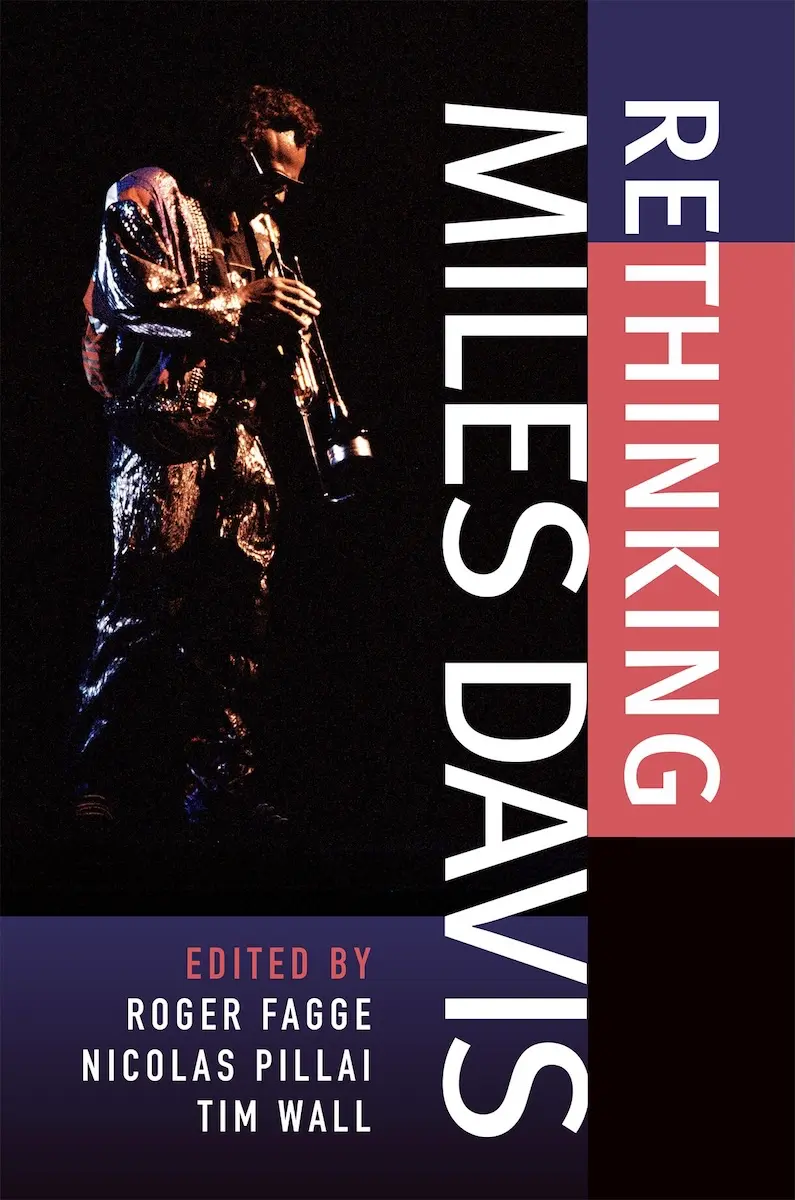
Note the title of this book: this set of 10 academic essays is an active rethinking of how we regard Miles Davis today, how we approach his work now, how we deal with his preeminent position in modern jazz, and how we approach him as an enduring icon of fashion and style. It is not a rethought history, it is not a historical review of his canon, and it most certainly is not a retrospective biography. Throughout, what matters here is Miles himself, and how he fits within the larger framework of modernism and mass culture. Crucially, it does not peddle the idea that it is “the music itself” that matters, rather than the person. For as the first chapter makes very clear, Miles’s persistent violence against women needs urgent addressing, especially during the current debates about masculinity and the #MeToo movement.
That is a very pertinent place to start, for while Miles strongly objected to CBS putting white women in his record covers, and replaced them with his then wife Frances Taylor and later with Cicely Tyson, he also prevented Frances from pursuing her thriving career as an actor and dancer, broke a girlfriend’s jaw, and regularly assaulted many of his women friends. His legacy is brutal, both to the women involved and to himself.
Subsequent essays are less hurtful to read. The Doo-Bop album gets an interesting assessment, not as the final – and weak – release of an ailing man, but for bringing jazz and hip-hop closer together. Likewise, his role as musician and actor on the Dingo soundtrack, his career change from Columbia to Warner Bros, the cultural importance and remaking of Miles in Tutu, and his contrasting collaborations with Gil Evans and then, decades later, with Marcus Miller, are worth reading. Best of all is probably Nicolas Pillai’s essay on Miles’s dress style, if only to disagree with the splenetic statements of critic Stanley Crouch.
The rethinking and indeed resurrection of Miles’s later career that this book presents is, however, knocked back in the photo essay, in which 16 musicians pick their favourite Miles album. All choose classic Miles quintet and big-band tracks from the late 1950s and 1960s, with only two more recent choices: violinist Rick Sanders picks On The Corner from 1972, while drummer Rob Youngs picks Water Babies (recorded in 1968) because it introduced him to Tony Williams, thus ignoring Miles completely! Interestingly, trumpeter Laura Jurd, by far the youngest musician here, picks Miles Ahead from 1957, an album issued 33 years before she was even born, while even Marcus Miller, so important in Miles’s Warner Bros work, picks Milestones from 1958. They all obviously never got the message as to what this book is meant to be about.
Rethinking Miles Davis, edited by Roger Fagge, Nicolas Pillai, Tim Wall. Oxford University Press, 236 pp, ISBN 978-0-19-008579-7