Mathias Heise & Danish Radio Big Band: A Love Supreme Revisited
I’ve long admired the four-part suite that is A Love Supreme, cut in December 1964 by the John Coltrane Quartet with McCoy Tyner (p), Jimmy Garrison (b) and Elvin Jones (d). But it’s not my favourite Coltrane of the period. That distinction rests with the April 1964 Crescent, a congruent but more diversely conceived and realised episode in the life of the man who, as the musician and writer Bill Cole observed in his 1976 study John Coltrane, “left true records of his spirit on earth.”
What, then, are we to make of this lavishly cast Danish big-band tribute to a modern jazz classic that has lent its name to a contemporary summer jazz [sort of – Ed.] festival in Sussex and inspired figures as distinct as the film-maker Spike Lee and the writer Ashley Kahn, whose A Love Supreme: The Creation Of John Coltrane’s Classic Album (featuring a lengthy and laudatory foreword by Elvin Jones) was published by Granta in 2002?
Why, one must surely ask, is there any need to “revisit” – and recast – A Love Supreme? Heise’s lengthy sleeve-note details various reasons for his enthusiasm for the work, and also outlines the musical frameworks of both the original and his reworked version. Scrupulous as all this is, I cannot help but recall the sagacity of Georges Braque’s observation that, to seek to define a thing is to risk substituting the definition of the thing for the thing itself.
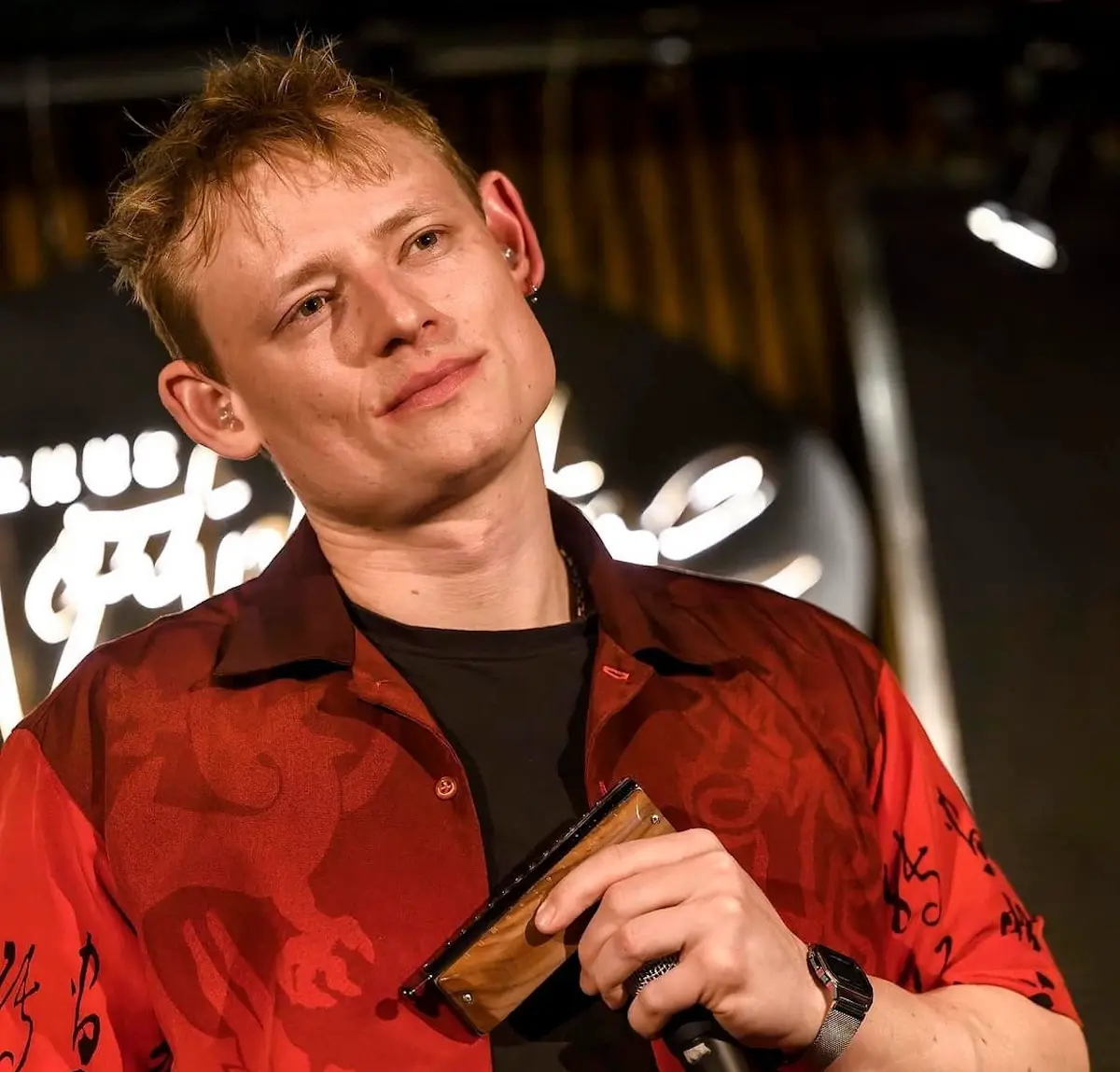
Turning to the music: a master of his instrument, to Heise’s credit he does not overdo things, apart from the three-minute cadenza which prefaces the concluding Psalm/Alabama – the last-named November 1963 item of course not a part of the original A Love Supreme. And certainly, there are moments of piquant beauty here, as in that piece, where Heise is at his subtle best. But why, overall, judge the harmonica (albeit a chromatic one) a suitable substitute for Coltrane’s tenor saxophone, one of the most arresting and spiritually charged sounds in jazz?
Further: why dress the original’s purposive muscularity in portentous big-band figures, as in the Introduction, or offer miscast mood-destroying moments such as the rock-inflected guitar solo at the beginning of Part 4 – Resolution, or the trumpet, trombone and flute flurries in Part 3 – Pursuance? On the same track Hans Ulrik and Karl-Martin Almkvist – both fine players – engage in what Heise calls “a tenor battle”, which he sees as “a loving nod to Coltrane”. Can you think of anything less appropriate to the overarching mood of the original recording?
According to Heise, Coltrane was “religious in a Christian sense, but that is ultimately irrelevant”. He says “You can replace ‘God’ with whatever you believe in.” Really? One wonders if Heise has read Freud’s The Future Of An Illusion (1927) or William James’s The Varieties Of Religious Experience (1902). If he hasn’t, perhaps he should.
Heise’s characterisation does no justice to Coltrane’s interest in a range of religious and/or spiritual practice, as attested by a track like the November 1961 India and Coltrane’s own sleeve-statement on A Love Supreme. And if you read Elvin Jones’s aforementioned foreword to Kahn’s study of A Love Supreme, you will quickly sense how important a particular Christian church-going tradition was to all the original recording’s participants.
To be clear: I am not contending that, in order to “get” A Love Supreme, you have to share Coltrane’s religious beliefs or spiritual inclinations. I am saying that you have to have due cognisance of those beliefs and inclinations in order to comprehend how the music that is A Love Supreme came to be. I’m a big admirer of April Records. But I’m afraid my response to this particular “revisiting” is a firm “Thanks, but no thanks.”
Discography
A Love Supreme – Introduction; Part 1 – Acknowledgement; Interlude nr 1; Part 2 – Resolution; Interlude nr 2; Part 3 – Pursuance; Harmonica Cadenza; Part 4 – Psalm/Alabama (44.59)
Heise (chromatic hca); Lars Vissing Reimann, Ari Bragi Karason, Thomas Kjaergaard, Mads La Cour/Jakob Sørensen, Gidon Nunez Vaz/Dorthe Zielke (t, flh); Peter Dahlgren, Peter Hangsel, Annette Saxe, Gustaf Wiklund, Jacob Munck (tb, th, tu); Peter Fuglsang (as, ss, cl, f); Nikolai Schultz (as, f), Hans Ulrik (ts, cl, f, af), Karl Martin Almqvist (ts, cl, f), Frederick Menzies (bar, bcl, cl) Per Gade (elg); Magnus Hjorth (p); Kaspar Vadsholt (b); Søren Frost (d). Copenhagen, 24-28 February 2025.
April Records APR167CD
Carsten Dahl, Reuben Rogers, Gregory Hutchinson: Into The Storm
JJ readers will be aware of my long-term enthusiasm for the diversely exploratory work of Danish pianist Carsten Dahl. The present Into The Storm is, quite simply, a fabulous release. It documents a live trio appearance from 2013 at Copenhagen’s fabled Jazzhus Montmartre with Dahl in the splendid company of two excellent Americans, bassist Reuben Rogers and drummer Gregory Hutchinson.
A lengthy sleeve-note from Christian Brorsen, musical director at Jazzhus Montmartre from 2011 to 2016, puts the gig in appropriate historical context, outlining the long tradition which developed from the 1960s onwards of visiting American stars appearing at the venue with top Danish musicians. As Brorsen remarks, these were the days when legends such as Dexter Gordon, Kenny Drew, Stan Getz, Oscar Pettiford, Johnny Griffin, Ben Webster and Bud Powell were backed by the likes of NHØP, Alex Riel, Mads Vinding, Bo Stief and other prominent Danes.
The magic continues here. While the rich-toned Reuben Rogers was inspired especially by the work of Pettiford, the multivalent Hutchinson came through the Ray Brown trio and worked with Betty Carter. They gell superbly with each other and Dahl in the sort of good-humoured and immensely enjoyable, literate yet exploratory programme which offers pure joy to anyone who likes their jazz both swinging and deeply reflective, ultra touch-sensitive and melodic, harmonically hip and rhythmically expansive (on the last, sample Caravan). The recorded sound is excellent throughout, the audience participation warmly enthusiastic while never intrusive.
I could highlight further particular tracks, such as the irresistible, brightly sprung opener that is Minoring Together or the surpassing reflection that is Blame It On My Youth. But everything here is from the top drawer. On no account miss this total cracker from Denmark’s long-estimable Storyville label.
Discography
Minoring Together; Body & Soul; Open Interlude & Giant Steps; Sweets To The Sweet; Blame It On My Youth; Caravan; You Stepped Out Of A Dream; Speak; The End Of A Beautiful Friendship (52.13)
Dahl (p); Rogers (b); Hutchinson (d). Copenhagen, 21 January 2013.
Storyville 1018544