Herbie Hancock: Takin’ Off
Recorded at Rudy Van Gelder’s legendary studio in Englewood Cliffs, New Jersey, and released just weeks later, Takin’ Off marked Herbie Hancock’s debut as a bandleader. For his first outing at the helm, Hancock assembled an exceptional ensemble of jazz talent. The lineup featured trumpeter Freddie Hubbard and tenor saxophonist Dexter Gordon, the latter enjoying a major career resurgence following his signing with Blue Note and celebrated for blending the influences of West Coast jazz with the innovations of John Coltrane. The project propelled Hancock into the spotlight, impressing jazz institutions with a level of musical maturity uncommon for someone his age.
Watermelon Man is a deceptively simple and irresistibly catchy composition that became one of Hancock’s signature pieces and a jazz standard after a hit rendition by Latin-jazz bandleader Mongo Santamaria. This original recording epitomises the Blue Note hard-bop aesthetic, being built around a lean, infectious piano groove and concise, purposeful solos.
The album’s remaining compositions may not have achieved the same commercial success, but they are equally well crafted and rewarding. Among the standout tracks are the reflective ballad Alone And I, Driftin’ (a personal favourite of mine) and the moody, minor key The Maze, which transitions into an exploratory solo section punctuated by bold ensemble accents that flow naturally into a vigorous, hard-swinging improvisational exchange.
Presented on 180-gram clear vinyl, it has artwork that is nearly identical to that of the original edition and accompanied by Leonard Feather’s liner notes from the album’s initial release. While Takin’ Off has appeared in numerous reissues, as is common with Blue Note releases, its value lies in documenting this incredible artist at the dawn of his career. No sense of youthful inexperience here.
Discography
Watermelon Man; Three Bags Full; Empty Pockets; You’re My Everything (25:26) – The Maze; Driftin’; Alone And I; Prophet Jennings (25.48)
Hancock (p); Freddie Hubbard (t); Dexter Gordon (ts); Butch Warren (b); Billy Higgins (d). New Jersey, May and October 1962.
WaxTime Records 526035
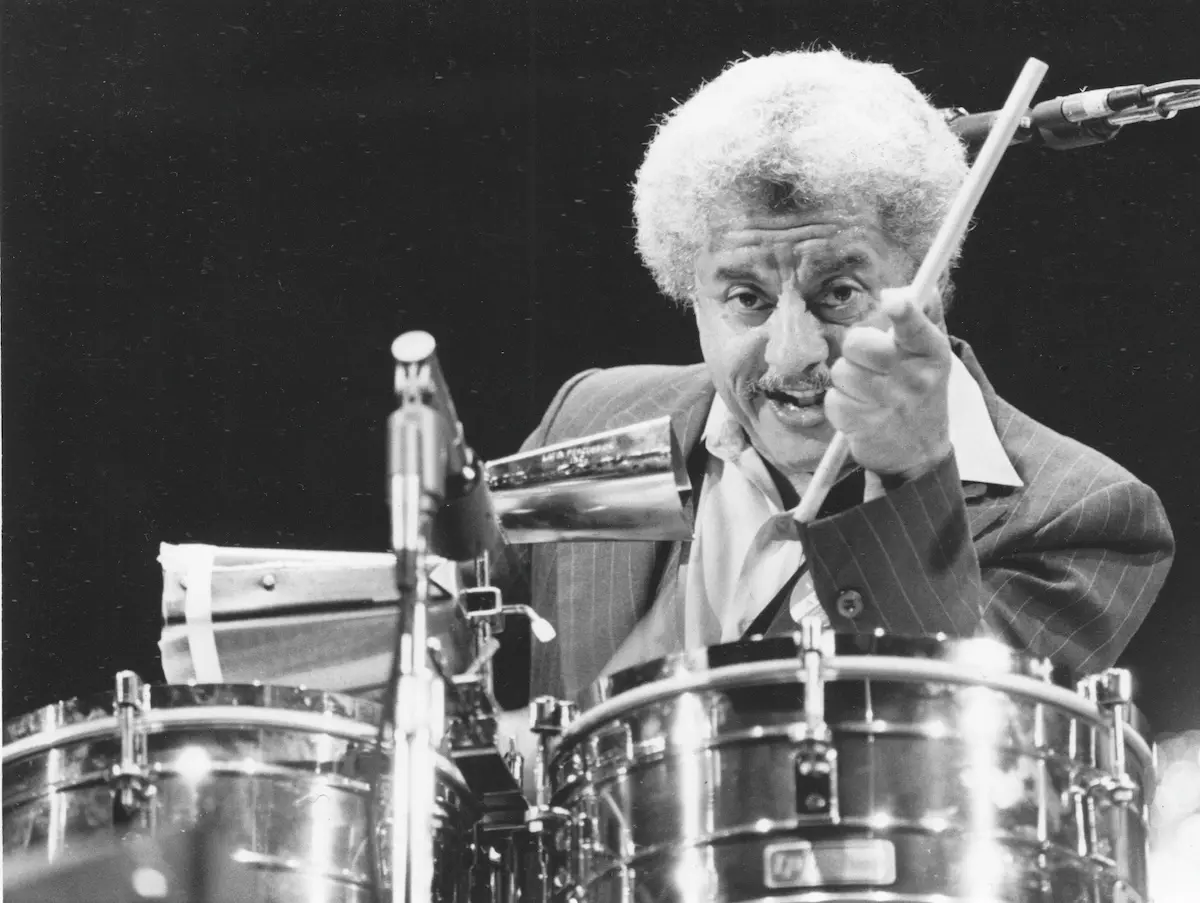
Tito Puente: Dance Mania
During the 1950s, Puente reached the peak of his fame, playing a key role in introducing Afro-Cuban and Caribbean styles such as mambo, son and cha-cha-cha to mainstream audiences – his mastery of these rhythms was such that many people incorrectly assumed he was Cuban. (He was the son of Puerto Rican migrants, but born in New York in 1923.) As his career evolved, he explored a wider range of musical styles, including pop and bossa nova and later became associated with a blend of Afro-Cuban music and Latin jazz that came to be known as “salsa,” a label he personally disliked.
Widely regarded as his signature album, Dance Mania opens with El Cayuco, a relaxed, uplifting track driven by lively piano, percussion and tasteful saxophone accents. The interplay between the instrumental sections is particularly engaging, while the crisp brass and saxophone articulations give the vocals a smooth, effortless feel. Complicación raises the energy with a warm, confident female vocal backed by bold trumpet responses and rich brass chords. The song’s groove is especially strong, thanks to the tight interplay between the piano and bassline.
Dance Mania features renowned conguero Ray Barretto, who joined the Tito Puente Orchestra in 1957, taking over the chair from Mongo Santamaría and establishing himself as a major presence in Latin music. His performance on this landmark release was so convincing that many listeners assumed it was still Santamaría on the congas. During this period, the orchestra remained busy with performances at the Palladium Ballroom and a growing national circuit for Latin music.
Another breakthrough reissue release from Descarga at an affordable price for vinyl collector newbies with three additional bonus tracks including Oye Cómo Va and original liner notes, albeit the audio quality might not be quite the best.
Discography
El Cayuco; Complicación; 3-D Mambo; Llegó Miján; Cuando Te Vea; Hong Kong Mambo; Oye Cómo Va (23.57) – Mambo Gozón; Mi Chiquita Quiere Bembé; Varsity Drag; Estoy Siempre Junto A Ti; Agua Limpia Todo; Saca Tu Mujer; Mambo Gil; Cha-Cha-Gua (24.40)
Puente (arr, pc, vib, mar); Bernie Glow, Jimmy Frisaura, Frank Lo Pinto, George López, Gene Repetti, Larry Moser, León Merian (t); Rafael Palau, Jerry Sanfino, Schapp Pullman, Tony Buonpastore (s); Raymond Concepción (p); Bobby Rodríguez (b); Ray Barretto (cga); Ray Rodríguez (bgo); Julio Collazo (cga); Santos Colón, Vitin Avilés, Otto Olivar (v). New York, November and December 1957, 1959 and 1962.
Descarga! Records 637011
Miles Davis: Kind Of Blue
Pressed on 180-gram blue-coloured vinyl, this nth edition of the landmark Davis album includes a bonus track and celebrates the work of jazz photographer Bernie Thrasher, whose imagery vividly reflected the mood and character of the period. Raised in St. Louis, Thrasher frequently attended concerts that stopped in the city, an important destination for musicians touring between the East and West coasts. Most of his photographs were taken at Peacock Alley between 1956 and 1959, though he continued photographing throughout the 1960s, documenting the jazz scene as it evolved from intimate club settings to larger theatre venues.
What makes this album exceptional is not the individual brilliance of its musicians, but the restraint they collectively display. Each player seems to understand that space and silence carry as much weight as the notes themselves. Bill Evans’s piano voicings float rather than declare, while John Coltrane gently probes the boundaries of the music without disturbing its atmosphere. Jimmy Cobb’s cymbal work is so light and effortless it seems almost untethered from gravity.
Over six decades since its debut, Kind Of Blue continues to captivate listeners, revered for its timeless beauty, emotional depth and groundbreaking artistry. There is little question that this release will find a receptive fan base, but many will welcome the chance to replace a well-played original copy, while others will be tempted by the addition of Stella By Starlight.
From the moment it appeared, KOB was recognised as a masterpiece – a status it has retained without serious dispute in the trumpeter’s centenary year. The seemingly countless number of reissues (Tom Lord’s discography might just have everything) is both a testament to its enduring appeal and a challenge for any new edition hoping to stand apart. Is there anything left to say?
Discography
So What; Freddie Freeloader; Blue in Green (24.43) – All Blues; Flamenco Sketches; Stella By Starlight (25.43)
Davis (t); Julian “Cannonball” Adderley (as); John Coltrane (ts); Bill Evans (p); Wynton Kelly (p); Paul Chambers (b); Jimmy Cobb (d). New York, 1958 and 1959.
Jazz Images 37197