
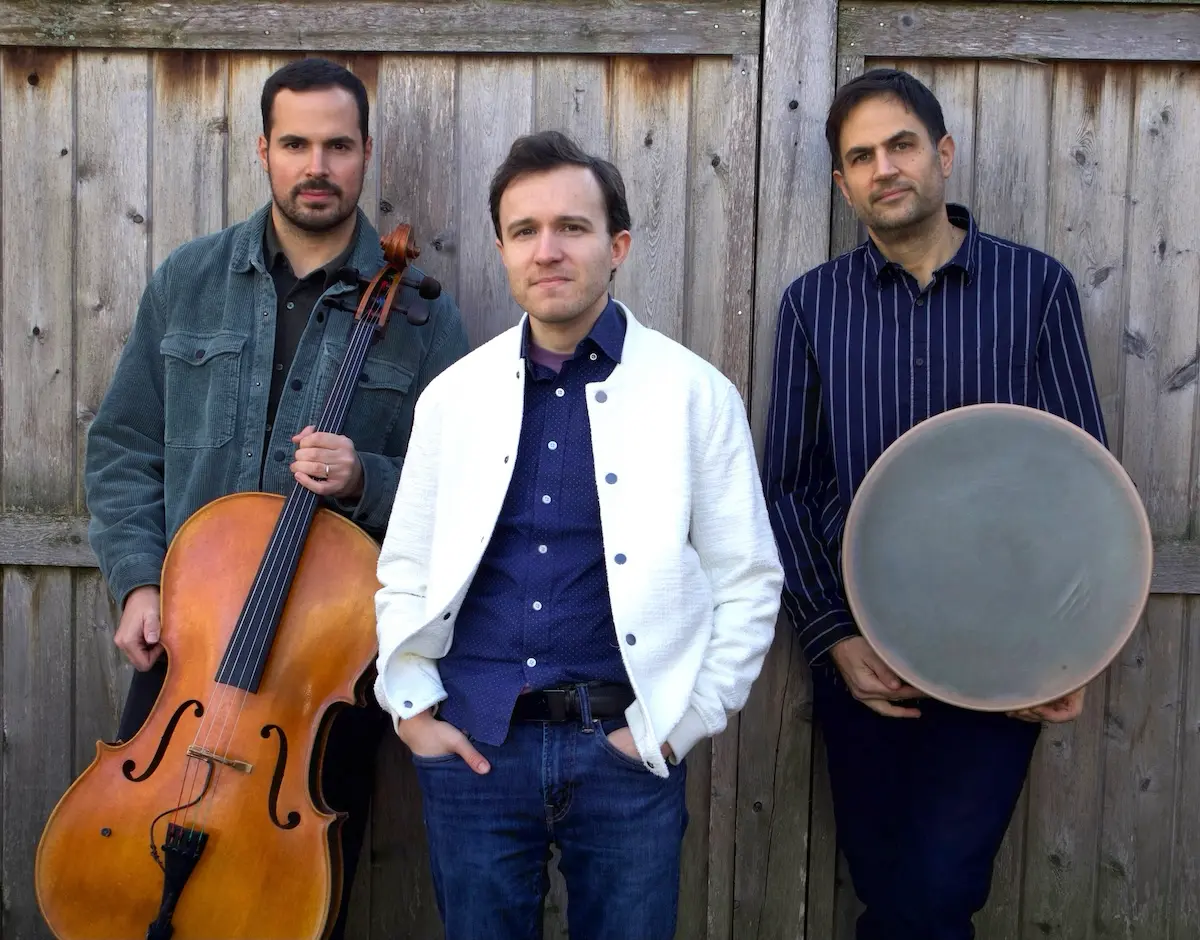
Ize Trio: Global Prayer
Musical cultures collide and blend on Global Prayer. American pianist Chase Morrin heads the Ize Trio with percussionist George Lernis and Naseem Alatrash on cello. Touching on various flavours including jazz, classical and Middle Eastern styles, the project sets out to reaffirm the beauty of multicultural interaction. Including a few featured artists, such as bassist John Patitucci, the release offers a subtly diverse set of songs to consider and sink into.
As with any ensemble, especially smaller ones like a trio, the way the players interact with one another counts for a lot. There is certainly a sense of cohesion between the members; even when they are layering and “talking over” one another, so to say, there is an interesting tension and (most times) resolution to the polyphony. Near the middle of Jam For The End Of The World, the piano and percussion battle a bit for rhythmic dominance. It has a Latin flavour to it, but it is also free of such definite genre-pigeonholing. The looseness is certainly a feature that can both help and hinder the compositions. Splashes Of The Future is bright and energetic without being chaotic. The marimba-like chimes are substantial enough to differentiate the track from the others and still keep to the overall tone.
Though there are some excellent tracks, not every piece successfully pulls off the sonic blend. At times the longer tracks seem a bit too wandering. Snæfellsjökull could easily be cut up into smaller songs and be stronger for it (at about 4.45 the piece shifts direction, a stronger direction which really needed to be its own track). Also, the lightness of some of the string instruments (laouto and bouzouki) has the odd effect of washing out said instruments, putting them more in the background than perhaps intended. Yet the Ize Trio’s determination to experiment and weave different influences is laudable. Global Prayer will surely inspire and usher in future convergences of music and cultures.
Discography
Flying; From The Stars; Splashes Of The Future; Snæfellsjökull; Global Prayer; The New Order; Jam For The End Of The World; Taqsim; Epilogue (46.46)
Chase Morrin (p); George Lernis (pc); Naseem Alatrash (clo); John Patitucci (b); Lihi Haruvi (s); Layth Sidiq (vn); Vasilis Kostas (laouto); Yaniv Yacoby (bouzouki). 12-13 January 2023 & 24 May 2025.
Independent
Vivienne Aerts: Current
From the start, this album announces itself as an indie project interested in blending instrumental music with external, environmental noises. Vocalist, composer and synth-player Vivienne Aerts dives into how sounds collide and weave together. The Dutch artist’s music may seem a bit strange at first, but one becomes acquainted if not accustomed to her style and perspective as the project rolls on.
During the first track (and subsequent ones), one seems to hear boat-rocking noises and waves. It is a unique sound that is further altered by synth and post-production effects. To compensate for the lack of a big ensemble, Aerts plays with reverb, synths, electronic effects, overdubbing (or self-harmonisation), etc., as on the third track Watch Its Show. At times, the release comes off more new age than jazz. The watery quality of the backing tracks on pieces like Gathered Here and Water Lock (Improv 2) are very reminiscent of material by Enya, specifically from her Watermark (1988, Reprise) release.
If the beginning sounds more experimental than some listeners are used to, a few songs (When I’m Gone and Where Is The Sun) are surprisingly melodic. The use of repetition and vocal layers keep with the established sonic aesthetic. Aerts goes for a stronger sing-song vibe, making them easier to hum along with. The piano part is mainly chords accompanying the vocals, but it works with the other sound layers coming in and out. Though the release may not be quite to everyone’s taste, the jazz blended with new-age styles is not something one hears every day. Aerts has hit upon a unique texture, and she is consistent in applying said texture throughout. Current exhibits an artist’s desire to experiment and push themselves over the boundaries of accessibility without completely sailing into avant-garde soundwaves.
Discography
Nothing Needs The World; Touching The Light; Watch Its Show; Gathered Here; Current (Improv I); When I’m Gone; Where Is The Sun; Closer; Water Lock (Improv 2); Reminiscing; Outside Inside Out (43.38)
Aerts (syn, v, elec, kyb); Hermine Deurloo (harm); Susanne Alt (s); Adina Meertins (b). The Netherlands, summer 2025.
New Amsterdam Sounds
Martina Liviero: Formas Al Desaparecer
Melding her Argentinian heritage with classical influences, Martina Liviero searches for new soundscapes on Formas Al Desaparecer. The guitarist and vocalist has an excellent ear for tunes. Having both instrumental as well as vocal pieces is a smart choice, too, showing a maturity and sophistication in Liviero’s sense of organisation and narrative flow.
Florecer comes second in the lineup, yet it is a stronger opener than the first track. A sway in the rhythm creates the main momentum. The vocals (which are dusky and lovely) and other instrumentals skate on top. It is an easy tune to enjoy. Unlike other Hispanic music coming from Cuba or Mexico (etc.), the folk style exhibited here is not as heavily tied to rhythmic parameters, where the beat is overly heavy or pronounced. The percussion and bass function as they would in a jazz ensemble; they provide the backing tempo and propel the track forward without constraining the other sonic elements.
Stronger classical overtones emerge as the release progresses, as on Un Intersticio and Valsa. On the first, there is an evident misterioso employed. It seems to conjure up a Rousseau painting. The latter one also plays with a darker tone, yet the Spanish guitar interjects a vaguely romantic air as well. Composers like Ginastera, Albéniz and de Falla are alluded to throughout. These more classical elements are not singular to this project, but the project is much the better for them, as it twists the traditional flavours of indigenous music. Furthermore, the gentle tone on many of the compositions clearly indicates Liviero’s devotion to the craft.
Discography
Primeras Luces; Florecer; Dónde; Hilo Azul; Un Intersticio; Valsa; Será La Noche; Una Semilla; Refugio (36.44)
Liviero (v, g); Rafael Martini (v, org, p, mar); Joana Queiroz (c); Martin Nevin (b); Ari Chersky and Will Graefe (elg); Julian Shore (p); Alé Fonseca (syn). New Doors Studio, Belo Horizonte, Brazil.
Hilo Records