Duke Ellington: Copenhagen 1964
In 1958 the Ellington orchestra embarked on a European tour which included a concert in Copenhagen. A programme of such ducal favourites as Perdido, Rockin’ In Rhythm and Diminuendo And Crescendo In Blue kept the customers audibly satisfied*. Six years later he returned with almost the same personnel to offer a more varied menu of his compositions – a medley of Black And Tan Fantasy, The Mooche and Creole Love Call with excerpts from Billy Strayhorn’s The Far East Suite, a work then still in progress and later to appear on the album of the same name. These were Amad, Agra, Blue Bird Of Delhi, Depk and Isfahan. All receive outstanding renditions from their chosen interpreters: Lawrence Brown is the principal soloist on Amad. The majestic Harry Carney delivers the theme of Agra (inspired by the Taj Mahal) and Jimmy Hamilton and Cootie Williams keep harmonious company on Blue Bird Of Delhi. But pride of place goes to Johnny Hodges for his moving portrayal of Isfahan, described by Duke as “a place of poetry” an arousing delivery of Things Ain’t and a languid interpretation of the Banquet Scene from Duke’s Timon Of Athens suite, composed for the 1963 Shakespearean Festival in Ontario in 1963. The “piano player” himself creates a witty and pulsating delivery of Kind Of Dukish. On Happy Reunion Paul Gonsalves sheds his Newport 1956 persona as a slaughtering R&B icon to offer a sensitive and delicate contribution to Happy Reunion.
These are only some of the treasures and delights to be enjoyed on this well-recorded “live” concert, with the entire orchestra (powered by Sam Woodyard’s subtle drumming) at its superlative best. Not only the audience but the musicians themselves can be heard expressing their delight in the remarkable sounds that filled the Tivoli Concert Hall on 13 March 1964. As critic Henrik Wolsgaard-Iversen, who attended the concert, remembers: “This recording is a gem, musically, Duke-wise and probably the best restored and re-mastered concert by the band in the 1960s… well, The Paris Concert comes close”. Listen and decide.
*See my review of Duke Ellington: Copenhagen 1958 / Bonus After Hours 1950.
Discography
Take The A Train; Medley: Black And Tan Fantasy, The Mooche, Creole Love Call; Harlem; Happy Reunion; Excerpts From The Impressions Of The Far East Suite: Amad, Agra, Blue Bird Of Delhi, Depk, Isfahan; Things Ain’t What They Used To Be; Banquet Scene (From Timon Of Athens); Skillipoop; Kinda Dukish & Rockin’ In Rhythm; Jones (69.15)
Cat Anderson, Cootie Williams, Herbie Jones, Rolfe Ericson (t); Lawrence Brown, Buster Cooper, Chuck Connors (tb); Johnny Hodges (as); Russell Procope (cl); Paul Gonsalves (ts); Harry Carney (bss); Duke Ellington (p); Ernie Shepard (b); Sam Woodyard (d). Excerpt from second concert, Tivoli Concert Hall, 13 March 1964.
Storyville 1018545
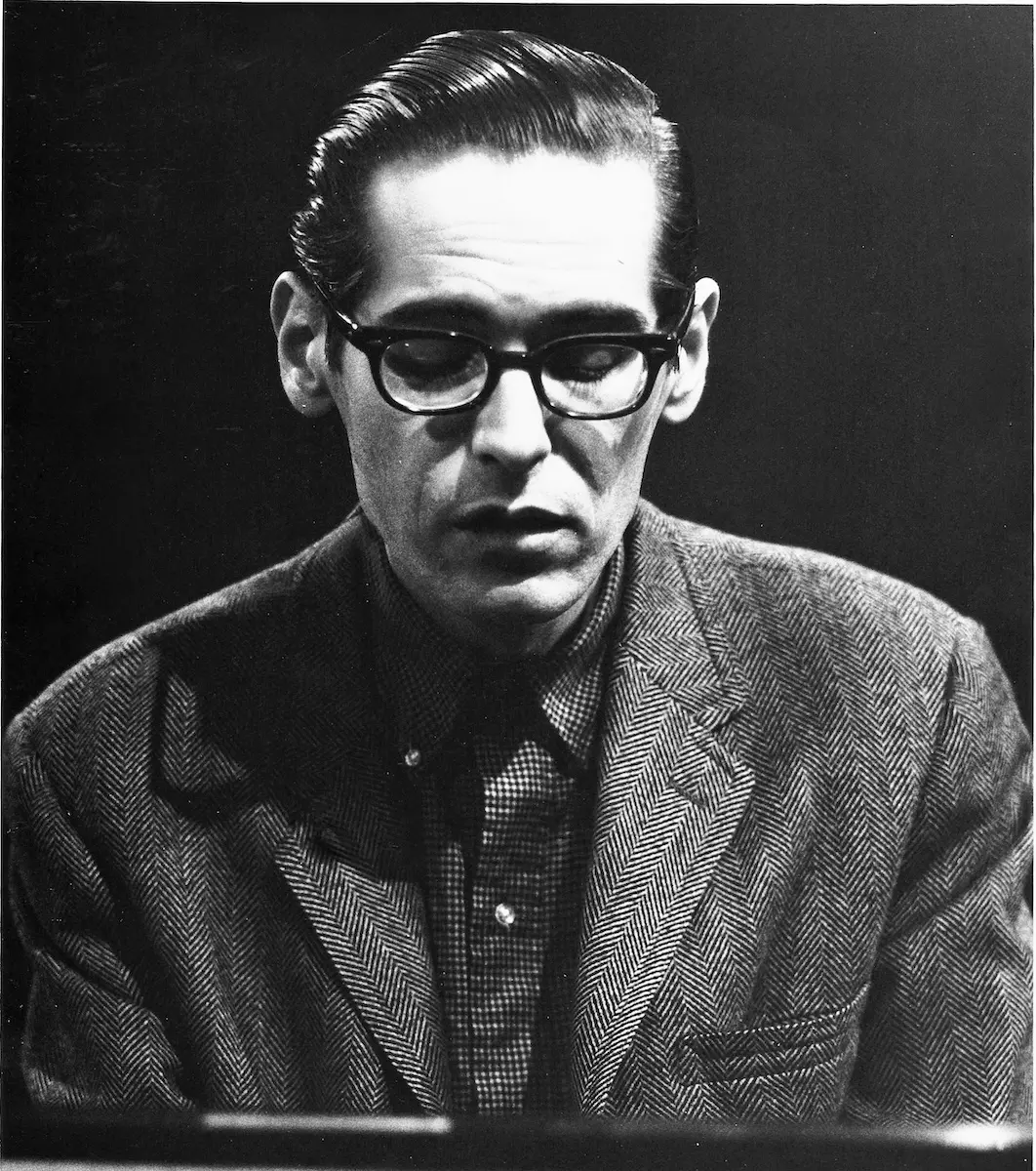
Bill Evans: At The BBC
Older readers may well remember seeing (and hearing) Bill Evans and this trio (bassist Chuck Israels and drummer Larry Bunker) when, while resident for four weeks at Ronnie Scott’s, they appeared on Jazz 625 on BBC2 on 12 May and 29 December 1965 (although differing dates have been cited for the two sessions). These performances have previously been available on video and some bootleg audio discs. This welcome CD reissue includes the spoken introductions to the two sets by host Humphrey Lyttelton.
This is the first release of the original (and remastered) BBC tapes by Matthew Luthans. The sound – low rather than hi fi – is still an improvement on earlier releases, and without visual “aids” allows the listener to concentrate fully on the music. In the accompanying booklet the indefatigable producer and archivist Zev Feldman includes extracts from his conversations with Israels and says “I am happy to present this ‘very first official release’ of a seminal event.” There is also an informed and insightful essay by critic Marc Myers in which he notes that what the Jazz 625 video illustrates is “the undertaker somberness of the trio and the audience’s subdued reaction, at least by today’s standards, to what is breathtaking emotional music”.
As for the music itself, every track bears the imprints of Evans’ inventiveness and complex (but endearing) personality. Jamie Cullum notes that he allowed the piano to “speak in sentences, rather than fragments,” while writer Thierry De Clemensat asserts that Evans was an artist who “understood restraint as a form of expression, and simplicity as a path toward depth”. One should add that he is in telepathic contact with Israels and Bunker – both of whom were given generous solo space as well as always complementing his incredible pianism. Aside from preaching to the already converted, I should say that Evans’ genius should continue to appeal to a younger generation. My highly recommended “sampler” tracks are, from set 1, Come Rain Or Come Shine and My Foolish Heart, and, from set 2, How My Heart Sings and Waltz For Debby. Like Bird, Evans lives.
Discography
CD1 (set 1): Intro by Humphrey Lyttelton; Elsa; Summertime; Come Rain Or Comes Shine; My Foolish Heart; Re: Person I Knew Israel Five (Theme) (34.35)
CD2 (set 2): Intro by Humphrey Lyttelton; Five (Theme); How My Heart Sings; Nardis; Who Can I Turn To; Someday My Prince Will Come; How Deep Is The Ocean?; Waltz For Debby; Five (Closing Theme) (33.28)
Bill Evans (p); Chuck Israels (b); Larry Bunker (d). London, 15 March 1965. Recorded for Jazz 625 on BBC2.
Elemental Music 5990458
Lalo Schifrin: Insensatez
Argentinia-born Lalo Schifrin (1932-2025) is best known (and celebrated) as a composer of TV and film scores including Mission Impossible (1966), Starsky And Hutch (1975), Cool Hand Luke (1967) and The Eagle Has Landed (1976). Among his many awards he was a five-time Grammy Winner, and was nominated for six Academy Awards. He was attracted to jazz at an early age and his (short-lived) connection with the music began with the formation of a 16-piece orchestra that appeared on a variety programme on Buenos Aires TV. He met Dizzy Gillespie in New York City in 1960 and wrote an extended piece for his orchestra called Gillespiana, which was recorded in 1960. After Dizzy abandoned his big band (for financial reasons) Lalo took over the piano chair in his new quintet. He also wrote a second extended work for Diz, The New Continent, recorded in 1962. A year later he recorded an album – Buenos Aires Blues – with Johnny Hodges, who featured on two Schifrin compositions Dreary Blues and B. A. Blues. These activities more or less ended Schifrin’s engagement with jazz and he resumed his meteoric filmic and TV career.
This album, recorded in 1962, marked his final “jazz” venture. Featuring Schifrin and guitarist Jim Hall together with nine violins, four violas, two cellos and a harp, it was an underwhelming venture. But Leonard Feather, in his sleeve notes to the original LP issue, would question this verdict. He asserted that the original 12 tracks (here with two ”bonus” tracks featuring Leo Wright, Jimmy Raney, Art Davis, Rudy Collins and Willie Rodriguez) illustrate ”the manner in which the melodic essence is retained and the Brazilian beat incorporated” to reveal “the three basics of bossa nova: gentle melodies and rhythms and that intangible, untranslatable, indispensable extra ingredient called bossa”. This encomium reminds me of the title of Philip Larkin’s collected record reviews: All What Jazz. Titles include Lalo’s Bossa Nova, Maria, Insensatez and the best-avoided I’m Looking Over (A Four Leaf Clover).
Discography
The Wave; Insensatez; You And Me; Lalo’s Bossa Nova; Silvia; Murmurio; *An Evening In Sao Paulo (16.33 ) – Maria; Rapaz De Bem; Samba Do Perroquet; Rio After Dark; Time For Love; I’m Looking Over A Four Leaf Clover; *Desafinado (16.03)
Schifrin (p, ldr); Jim Hall (g); Chris White (b); Rudy Collins (d); Jose Paulo & Carmen Costa (pc). *Schifrin; Leo Wright (as, f); Jimmy Raney (g); Art Davis (b); Rudy Collins (d); Willie Rodriguez (cga, bgo). New York, 1962.
Jazz Samba 709108