
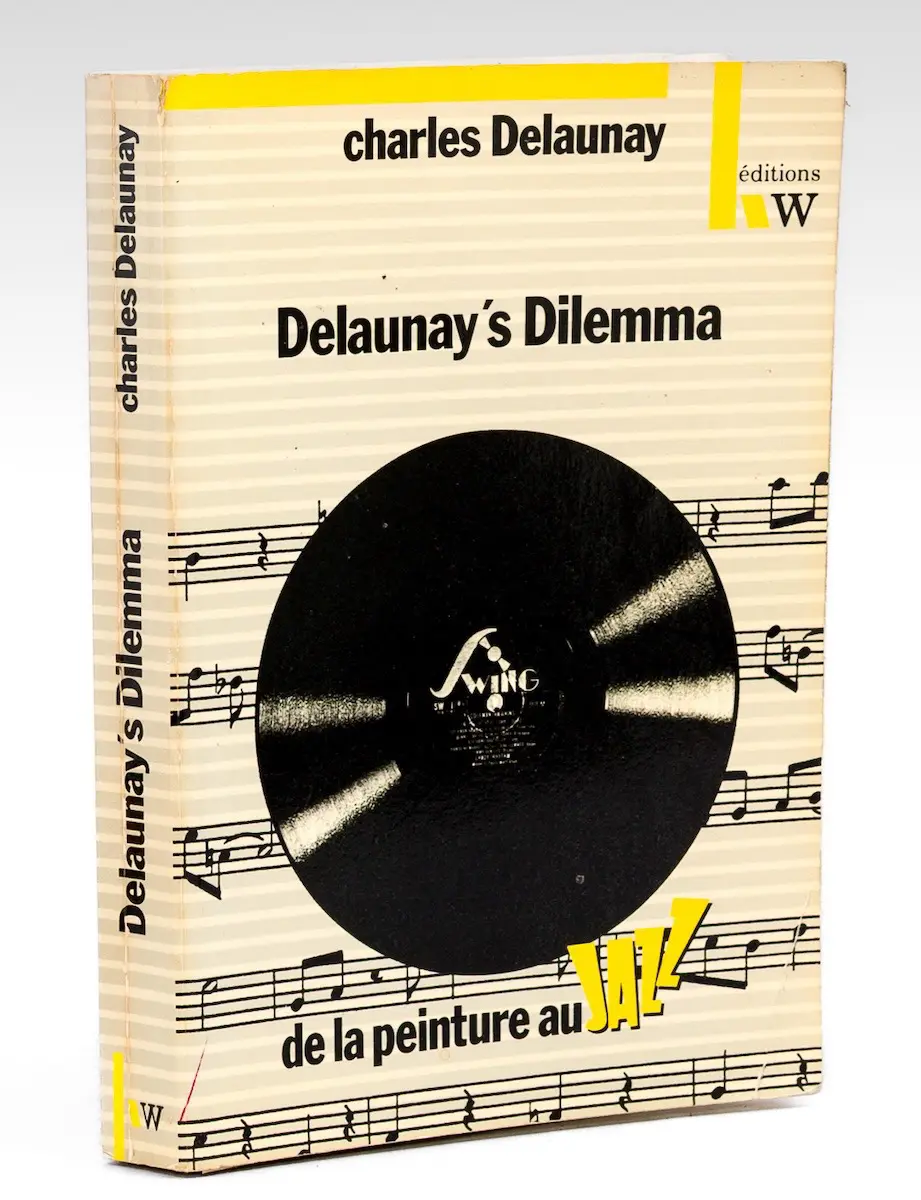
Charles Delaunay is one of France’s most eminent jazz advocates – a writer, producer, promoter and co-founder with Hugues Panassié of the Hot Club de France in 1933. A dedicated champion of black American music, Delaunay was, to a large extent, responsible for winning significant recognition in France for Django Reinhardt and Sidney Bechet.
The book’s title comes from the 1954 John Lewis composition for the MJQ and refers to the period in the late forties when staunch traditionalist Delaunay was exposed to the siren strains of bebop. Initial aversion gradually gave way to recognition and approval of a vital new development in jazz – and Delaunay’s conversion to the new music was the detonator for an explosion of conflict which shook the Hot Club to its foundations.
The schism culminated in a solemn meeting in a café in Pigalle when Panassié, the Pope of Montauban, as he was dubbed, in recognition of his pretensions to infallibility in matters of jazz, decided that there was not room in the club for both him and Delaunay – so Charles stepped down as secretary and the rift became permanent. Panassié was horrified that anyone should think for a moment of giving to Dizzy Gillespie even a fragment of the recognition accorded to Armstrong.
Delaunay, a most gracious, sensitive and cultivated man, has written a book of fragmented reminiscences which, though lacking in narrative continuity, is a delight to dip into. He writes in elegant French and with a certain humility about his first encounter with jazz and recalls how the jazz culture imposed itself on France – and on Paris in particular – in the thirties and forties. If France has a greater respect for jazz as a culture than some other European countries, then men like Delaunay and Panassié certainly made an important contribution to this awareness.
Delaunay founded the monthly magazine, Jazz Hot, in 1934 and three years later created the famous Swing label on which he recorded Benny Carter, Coleman Hawkins, Eddie South, Dicky Wells, Django, Grappelli and many more great names.
In 1948, along with a group of jazz record collectors, Delaunay founded the company, Jazz Disques (later to become Vogue) with the object of licensing American recordings for release in France. The first titles appeared on the Jazz Selection label – a positive treasure trove for British bop enthusiasts to whom recordings by Parker, Powell, Al Haig and Dizzy Gillespie were rare as hens’ teeth.The somewhat neglected son of parents who were both successful painters – and evidently more preoccupied with art than with parenthood – Delaunay was confronted early in his life by another dilemma: whether to follow in his parents’ footsteps and exercise a talent (which he clearly possessed) for painting, or to apply himself to becoming an evangelist for jazz, a music which he says totally transformed his life. Fortunately for jazz, Delaunay chose not to make painting his career – though his artistic gifts are well in evidence in the portraits of Louis Armstrong, Freddie Johnson, Herman Chittison, Robert Mavounzy, Garnet Clark and Joe Turner which are among the book’s fascinating illustrations.
Altogether a most engaging, good-natured and gracious collection of memoirs.
Delaunay’s Dilemma – De La Peinture Au Jazz, by Charles Delaunay. Published by Editions W, Macon, 71000, France. 271 pp, 62 pages of photographs. 115 francs