Anthony D’Alessandro: City Lights
This session led by Toronto-based pianist Anthony D’Alessandro is a joy to listen to from beginning to end. He is joined by trumpeter Summer Camargo, tenor saxophonist Jacob Chung, bassist Jonathan Chapman and drummer Ernesto Cervini. The talented vocalist Jennarie appears on one track (Oversight), co-composed with D’Alessandro. The sextet offer spirited versions of six D’Alessandro compositions plus his two nimble reworkings of stride pianist James P. Johnson’s famous recordings of Charleston and Harlem Strut. This is D’Alessandro’s second album. The first, Searchin’ (2024), received critical approval, and launched him on a world tour. City Lights will also doubtless receive deservedly high praise.
Throughout, the sextet forms a cohesive, multi-faceted and relaxed unit. The leader does not hog the limelight, but rather supports and inspires his sidemen. Camargo, the youngest member of the Saturday Night Live band, and Chung are both already established stars in the Toronto/New York jazz firmament. Chapman and Cervini propel their colleagues with apparent ease.
All nine tracks offer and combine the basic elements of what used to be termed “mainstream” jazz: rhythm, swing and blues-soaked originals – try Staying The Course and/or Four Minute Mile, a romantic ballad (Oversight) and Green Sauce. In an elegant liner note D’Alessandro writes “Unlike Searchin’, which is more a collection of my greatest hits, I wrote City Lights as a suite of music, trying to achieve a cohesive sound across the record.” He does. You won’t be disappointed.
Discography
Four Minute Mile; Staying The Course; Sacred Ground; City Lights; The Line Up; Oversight; Green Sauce; Charleston; Harlem Strut (47.50)
D’Alessandro (p); Camargo (t); Chung (ts); Chapman (b); Cervini (d); Jennarie (v). Toronto (?), 6 May 2025.
Independent
Martial Solal & Éric Le Lann: Portrait In Black And White
Recorded at the Vannes Jazz Festival in August 1999, this is a reissue of a meeting between two French jazz men: celebrated pianist Martial Solal (1927-2024) and the lesser-known trumpeter, Éric Le Lann (born in 1957), whose autobiography was reviewed recently by Graham Colombé. Although not entirely satisfying, the record is of more than antiquarian interest. Both men enjoyed a long friendship, and Solal had already recorded duets with Lee Konitz, Dave Douglas and Johnny Griffin. In these live performances before an audibly enthusiastic audience, they exchange ideas, quotations and responses on a selection of standards and three other compositions including one by Le Lann – Le Bleu d’Hortens – and a Charles Trenet song, Que Reste-t-il De Nos Amours?
The album opens with a soulful version of Gershwin’s The Man I Love, with a slightly off-key Le Lann solo, and some rather aimless noodling by Solal. Things audibly improve with the title track (Portrait In Black And White), an Antonio Carlos Jobim composition. Two famed Monk pieces – ’Round About Midnight and Well, You Needn’t (arguably the two best tracks) have Solal and Le Lann in seemingly telepathic communication, particularly on Needn’t, where Solal crafts a logical and rhythmic solo, receiving audience applause. Cole Porter’s What Is This Thing Called again has the pianist “talking” to Le Lann, who responds appropriately.
This is an interesting – if somewhat monotonous album, with neither of the soloists at the top of their respective games. Producers Augustin Bondoux and Patrick Frémeaux suggest that Solal and Le Lann were essentially engaged in “conversations” with “daring and intimate exchanges”. Another less charitable verdict might be that they were simply going through the motions.
Discography
The Man I Love; Portrait In Black And White; ’Round About Midnight; Well, You Needn’t; Body And Soul; Le Bleu D’Hortense; Que Reste-t-il De Nos Amours?; Invitation; What Is This Thing Called Love? (60.33)
Solal (p); Le Lann (t). Jazz á Vannes, August 1999.
Frémeaux & Associés FA8625
Ledisi: For Dinah
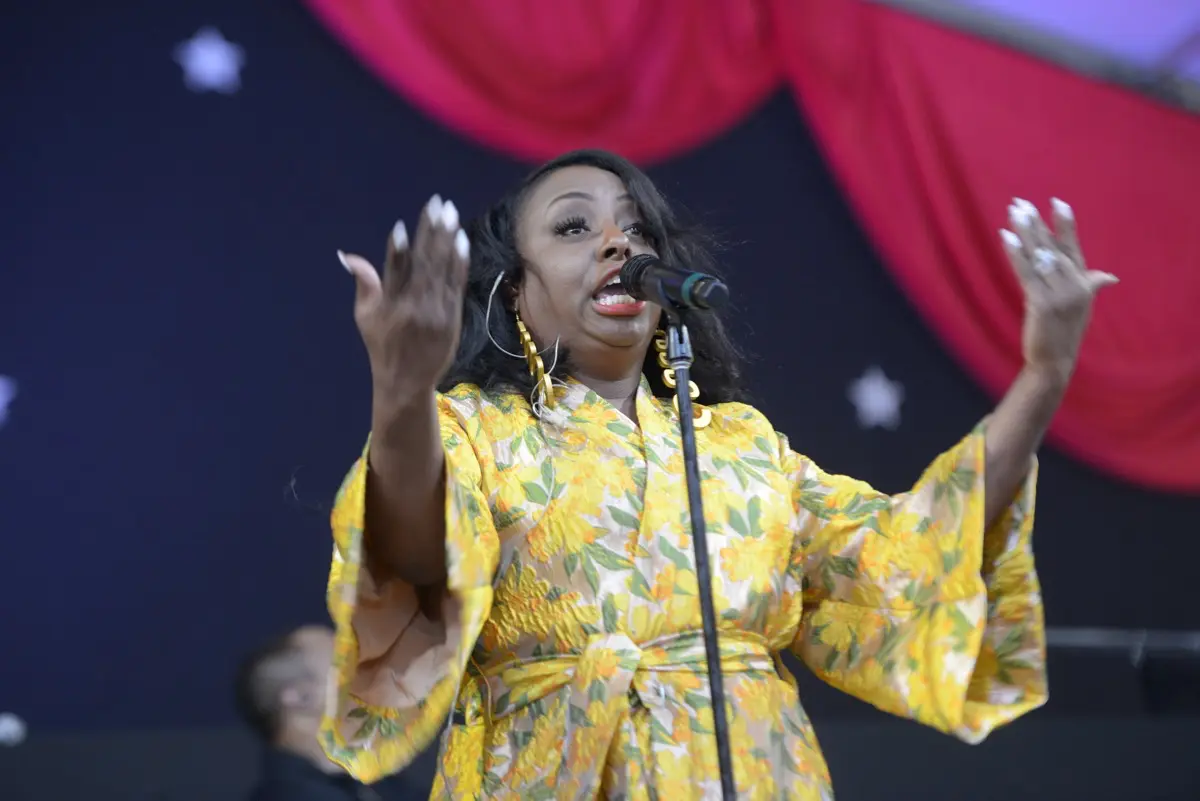
Ledisi is a vocalist, a professor of music and head of the Gender Justice in Jazz programme at the Berklee College of Music (where she received an honorary doctorate in 2024). She is also an author, civil rights activist, entrepreneur and actress. Born in New Orleans and raised in Oakland, she has received 15 Grammy nominations, one for “best traditional R&B performance” of I Need To Know, and has performed at Carnegie Hall. She also portrayed Mahalia Jackson in the film Remember Me, appeared in the film Selma, and is a member of the Delta Sigma Theta sorority, a college sisterhood of black women.
This album is her tribute to the “Queen of the Blues” Dinah Washington (1924-1963). With co-producer Christian McBride, she reinterprets nine of Dinah’s most popular recordings, notably This Bitter Earth, What A Difference A Day Made and Let’s Do It. The supporting orchestras (some with strings) include McBride (bass), Gregory Porter (vocals on a raunchy You’ve Got What It Takes), and Michael King (drums). Asked why she embarked on this project Ledisi replied “Before there was Aretha there was Dinah. She deserves to be recognized in today’s music as well. Instead of asking me ‘Why Dinah?’, you should be asking me ‘Why not Dinah?'”
This tribute also deserves to be recognised – as a heart-felt and entirely appropriate combination of imaginative reinvention and genuine respect for a unique vocalist and opponent of discrimination and segregation. Ledisi has also been quoted as saying that this album is “a thank you letter across the generations to an innovator who was bold, feminine, and unapologetically Black”, adding “This is my way of saying her name out loud.” Listen to any (or all) of these tracks if you still need convincing.
Discography
What A Difference A Day Made; If I Never Get To Heaven; Caravan; Let’s Do It; You Don’t Know What Love Is; You’ve Got What It Takes; You Go To My Head; This Bitter Earth (33.19)
Ledisi with various orchestras. No date given, c. 2025.
Candid CAN 33802