
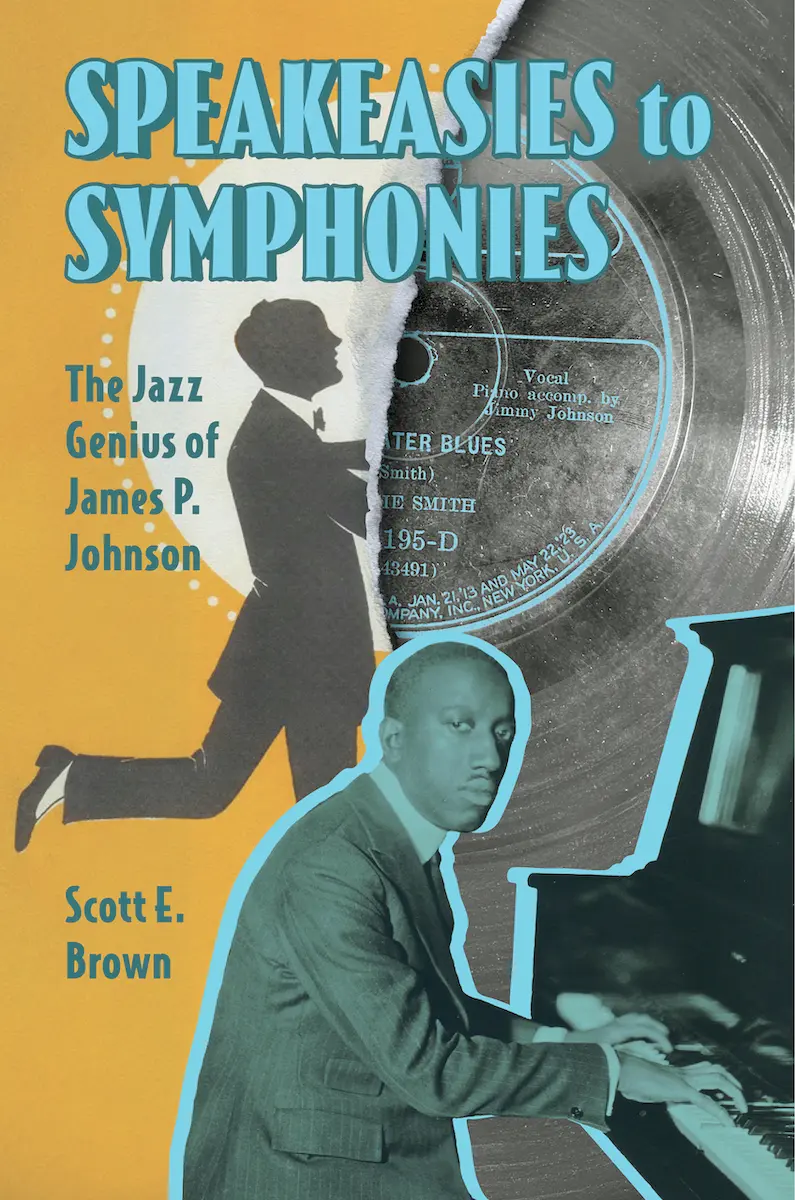
Author Scott Brown has devoted much of his life to researching and commenting on the life and legacy of James P. Johnson. Some 40 years ago Scarecrow Press published his James P. Johnson – A Case Of Mistaken Identity. That included a discography and I regret that his second book on Johnson, which is extraordinarily thorough in other respects, doesn’t do the same. However, the detail that 40 years of further research have produced is highly impressive.
We learn that Johnson’s maternal grandfather was born a slave in 1805 but was freed by mid-century. James P. himself was born in 1894 in New Brunswick and the P stands for Price, which was the surname of a white family that had a relationship of employment and protection with the Johnsons. From then on the detail provided is similarly extensive and at times overwhelming. I was delighted to learn that one Alberta Simmons gave piano lessons to the young James, and also, some years later, to another youngster with the unusual name of Thelonious Monk. However, the hundreds of other names which appear in the book include many peripheral characters and I often found their manifold details unhelpful in terms of keeping the narrative moving, although I understand that the author didn’t want any of the results of his lengthy research to be wasted.
Though Johnson was dissatisfied in two different ways at the end of his life, he was in many ways successful. Currently available CDs, including cheap useful anthologies as well as very expensive rarities, reflect the continuing interest in his many recordings, and during his lifetime he and his family were never short of money, partly due to royalties from such compositions as The Charleston. He also played with and was respected by an enormous number of musicians and singers, ranging from the very famous to insignificant. His two causes of regret were the effect of alcohol on his health (leading to death at the age of 61) and his limited success in achieving performance of his compositions for orchestra during his lifetime, though interest in these has grown since his death and relatively recent recordings of some are available. Although this book mentions probably all of his own surviving recordings (including some never made publicly available) the author is not concerned with detailed musical analysis, though there is considerable consideration of what constitutes the “stride” style.
On a personal note I regret that he didn’t draw attention to the 1930 piano duets with Clarence Williams where the two men indulge in absurd vocal exchanges which show the side of Johnson that enjoyed parties and booze as opposed to the serious musician and composer. However, if you have more than a passing interest in the great JPJ, this book surely has far more information about him than what you know already and a great deal of it you’ll probably find very interesting.
Speakeasies To Symphonies – The Jazz Genius Of James P. Johnson by Scott E. Brown. University Press Of Mississippi, pb, 380pp and 48pp notes. ISBN 978-1-4968-5753-8