Hank Mobley & John Coltrane: Tenor Conclave
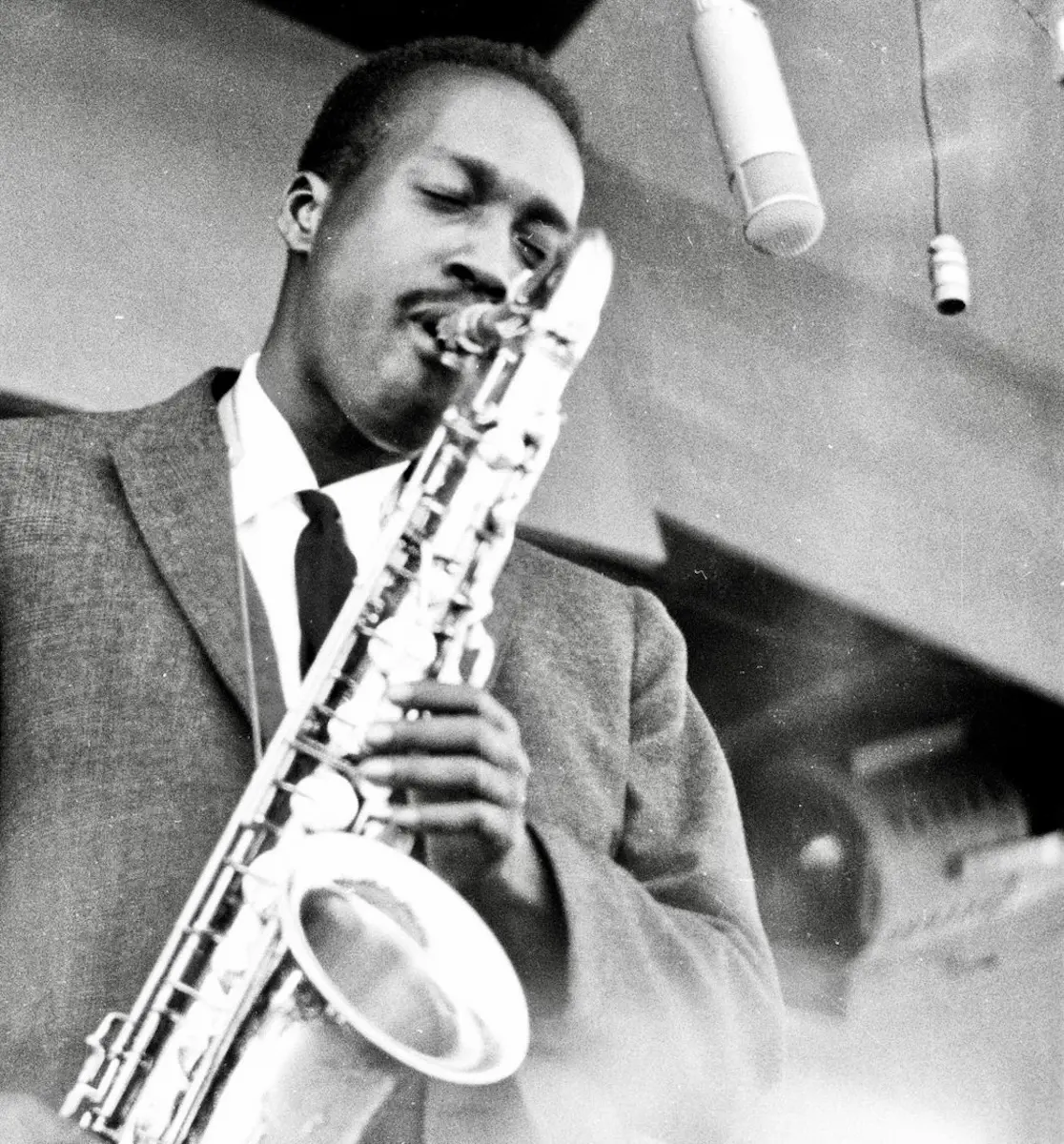
Ira Gitler’s sleeve-note says “The most attractive point of Tenor Conclave is the unusual collaboration between John Coltrane, Zoot Sims, Al Cohn and Hank Mobley.” It is unclear why Sims and Cohn are omitted from the album title despite being pictured on the LP cover as members of the Tenor Conclave. They had been long-term colleagues since 1948 when they were section-mates in Woody Herman’s Second Herd. This was their only collaboration with Mobley, who had recorded with Coltrane earlier in 1956. Gitler hints at “two recording projects between Cohn and Coltrane”. If they exist I have been unable to track them down. Sims never recorded again with Coltrane.
In Workout – The Music Of Hank Mobley, Derek Jewell refers to Tenor Conclave “as a most unusual album” highlighting Mobley’s sophisticated choruses on How Deep Is The Ocean for particular attention. (I reviewed Jewell’s book for Jazz Journal in October 2008.) Ben Ratliff’s definitive John Coltrane biography The Story Of A Sound refers to the same ballad where he feels Coltrane’s contribution “sits uneasily with the mood of the tune”.
This reissue is a typical Prestige blowing session with a repertoire of common-denominator standards plus a blues – Bob’s Boys. Tenor Conclave is a Rhythm chart and Just You Just Me, introduced in 1929, has been a favourite vehicle for jazz musicians ever since. Tom Lord lists 496 recordings so far and Thelonious Monk’s Just You, Just Me contrafact Evidence has been recorded on 420 occasions. Composer Jesse Greer’s harmonies have proved to be long-lasting. Each of the tenors has his own highly individual sound but for those in doubt, Ira Gitler provides a helpful solo breakdown on the sleeve. Polka Dots And Moonbeams is a bonus track featuring Mobley and Coltrane, recorded three months earlier with Joe Gordon.
Discography
Bob’s Boys; Just You, Just Me; Polka Dots And Moonbeams; Tenor Conclave; How Deep Is The Ocean (52.08)
Joe Gordon (t); Mobley, Coltrane, Al Cohn, Zoot Sims (ts); Red Garland (p); Paul Chambers (b); Art Taylor (d). New Jersey, 7 September 1956.
Jazz Wax Records JWR 4650
Charles Mingus: Blues & Roots
Early in 1958 Nesuhi Ertegun, who produced Charles Mingus’s Atlantic studio sessions from 1956 to 1961, suggested he record “a barrage of soul music: churchy, soul, blues, swinging and earthy”. All of that and more has been accomplished here although there are only three titles that are strictly in the 12-bar form. John Handy and Booker Ervin had debuted with the Mingus Workshop on his Jazz Portraits the month before and their previous careers on the R&B scene made them ideal candidates for what Ertegun and Mingus had in mind. This was Pepper Adams’ first experience of the leader’s idiosyncratic approach to orchestration. Instead of written charts, the musicians had to memorise their parts after hearing them demonstrated by Mingus at the piano. This achieved total spontaneity, resulting in what Brian Priestley in his Mingus biography memorably calls “masterpieces of planned chaos”.
Wednesday Night Prayer Meeting is inspired by Mingus’s early church meetings with his mother, where “the congregation confess their sins, sing and shout and do a little Holy Rolling”. Giving testimony here are Willie Dennis, one of the great individualists of the trombone, and tenor-man Booker Ervin. Just like Better Git It In Your Soul from Mingus Ah Um, the band opt-out during part of Ervin’s solo leaving him centre-stage accompanied by rhythmic hand-clapping and verbal encouragement. Moanin’ should not be confused with Bobby Timmons’ classic of the same name. It opens with a dramatic, unaccompanied baritone statement that could be interpreted as a preacher calling the congregation to prayer. Ertegun wanted something “churchy” and he certainly got it here. My Jelly Roll Soul is a sincere tribute to Jelly Roll Morton, who was one of the leader’s earliest inspirations. Fine solos here by regular Workshop members Jimmy Knepper, John Handy and Horace Parlan.
Discography
Wednesday Night Prayer Meeting; Cryin’ Blues; Moanin’; Tensions; My Jelly Roll Soul; E’s Flat Ah’s Flat Too; We Got Blue (42.60)
Jimmy Knepper, Willie Dennis (tb); Jackie McLean, John Handy (as); Booker Ervin (ts); Pepper Adams (bar); Horace Parlan, Mal Waldron (p); Mingus (b); Dannie Richmond (d). New York, 4 February 1959.
WaxTime 771713
The Gil Evans Orchestra: Out Of The Cool
Working with Claude Thornhill during the 40s, Gil Evans was part of a writing team that included Bill Borden, Rusty Dedrick and Gerry Mulligan. Along with the leader they created the unique Thornhill sound that could sometimes “hang like a cloud”. Later in the decade he was prominent in the discussions that led to the Miles Davis Birth Of The Cool recordings. Two of the charts were his – Boplicity and Moon Dreams. Most of the early 50s, though, were difficult for him. He spent a couple of years playing piano at the Nut Club which was a well-known Greenwich Village strip club. Sometimes Zoot Sims or Phil Woods would join him there. He did a couple of weeks with Gerry Mulligan and Al Cohn in a quintet at Basin Street but essentially he became a “pen-for-hire” with artists like Lucy Reed, Helen Merrill and Johnny Mathis. Things changed dramatically with his successful late-50s collaborations with MiIes Davis (Miles Ahead, Porgy And Bess and Sketches Of Spain) which finally allowed him to record his own music.
Out Of The Cool was his fourth album as a leader and despite its four-star rating in The Penguin Guide To Jazz and The All Music Guide To Jazz I find it disappointing. La Nevada (the longest track at nearly 16 minutes) opens with an atmospheric vamp leading to a trombone soli with added woodwinds. Johnny Coles, Budd Johnson, Tony Studd and Ray Crawford stretch out creatively and very lengthily on a single chord which eventually become somewhat monotonous. On Stratusphunk composer George Russell plots a mysterious harmonic journey during his interpretation of the simple 12-bar blues form through the lens of his Lydian Concept. After more moody introspection on Bilbao Song the final track Sister Sadie is a foot-tapping, swinging affair quite unlike anything that has gone before.
Discography
La Nevada; Where Flamingos Fly; Bilbao Song; Stratusphunk; Sunken Treasure; Sister Sadie (44.19)
Collective personnel: Johnny Coles (t); Jimmy Knepper (tb); Tony Studd (btb); Eddie Caine (as, f, picc); Budd Johnson (ts); Gil Evans (p. arr); Ray Crawford (elg); Ron Carter (b); Charlie Persip, Elvin Jones (d, pc). New York, 18 & 30 November 1960 and 10 & 15 December 1960.
SoundsGood 66427