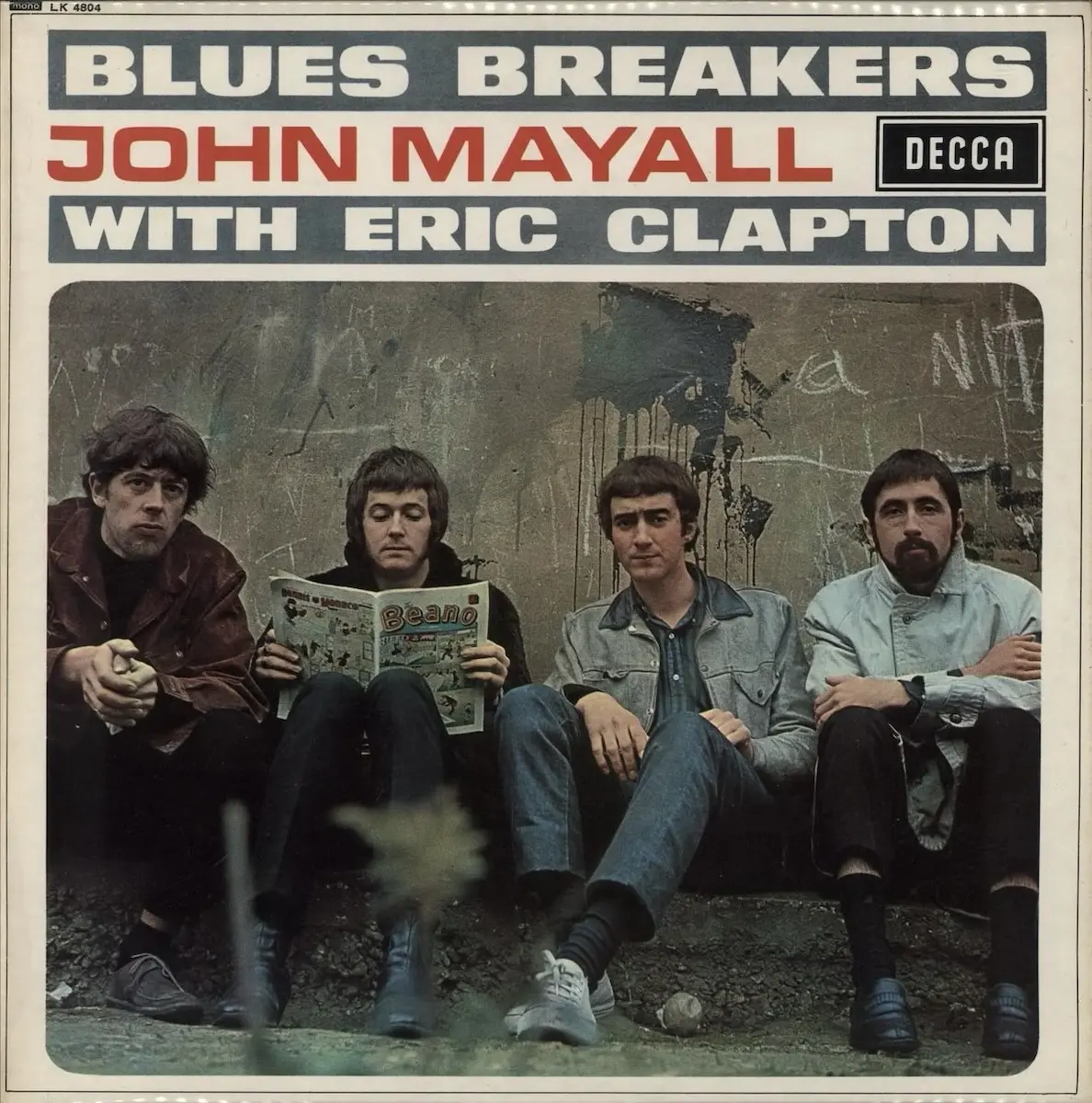
By the time this magazine is on the bookstalls, Otis Rush should have shaken the very foundations of the Albert Hall and Free Trade Hall with his evil singing and guitar work. And I am sure John Mayall and Eric Clapton will have been along there cheering with the rest of us who like the blues reasonably loud and mean. Three of the numbers on this record show definite leanings towards the Rush style (All Your Love, Double Crossing, Have You Heard) but it would be unfair to both sides to compare these performances with any by Rush, Buddy Guy, B. B. King or any other genuine article.
So, confining our comparisons to the better white bands in this idiom, we find that the Blues Breakers lack the originality and jazz sense of Alexis Korner’s group on one hand and the plain guts of the Butterfield band on the other. Clapton’s guitar is a creditable, if overamplified, synopsis of the styles of the aforementioned Messrs. King, Guy and Rush, but I cannot recommend the album on the strength of a couple of solos that only make you wish you had grabbed a few of those original 78s and 45s. Neither can I recommend it purely because of a crudely exciting 12-bar introduction to Have You Heard by Alan Skidmore. We need bands like this in the clubs – good solid dance music – but the market on record must remain amongst those who have yet to come under the spell of the real thing.
Discography
(a) All Your Love; Hideaway; Little Girl; Another Man; (b) Double Crossing Time; (a) What’d I Say (19 min) – (c) Key To Love; (a) Parchman Farm; (c) Have You Heard; (a) Ramblin’ On My Mind; (c) Steppin’ Out; (a) It Ain’t Right (18 min)
(a) John Mayall (vcl/org/p/hca); Eric Clapton (g/vcl on Ramblin’); John McVie (bs-g): Hughie Flint (d). London.
(b) as (a). Add John Almond (bari).
(c) as (b). Add Alan Skidmore (ten); Dennis Healey (tpt).
(Decca LK 4804 32s. 6d.)