Duke Ellington: Jungle Nights In Harlem 1927-1931
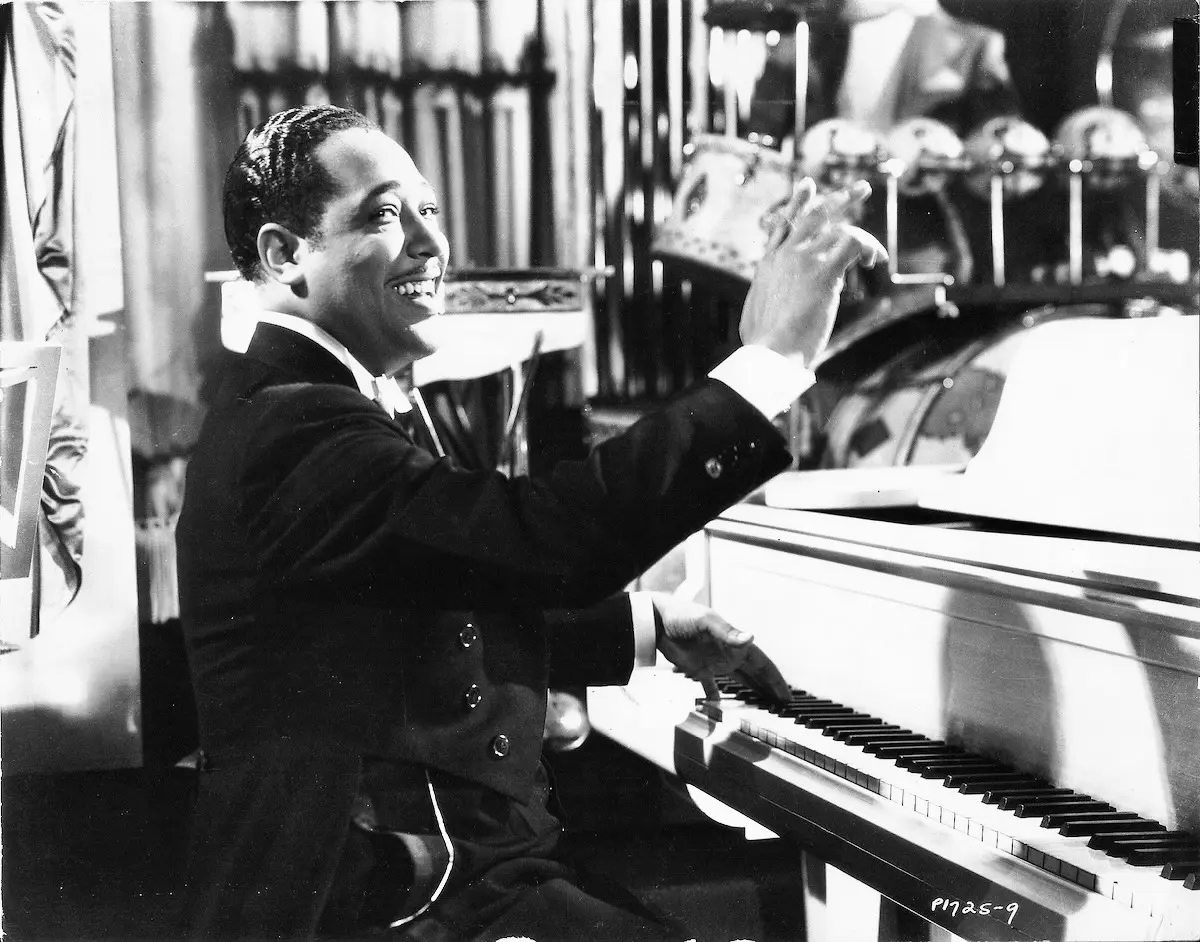
This is the latest edition of many albums with similar contents and titles issued by various companies over the past few years. Singly and collectively, they contain many gems from Duke’s early career when he created and recorded a blues-influenced repertoire of compositions during his long residence at Harlem’s Cotton Club. Disciples will be familiar with many of these 36 titles – Creole Love Call, Black And Tan Fantasy, The Mooche, Saturday Night Function – which he continued to feature at concerts and re-record until his death in 1974. Less familiar could be Tiger Rag (parts 1 & 2), Blue Bubbles, Harlem River Quiver, Beggar’s Blues and Wall Street Wail. In his biography Duke Ellington And His World (2001), A. H. Lawrence writes that “the Cotton Club became Duke’s atelier, where he mastered his craft and forged his unique style.”
This well-chosen and immaculately annotated sampler also benefits from technically improved sound, and informative essays (in French and English) by Tony Baldwin and Alain Pailler. They suggest that the blues were not prominent in Duke’s home town of Washington, D.C., but after his arrival at the Cotton Club, they became “integrated” (unlike its lily-white customer policy) into his oeuvre. As they explain, Ellington’s “Jungle Music” had “major and minor scales alternating within a given piece, shifting between martial and elegiac moods”. These are particularly evident in such titles as East St Louis Toodle-Oo, Black And Tan Fantasy and The Mooche. Another ducal innovation had vocalist Adelaide Hall creating a wordless and gravelly recitation on The Blues I Love To Sing. Among the orchestra’s staple personnel, Johnny Hodges, Joe Nanton and Bubber Miley were already consummate blues players. On Yellow Dog Blues, Hodges (on soprano sax) made his first recorded solo appearance with the orchestra.
Ellington was a major figure of the Harlem Renaissance and his contributions – early in his long career – to the musical and “flapper” culture of the 20s and 30s are immeasurable. This two-volume CD provides enjoyable confirmation (if needed) of that claim.
Discography
CD1: Creole Love Call; The Blues I Love To Sing; Black & Tan Fantasy; Harlem River Quiver; East St Louis Toodle-Oo; Blue Bubbles; Jubilee Stomp; Yellow Dog Blues; Tishomingo Blues; Hot And Bothered; The Mooche; The Blues With A Feelin’; Tiger Rag Part 1 Tiger Rag Part 2; Flaming Youth; Saturday Night Function; The Dicty Glide (56.25)
CD2: Cotton Club Stomp; Beggar’s Blues; Jungle Jamboree; Jolly Wog; Haunted Nights; Jazz Lips; Blues Of The Vagabond; Wall Street Wail; Double Check Stomp; Double Check Stomp; Jungle Nights In Harlem; Sweet Jazz O’Mine; Shout ’Em Aunt Tillie; Ring Dem Bells; Old Man Blues; Sweet Chariot; Echoes Of The Jungle (55.26)
Selective personnel: Ellington (p); Bubber Miley (t); Hall (v); Barney Bigard (cl); Harry Carney (bar); Hodges (as); Sonny Greer (d); Cootie Williams (t); Tricky Sam Nanton (tb). Camden, NJ, New York and Hollywood, 1927-1931.
Frémeaux & Associés FA5934
Nico Widdowson Trio: On Fools And Clowns
Up and coming young pianist Nico Widdowson was winner of The Musicians’ Company 2024 Tina May Jazz Award. Born in Wales, and a graduate of the Leeds Conservatoire, he moved to London where he formed the Nico Widdowson Trio. His unique achievement to date has been to fashion a pianistic style which incorporates classic Harlem stride piano with the later contributions of such acknowledged masters as Monk, Jaki Byard, Bud Powell, McCoy Tyner and Duke Ellington. He has candidly conceded that “I try to embrace my weaknesses and turn them into strengths,” and recently told one interviewer “I got into Duke a few years ago and then Willie the Lion and other Harlem Stride guys: Fats and Tatum, James P.” He also admitted “for all intents and purposes I’m rehashing a really old style, but it feels fresh to me because I do it as authentically to myself as I can.”
On Fools And Clowns attests to Widdowson’s determination and dexterity. It also reflects his belief that “contradiction, humour and seriousness” should sit side by side in jazz performances. He has commented that “Ellington, a personal hero of mine, was master of this. I try to have fun [but] I’m deeply serious about the music I make but it’s only music. It’s harsh and gritty and the ultimate example of flawless black artistry at a time when the voices of black artists weren’t taken seriously.”
These observations are evident in his performances of the superb Duke’s Blues and the tracks Who Shot Pinetop? and Maple Leaf Rag. Best taken in small doses because of its changing tempos and “mixes”, On Fools And Clowns deserves a respectful hearing. Bassist Joe MacLaren and drummers Jordan Hadfield and Charlie Hutchinson provide the leader with sympathetic and (where appropriate) propulsive support. This is a “hybrid” session, and very enjoyable, but (as Widdowson would presumably agree) not to be taken too seriously.
Discography
Angela Scott; Are You There Lion? Duke’s Blues; Nicotine Fingers; Who Shot Pinetop? And Also Her Mother; Today I’ve Been Feelin’ Blue; You Can Fire Me In The Morning; On Fools And Clowns; To Those I Love; Maple Leaf Rag (44.35)
Widdowson (p); Joe Maclaren (b); Jordan Hadfield, Charlie Hutchinson (d). Lightship 95, England, 6-7 March 2026.
Trash City Records
Phil Woods: Here’s To My Lady
A devout Woodsman, I’d looked forward to reviewing this album – first released on LP in 1988 when he was 57 years old. Woods (1931-2015) was a unique and fully formed musician (on alto and clarinet) when he first arrived on the jazz scene in 1954. His major influences were Benny Carter and Bird. His discography is both quantitatively and qualitatively impressive.
Unfortunately, this Chesky reissue leaves a lot to be desired. The original LP had 13 tracks (now also available on CD); but this sonically hyped reissue has only eight. The “missing” ones are Blue And Sentimental, Origins, Waltz For Debby, and alternate takes of Here’s To My Lady and Just Us. Scott Yanow, a normally informative sleeve writer, contributes only a condensed account of the session’s origins and subsequent history. He lists the (re-)recording date as 20-21 January 1998, and mentions that Woods can be heard on three tracks playing clarinet. But he cites only one of these – Another Love Song. The others are – as far as I can deduce – given the similarities between Woods on alto and on clarinet, Canadian Sunset and Charles Christopher. The LP disc itself is devoid of track titles, liner notes or playing times. For the record, Woods married Parker’s widow Chan in 1956, and their union lasted for 17 Years. That’s enough already; what about the music?
Throughout, Woods performs superbly, and confirms Dan Morgenstern’s assertion that although he was inspired by Bird, Woods was “not ashamed of his ancestry. He is never strident, never maudlin, and always tasteful.” Try Johnny Hodges, Canadian Sunset or Just Us. Underpinning and inspiring Wood’s inventive and sterling performances, the well-oiled Tommy Flanagan Trio deserve special mention and commendation. Flanagan is his usual consummate self, and is ably assisted by bassists George Mraz and drummer Kenny Washington. Together they deliver the promised goods.
Discography
Superette; Johnny Hodges; Another Love Song; Canadian Sunset (19.05) – Charles Christopher; Visions Of Gaudi; Here’s To My Lady; Just Us (20.46)
Woods (as, cl); Flanagan (p); Mraz (b); Washington (d). NYC, 20-21 December, 1998 (?).
Chesky Records (LP) EVLP121