Ted Brown Quartet: Just You, Just Me
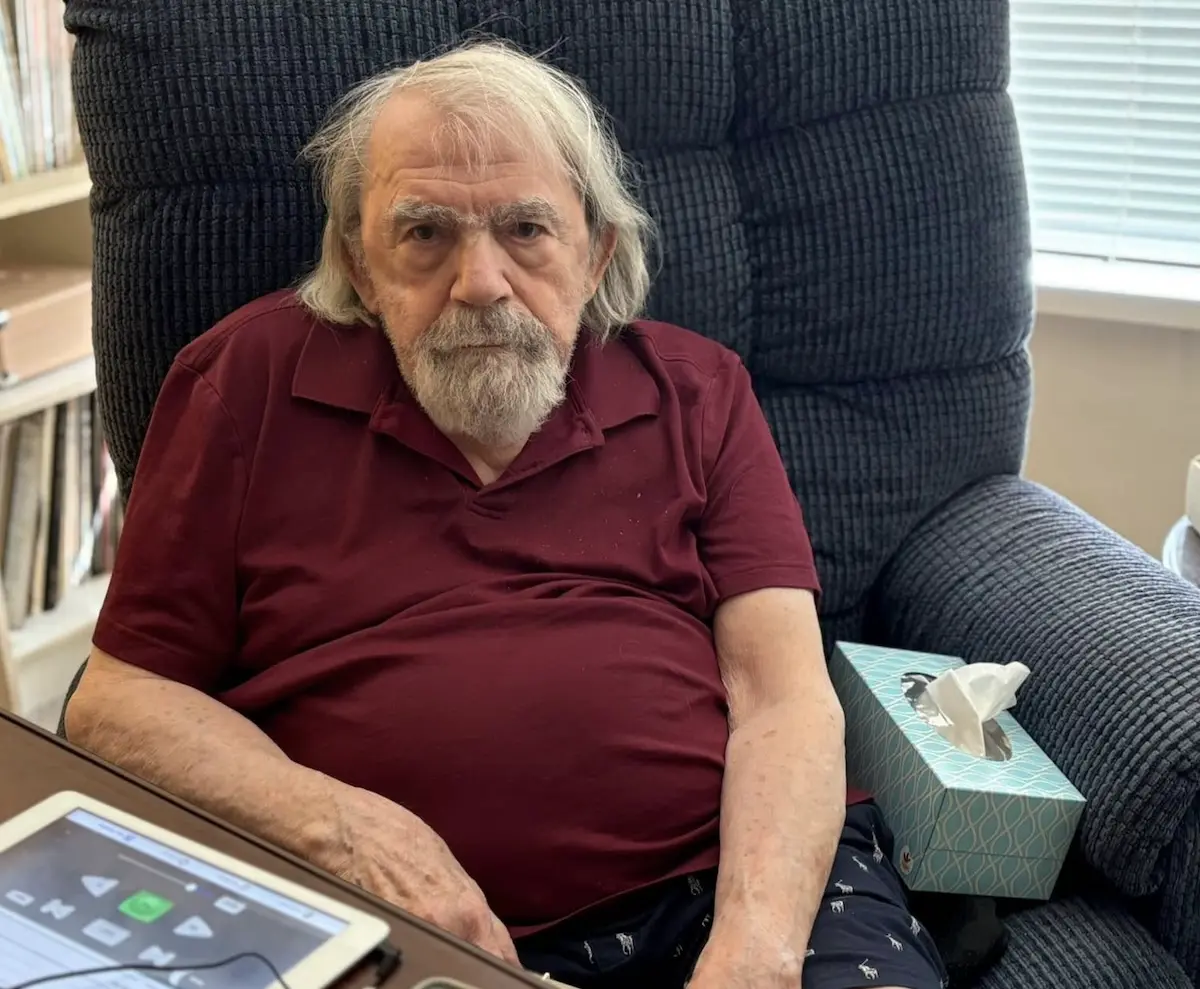
Tenor saxophonist Ted Brown must be the oldest surviving student of Lennie Tristano. He was born in Rochester, New York, in 1927, which makes him a contemporary of Lee Konitz. An uncle taught him clarinet and tenor saxophone. After performing in army bands and working in Hollywood (1945–8), he moved to New York to study with Tristano. During 1955-57 he worked with Tristano, Konitz and Marsh, and recorded as a leader. He recorded periodically with Konitz, and led a quintet with him in the 70s.
Here we hear him with a trio of fellow Tristano school musicians, all of whom perform at a superlative level in this rather particular modern jazz idiom. Jon Easton is a pianist I’ve not heard so much from, compared with other Tristano players. His long solo on I’m Getting Sentimental Over You in particular is a revelation – sinuous, complex, with unusual note-choices.
Brown himself is in remarkable form for someone of 86 at the time of these recordings, which were made at a number of venues in the New York and New Jersey areas during 2013. As expected, the programme consists of familiar standards, in this case without contrafacts. Everything Happens to Me is a plangent ballad. But a highlight for me is a wonderful interpretation of It’s You Or No One, in which Brown’s powers of invention are superlative; Easton’s contribution is also highly memorable here. The tenorist’s sound is close to that of Warne Marsh, but fully individual and distinctive. As Jimmy Halperin comments in his contribution to the sleeve note, it’s a beautifully smooth line. This is sophisticated, powerful and compelling music – and a highly recommended release.
Discography
After You’ve Gone; Gone With The Wind; I Can’t Believe That You’re In Love With Me; Just You, Just Me; It’s You Or No One; Everything Happens To Me; I’m Getting Sentimental Over You (57.00)
Brown (ts); Jon Easton (p); Don Messina (b); Bill Chattin (d). New York and New Jersey, 2013.
New Artists Records NA1079
Yusuf Mumin: Journey To The Ancient
Yusuf Mumin was born Joseph W. Phillips in 1944. Through Yusef Lateef, he was drawn to outside playing, and became a key figure in Cleveland’s 1960s free jazz scene. In 1968 he recorded the Black Unity Trio’s cult 1968 album Al-Fatihah; he was the blistering alto saxophone voice, with Abdul Wadud and Hasan Shahid. Journey To The Ancient is the result of further searches for material by Mumin in his private collection. It comes from at least two sessions, where Mumin performs both under his own name and, when multitracking bass parts, the pseudonym Dan Nuby. So the line-up here is Mumin on horns, and double-tracked on bass – plus drummer William Holmes, an associate of the late Sonny Simmons, who provides vivid support.
In an online interview, Mumin says “Yusef Lateef was like a big brother to me when I finally had the opportunity to meet him in Los Angeles.” He adds “Autophysiopsychic is a term coined by Brother Lateef, meaning music from one’s physical, mental, and spiritual self. It describes music that is not merely for entertainment but serves as a conduit for the artist’s entire being and a deeper connection to creation.” Lateef felt that the term “jazz” was a commercialised label. “The Black Unity Trio was playing cultural centres and colleges. What we were doing was based on art, but some people just couldn’t dig it. It was the revolutionary minded people who supported us.”
There’s something intensely moving about this enigmatic musician’s beautiful music, which has remained unheard for decades. Mumin isn’t sure when the material was recorded, but says it could be the 80s, 90s or early 00s. He’s featured on alto, tenor, flute and, for a short opening piece in memory of Abdul Wadud, cello and vocals. He explains that he found the effort of reclamation “mentally disturbing… because of the energy and sentiment put into the music’. He adds “I found the stored away music to be an ongoing process for understanding myself. Even today I’m working on music that I started long ago.”
The title track is the highlight for me, a haunting, mysterious evocation in a loose swing groove, with the leader on vibrato-laden tenor-saxophone. It’s certainly art, and I dig it. On A Distant Land is in free tempo, and Mumin switches to flute. Diaspora Impressionism is furious free jazz, and, says Mumin, paints “an impression of people being evicted from their homes and scattered about the cities with little to no means”. He explains how the title Journey To The Ancient reflects the ancient view of time as cyclical. A compelling archival release.
Discography
Bakumbadei; Journey to the Ancient; A Distant Land; Diaspora Impressionism (38.00)
Mumin (as, ts, f, b); William Holmes (d). USA, date unknown.
Wewantsounds WWSLP113
Erb, Mayas, Hemingway: Phyla Music
Phyla Musicdocuments an evening of profound sonic exploration at Basel’s Wurm Club. It features the trio of Christoph Erb on tenor and soprano saxophones, Magda Mayas on clavinet, and Gerry Hemingway on drums, voice and controlled feedback. They present two pieces: an extended performance of 46 minutes, and a brief two-minute piece. It’s the trio’s fourth recording, and as on previous offerings, Mayas sets aside piano in favour of clavinet. The album appears on Erb’s own Veto – or maybe that’s “veto” – label.
The extended performance is long and eventful. It opens with haunting multiphonics from Erb, who avoids conventional melody, focusing on breath and air, the key clicks contributing to an anxious atmosphere. The climaxes build on saxophone multiphonics, in some cases intensified by turkey-gobbling, and increasingly hectic percussion.
Mayas gets acidulous sounds from the clavinet, which she treats as a resonant, industrialised soundboard. In her hands, its raw, metallic timbre is similar to electric guitar. The five-octave electronic keyboard instrument was manufactured by Hohner from around 1960, and is similar to an electric piano. The sound resembles a clavichord, and is produced by small hammers, mounted under touch-sensitive keys. These hammers strike short strings directly beneath them; the string vibrations are converted into voltage variations and projected by a loudspeaker.
Mayas stresses timbral shading and the delicate sonic architecture rather than volume. In one particularly delicate passage, Mayas strums the clavinet accompanied by a plethora of watery sounds from Hemingway. The drummer has long moved away from timekeeping, treating the drum-kit as a source of diverse metallic and wooden sounds, enhanced by his deployment of feedback. Phyla Music is a remarkable achievement in the medium of soundart and free improv.
Discography
Phyla Music; Phyla Music (excerpt) (50.00)
Christoph Erb (ts, ss); Magda Mayas (clav); Gerry Hemingway (d, v, controlled feedback). Place and date unknown. Basel, Switzerland, 5 September 2024.
veto-records/exchange 023