South Hill Park again used the sun playing alto (?) as its badge for the Bracknell Jazz Festival. Their confidence was not misplaced and the weather smiled on the second edition of this worthy event. On balance the programme was less strong than last year but the atmosphere transcended purely musical considerations.
The only real disappointment was guitarist Ralph Towner, one of the top of the bill artists on his first appearance in Britain. His pedigree with Stan Getz, Gary Burton, Keith Jarrett and his own group Oregon is well known. Unfortunately his style reminds one too much of a guitar lesson. His facility is beyond doubt, yet it never sounds like a natural process, and the moments when he really swings are rare. The ideas he produces are at times quite beautiful but he reminds me of Yehudi Menuhin playing jazz.
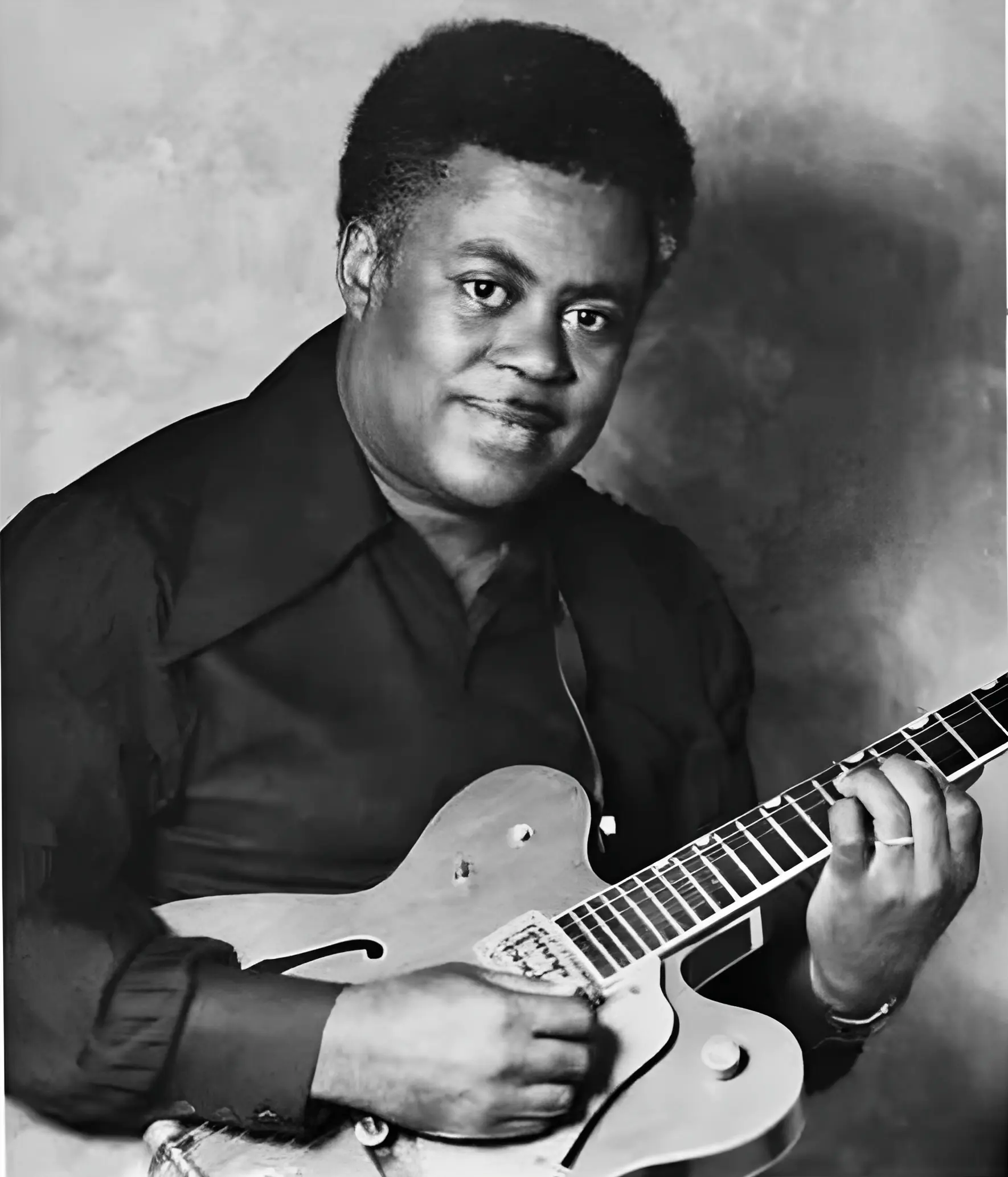
In total contrast, we had Eddie ‘Guitar’ Burns, a man whose technique can best be described as suspect. Nevertheless, he reminded us that he has employed men like Sonny Boy Williamson, by delivering a selection from the ‘Bluebird Song Book’. He played items like My Little Woman, Whiskey Headed Woman and his favourite Bottle Up And Go with a conviction and blues feeling that stamped him as a very fine blues singer indeed. His sense of timing alone was an object lesson to Towner.
The same could probably be said of Johnny Griffin, a tenor saxophonist who makes a virtue of overstatement. His set was powerful, inventive and full of jazz feeling. His timing is superb and one is constantly astonished at the way he can sustain his inventive flow at eighty bars to the minute and above.
Rock/jazz was unfortunately over-represented and it reflects my prejudice if I say that the stronger the jazz content the better I liked it. The Brian Smith/Terry Smith Quintet were the best. Terry has a reputation for inconsistency but he chose to have a good day at Bracknell. He gave a demonstration of thematic development on guitar that his namesake was sorely pushed to equal. Somehow he nearly managed and aided by Alan Jackson and his driving drumming, this was a good set. Turning Point were better than at Ronnie Scott’s and with Jeff Clyne’s powerful bass, Brian Miller’s articulate keyboard work and Dave Tidball well in control of his intonation they earned their enthusiastic audience response.
John Stevens’ Away did not impress and their music is something of a hybrid. The leader is one of the finest of all European drummers but, in this context, he seems unsure of his direction. At times he plays with unpredictable audacity and then seems to remember that this does not suit the group. He then lapses back into a metronomic rock groove. Red Brass really have no place at a jazz festival. Trombonist Paul Nieman and reed specialist Chris Biscoe are good jazzmen but the group’s policy is really built around their lady singers. What they do is very good and they maintain high musical standards. It is perhaps a pity that they did not stand and listen to Guitar Burns for half an hour.
The Southern Jazz Quintet were quite a surprise, playing a neat programme of hard-bop arrangements and featuring good Hank Mobleyish tenor from Bob Jenkins and delightfully incongruous cool alto from Johnny Watmough. Company were predictably excellent and Derek Bailey, Evan Parker and Lol Coxhill became locked into some superb modern counterpoint. Bailey soloed well and one soprano solo from Parker must have rated amongst the best individual contribution of the weekend. The Stan Tracey, Mike Osborne Duo also scored highly and the Lennie Best Quartet backed their talented guest Don Rendell with aplomb.
The best mainstream came from the London Jazz Big Band. Due to travelling from London to Bracknell via Durham, Bruce Turner was an absentee. It says much for the driving big band and Stan Grieg’s leadership from the piano stool that he was hardly missed. The band’s brass is particularly impressive with Colin Smith, Al Fairweather and Ray Crane on trumpets and John Picard, Mike Hogh and Tony Milliner on trombones and, although the rhythm section is not especially swinging, the group builds up quite a head of steam.
Humphrey Lyttelton continues to play well and at Bracknell he produced an interesting programme, full of new pieces and avoiding all but one of the pot boilers. He also had the difficult task of showcasing the unbelievable feet of Will Gaines, and this he did with charm and musical skill. Turner had arrived by the time this set began and he played creatively in his usual nonchalant manner.
Circumstances seemed against my hearing much of the traditional music. A flat tyre made me miss the Excelsior Brass Band and my involvement with some outstanding music in the marquee made me miss Sammy Rimington. I did, however, hear the San Jacinto Jazz Band who played two useful sets in the Cellar Bar. They produced good riff patterns behind the soloists and had a reasonably light rhythm section.
Considering the fact that we had several American musicians on the bill, it was gratifying that the two standouts of the festival came from players on the local scene. Saturday’s events in the Cellar Bar closed with the Mike Osborne Trio and it was a stunning performance. Louis Moholo’s drums came booming out of the corner of the room and Harry Miller played with his customary authority. Osborne, however, was a revelation. He played not only with swing and fire, but also with the kind of organisation and formal control that might make one suspect that he was reading. He was not, and this was a brilliant set.
Very different but equally successful was the Stan Tracey Octet. He was there to perform his Bracknell Connection, with his regular sidemen about him. The outcome was an unqualified triumph with superb solo work from Tracey, Malcolm Griffiths, Art Themen, Don Weller and Harry Beckett. The four part Connection was a very difficult chart but slip-ups were rare and the audience gave it a standing ovation. We can only hope that music of this quality will induce organiser John Cumming to get more ulcers arranging next year’s ‘bash’ as well as he had this one.