The Heath Brothers: Marchin’ On!
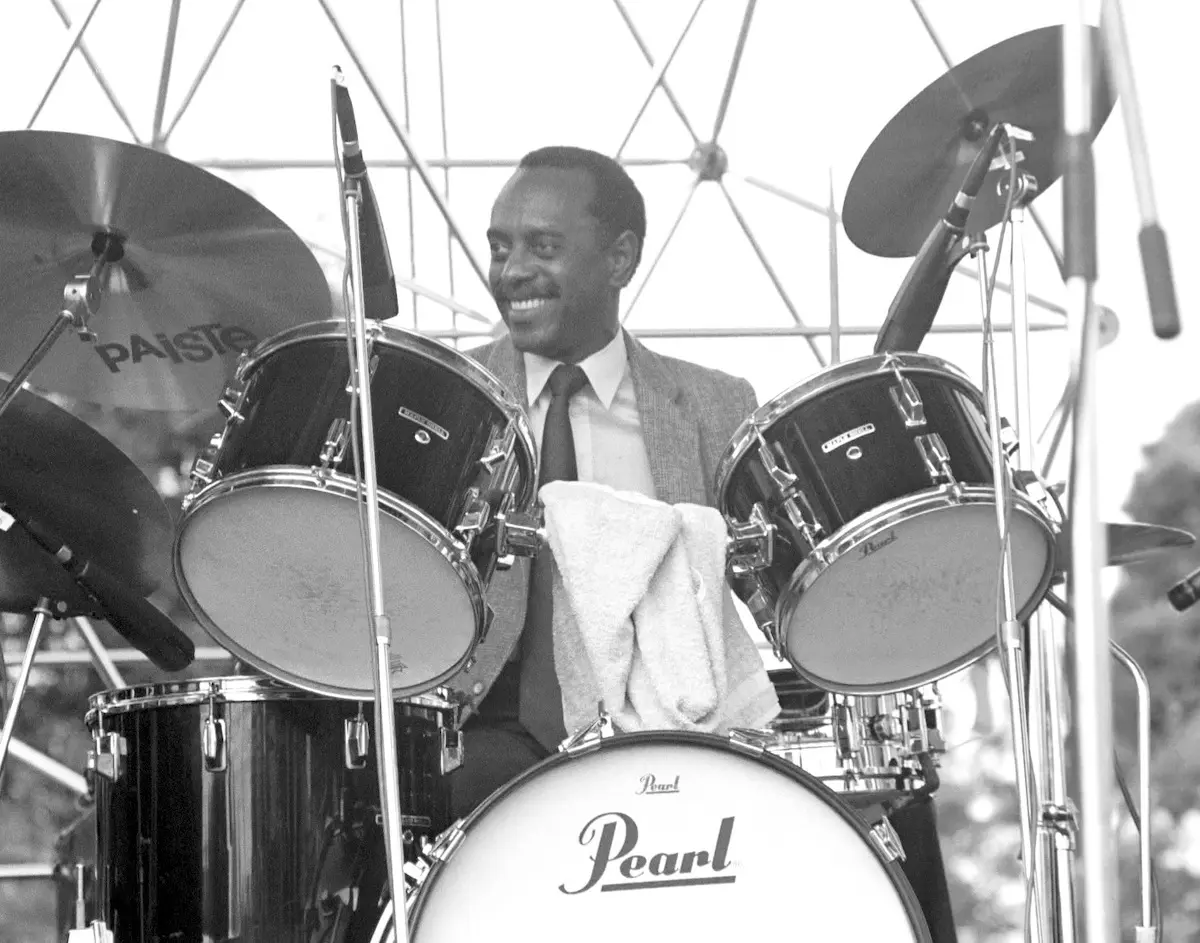
I’d guess that a clear majority of JJ readers have at least one recording by at least one of the Heath Brothers – bassist Percy worked with Charlie Parker, Thelonious Monk, Miles Davis, Stan Getz, Fats Navarro, Sonny Rollins and Dizzy Gillespie before joining the Milt Jackson Quartet, which would become the Modern Jazz Quartet (and with which he stayed until its final disbanding in 1997, whilst drummer Albert (aka “Tootie”) worked with John Coltrane, J.J. Johnson, Wes Montgomery, Art Farmer, Benny Golson, Cedar Walton, Bobby Timmons, Kenny Drew, Sonny Rollins, Dexter Gordon, Johnny Griffin, Herbie Hancock, Friedrich Gulda, Nina Simone and Yusef Lateef. Saxophonist Jimmy worked with Farmer, Gillespie and McGhee, and was a prolific composer of jazz standards as well as string quartets, suites and a symphony. Sadly, all three brothers have died during the last two decades, but what a legacy they have left.
In some critiques and publicity that I have seen, much has been made of the historical significance of this album for musical and political reasons – too much, methinks. There is the reference to the Watergate scandal (three years old at the time of this recording but still smelling bad) but for me the heart of the session is the four-part tribute to drummer Billy Higgins, which took up a whole side of the original LP issue.
For those who, like me, expect some driving hard-bop, the beautiful opening tracks might come as a bit of a shock. Warm Valley and Tafhadhali, showcasing flute and mbira and high-register work by Percy, have an appealing, pastoral, chamber-music vibe. The Watergate Blues, which again features Percy’s bass violin rather than the double bass, starts to toughen things up, with Jimmy on flute again and Percy still on bass violin. Jimmy’s tenor makes its entrance on Maimoun, a gently funky piece which, after a solo by Percy, transitions back to the pastoral mood. The Suite opens with Percy’s melancholy arco work, soon joined by liquid piano figures and the theme on flute. The second movement brings Cowell’s beguiling mbira to the fore in another bluesy-funky piece, whilst the third features an oriental-flavoured vamp recalling Yusef Lateef and John Coltrane, with Jimmy on soprano. For the climactic fourth movement Jimmy finally stretches out on tenor, variously embracing lyricism and agitation. I haven’t yet mentioned Albert’s contributions – as you would expect, they are excellent throughout, ranging from subtle to driving as required.
Discography
Warm Valley; Tafadhali; The Watergate Blues; Maimoun; Smilin’ Billy Suite (38.13)
Jimmy Heath (f, ss, ts); Stanley Cowell (p, mbira); Percy Heath (b, bass violin); Albert Heath (d). Talent Studio, Oslo, 22 October 1975.
Strata East SES 197 19766-25
Yamirah’s Solar Explorers: Andromeda Galaxy
This is the debut album from a young trio based in Berlin, although Gercke has released two albums herself – Neighbours and Pressure. She graduated from Berklee and has had wide experience with various projects, including Bad Ass Freaks with her late father, Lenjes Robinson. She is a significant presence on the indie scene and is dedicated to supporting emerging talent. Hladiy trained at the Bill Evans Piano Academy in Paris, and Rother studied in Leipzig and Porto and is involved with a number of bands in Berlin.
Gercke’s compositions (including two – Giraffe and Ode To Jergen – co-composed with her father) are varied and appealing, and often very atmospheric. They encompass elements of blues, gospel, rock, fusion, soul and even a reference to Coltrane’s A Love Supreme in So Tired Of All These Wars, but all these are woven into a coherent, convincing and well-crafted whole. There is an impressive degree of elegance to several of the tracks, but this never interferes with the emotional elements of the music or the inventiveness of the soloing. It’s an intriguing, characterful and striking first album and I look forward to hearing more from this trio.
Discography
Flying; Andromeda Gallery; Badji Giiraffe; So Tired Of These Wars; Nowhere Local; Ode To Jeurgen; French Toast; Disco Pluto (51.46)
Yamirah Gercke (elg); Sacha Hladiy (kyb); Ria Rother (d); Walter Gauchel (f, ss) on Giraffe; Su Terry (as) and Selome (v) on Disco Pluto. Probably Berlin, c. 2025.
Fat Banshee Records LC7469
Louis Armstrong And His All-Stars: Satch Plays Fats
One musician once nonsensically dismissed as a clown and an Uncle Tom pays tribute to another, also often dismissed as a clown and bastardiser of jazz. Both were, of course, great instrumentalists influential in the development of jazz – Waller a proponent of the Harlem-stride style and probably the first convincing jazz organist (he studied J. S. Bach and might have made a respectable classical musician except for the small matter of race) with Armstrong generally hailed as the first great improvising soloist of jazz. The Uncle Tom jibe was somewhat torpedoed when Armstrong refused to make a State Department sponsored trip to the USSR in 1957 when President Eisenhower failed to enforce the desegregation of a Little Rock high school, despite black students being met with racist violence when they tried to enter the school after a Supreme Court decision supporting the desegregation.
The album kicks off with a lively version of Honeysuckle Rose with Velma Middleton joining Louis, as she does on Squeeze Me, All That Meat And No Potatoes, I’ve Got A Feeling I’m Falling and the alternative take of Honeysuckle Rose, her rich tone and clear diction providing an excellent foil for Armstrong’s trademark elegant growl. In contrast, his trumpet sounds almost operatic and its bright incisive tone is especially showcased in some epic episodes where he and Deems strike sparks off each other, building the excitement towards a triumphant conclusion.
Soon after these recordings the All-Stars would find a wider audience beyond the jazz community when they appeared in the film High Society with Arvell Shaw replacing Bigard on clarinet. Waller did not live to hear this tribute (he died in December 1943) but I guess he would have loved it, not least for Armstrong’s witty musical quips. I certainly do, and played the LP more often than strictly necessary for review purposes. Everyone is on splendid form and the sound is excellent. Waller’s spirit is well-captured throughout by the All-Stars. What’s not to like?
Credit, too, for labelling the bonus tracks (versions of Ain’t Misbehavin’, Blue Turning Grey Over You and Honeysuckle Rose) as alternative takes rather than the common and incorrect practice of calling them alternate takes! There is nothing second-rate about any of these versions, which enrich the album.
This is a limited edition release on 180-gram vinyl, with the cover incorporating excerpts from the illuminating original sleeve notes by producer George Avakian.
Discography
Honeysuckle Rose; Blue Turning Grey Over You; I’m Crazy About My Baby; Squeeze Me; Keepin’ Out Of Mischief Now; Ain’t Misbehavin’ (alt); All That Meat And No Potatoes; I’ve Got The Feeling I’m Falling; What Did I Do To Be So Black And Blue; Ain’t Misbehavin’; Blue Turning Grey Over You (alt); Honeysuckle Rose (alt) (50.51)
Armstrong (t, v); Trummy Young (tb); Barney Bigard (cl); Billy Kyle (p); Arvell Shaw (b); Barrett Deems (d); Velma Middleton (v). New York, 26-27 April and 3 May 1955.
WaxTime 771914