
Charles Lloyd: Figure In Blue
Charles Lloyd’s move from ECM to Blue Note in 2013 – this is his 12th album for the label – has been distinguished by his skilled and adept adoption of the trio as his favoured format. Three different trios made their appearance in 2022, and are now followed by a new line-up on this double set featuring his longstanding partner the pianist Jason Moran and a newcomer, the Chicago-born blues and jazz guitarist Marvin Sewell. The musical terrain travelled is wide and expansive, from beautiful ballads to raw Delta blues, tributes to both Duke Ellington and tabla player Zakir Hussain scattered along the way.
The set opens with the traditional hymn, Abide With Me, taken at a reverential pace, all the better to enjoy Lloyd’s poignant delivery, and barely picks up pace for some time. Lloyd obviously commands the most attention for his breathy, sometimes hesitant but always warm tone, with Moran supportive and often surprisingly romantic in the background and Sewell a sparse and delicate accompanying voice. So far, so undemonstrative. Then, in the lengthy Ruminations, which stands out for its complex melodic interplay, the weaving guitar line creates a tonal uncertainty that becomes increasingly dominant.
The entire album then takes a sharp left-field swerve in Chulahoma, where Sewell shifts from quiet jazz performer to electrified Delta blues guitarist. Lloyd matches Sewell with an impassioned solo, while on The Ghost Of Lady Day, Sewell plays an atmospheric electric solo that wonderfully de-centres the piece, again matched by an impassioned Lloyd. More Delta blues on Blues For Langston, with Lloyd in playful response on alto flute, before a dreamy Heaven, an evocative Black Butterfly, and a shimmering Hymn To The Mother restore normal service. An oh-so-slow Somewhere brings proceedings to a graceful close.
A double album is allowed to sprawl, but such a sprawl can dissipate focus, which I would suggest has happened here. At his best, Lloyd is still commanding, and this new trio serves him well indeed. But his beautiful personal voice risks being drowned out by a noisy Delta.
Discography
CD1: Abide With Me; Hina Hanta, The Way Of Peace; Figure In Blue, Memories Of Duke; Desolation Sound; Ruminations; Chulahoma; Song My Lady Sings (47.59)
CD2: The Ghost Of Lady Day; Blues For Langston; Heaven; Black Butterfly; Ancient Rain; Hymn To The Mother, For Zakir; Somewhere (49.57)
Lloyd (ts, af, taro); Jason Moran (p, shakers); Marvin Sewell (elg). Santa Barbara, California, 2024?
Blue Note 00602478449192
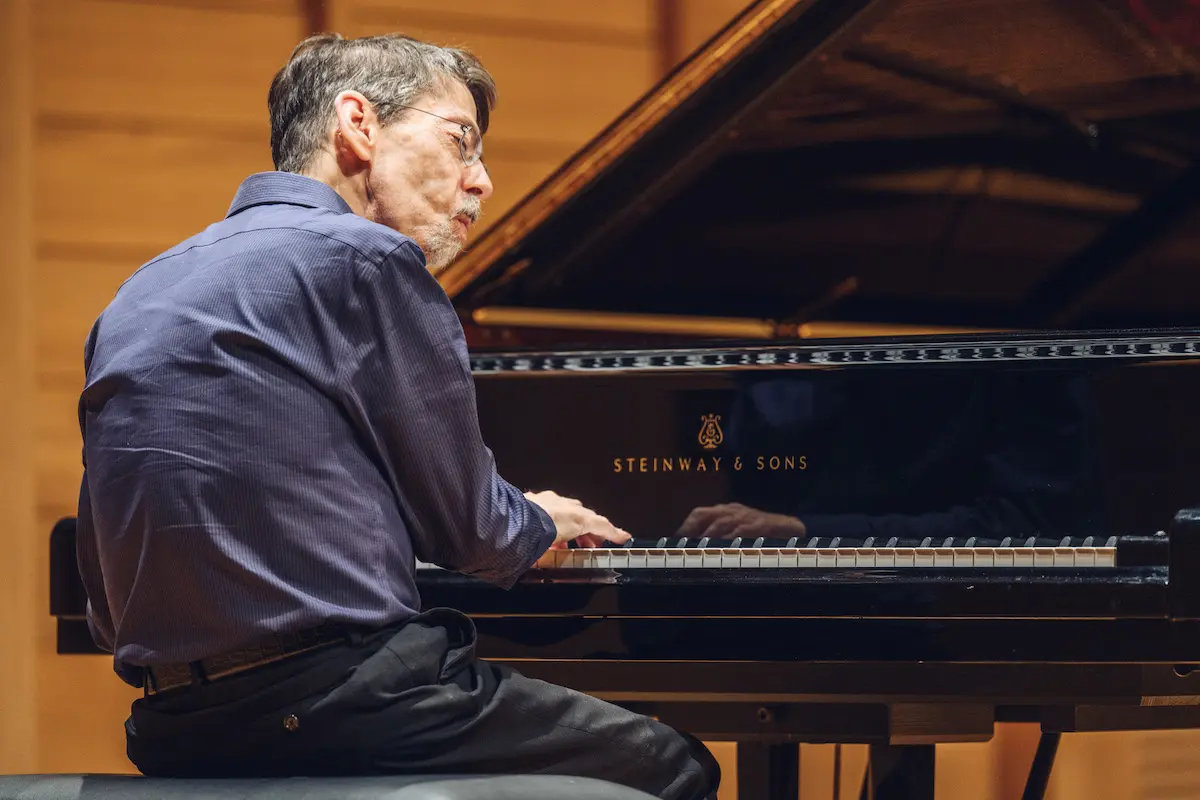
Fred Hersch Trio: Dancing In The Dark
First released in 1993, and quickly rewarded with a Grammy nomination, Dancing In The Dark is a wondrous exploration of the Great American Songbook. Fred Hersch has always had a close affinity with the songbook and here one of his best trios displays a near-telepathic interplay as they offer up fresh perspectives on a range of popular evergreens. For All We Know is taken at a leisurely pace, keeping the questioning wonder of the title intact; I Fall In Love Too Easily is suitably wistful in mood; If I Should Lose You almost loses itself in Hersch’s fragmented solo; the title track is an infectious delight; and Out Of Nowhere is a daring sonic reworking. And so it goes on, one stylish performance after another.
The melodies might be familiar, so too the harmonies, but this group’s improvisations transform them into new and exciting adventures. Hersch seems to revel in these songs, both playful and thoughtful in his playing, while bassist Drew Gress – always a delight to listen to – is independent yet dependable, drummer Tom Rainey a supportive voice that keeps everything nicely on track. It’s great to have this fine set back again.
Discography
So In Love; For All We Know; I Fall In Love Too Easily; If I Should Lose You; Dancing In The Dark; Out Of Nowhere; Secret Love; Wild Is The Wind; All The Things You Are; My Funny Valentine; Bye Bye Blackbird (68.20)
Hersch (p); Drew Gress (b); Tom Rainey (d). December 1992.
Chesky Records EVSA3072S
Satoko Fujii Quartet: Burning Wick
Does Japanese pianist Satoko Fujii never stop working? To date she’s recorded well over 100 albums and I’ve already reviewed four new sets this year, all featuring different line-ups and formats. And now here comes a fifth, this time a revival of her avant jazz-rock quartet delivering a set of seven powerful originals. The quartet was founded in 2001 and recorded five albums before calling a halt in 2007, but here they are again as young and playful as ever despite their average age of 68!
Fujii’s compositions were recorded as they stood: in the past, Fujii would change the arrangements the day before recording to keep the band fresh and alert. Every permutation of musicians – and the stop–start, quiet–raucous music they play (and sing) – is explored during the course of the set, although never at the expense of group cohesion, notably on Three Days Later, where each musician gets an unaccompanied solo, then pairs off in duets before a quartet finale. The ethereal piano and drum introduction to the opening Solar Orbit gradually builds up into a tumultuous clatter dominated by Tamara’s eloquent trumpet, while Takeharu’s bass solo on Rain In The Small Wee Hours ventures into abstraction despite the relaxed jazz feel of the piece, the contrasting voices of the quartet coming nicely to the fore. The summoning up of spirits over the headbanging groove of the concluding and climactic title track epitomises this fine set perfectly.
Discography
Solar Orbit; Rain In The Small Wee Hours; Walking Through The Border Town; Neverending Summer; Mountain Gnome; Three Days Later; Burning Wick (71.25)
Fujii (p, v); Natsuki Tamara (t); Hayakawa Takeharu (b, v); Tatsuya Yoshida (d, v). Tokyo, 2 September 2025.
Libra 204-082