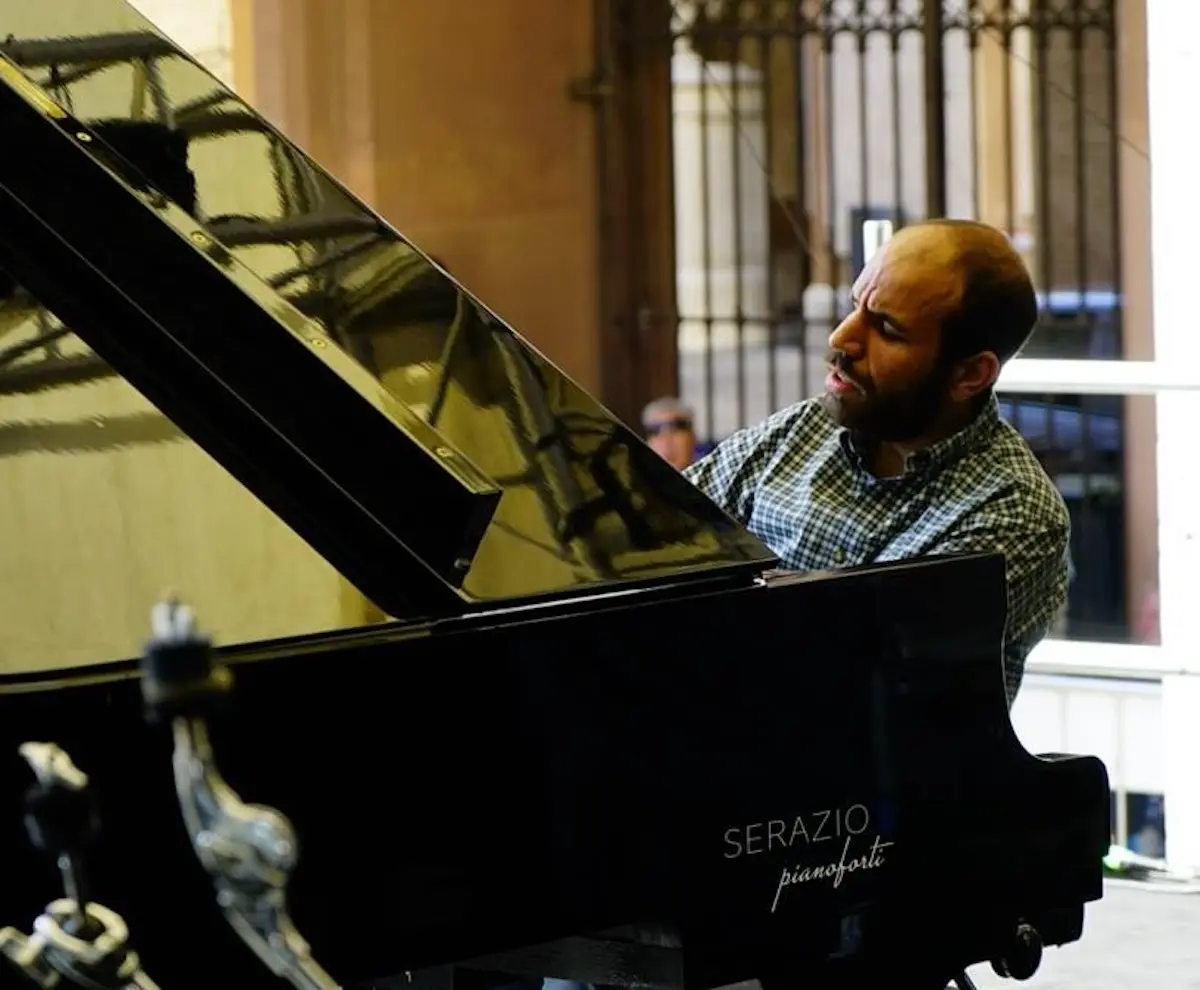
Yakir Arbib & Conti Bilong: Afro Baroque
As in my last batch of selections, eclecticism is a keyword with these albums. Afro Baroque is one of those happenstance sessions, a consequence of a chance meeting between the award-winning pianist Arbib and percussionist and vocalist Bilong in a rehearsal room in Paris when they started jamming on Tizol and Ellington’s Caravan. This worked out so well that they went on to make this album.
Israeli-born Arbib and Cameroonian Bilong have a rich heritage of influences from central Africa and the Middle East, and Arbib in particular stirs in European classical influences too, all held together by their joint jazz sensibility. The various strands dance around each other in an elegant yet rhythmically vibrant fashion.
At first listening the album struck me as just a pleasant, well-crafted enterprise, and there’s nothing wrong with that, but further hearings revealed deeper dimensions, as good music should. On Mout Binam Nou we are asked (in the Basa language) “Why do we humans have to create so much enmity, jealousy and strife between us just because of differences in provenance, culture and colour of the skin?” Good question. One can only hope that such cross-cultural projects make some small contribution to a solution.
Discography
Ngola and Ekang; Wana So; All Blues; Mout Binam Nou; Afro Baroque; Muna Wandja; Stuck In Dagestan; Barbès – Rochechouart (38.13)
Arbib (p, kyb); Bilong (d, pc, v) Paris, unknown date.
Elsden Music EM 14
Sangoma: Malombo
Back in the 70s I was a regular customer at gigs by South African expats at the 100 Club in Oxford Street and occasionally at other London venues. These sessions, mainly by the Chris McGregor Group and other bands led by various of its members, including Mongezi Feza, Johnny Dyani, Louis Moholo and Dudu Pukwana, ignited my on-going love of South African music, from kwela to kwaito via township jazz and jive. Later I discovered Julian Bahula’s bands Jabula and Jabula Spear Incorporating Pukwana’s band Spear.
Bahula (who died in October 2023) was a founder member of Malombo. He had moved on by the time this LP was recorded but he had played an important role in setting its course. Sangoma, which means “spiritual healer”, was also shaped by the band’s experiences of three years touring in the USA, including an appearance at Newport alongside various American musical giants, leading Philip Tabane to boast “I don’t play like Miles, Miles plays like me.”
I’d guess that some of our readers might feel that the jazz is somewhat swamped by the African elements. That may be so, but for me it pressed some of the same buttons as does jazz. I liked it, and it prompted this old fart to try a few steps and throw a few shapes. Along with compelling yet graceful rhythms (often powered as strongly by the bass as by the drums) there are genial, catchy melodies, with Koloti’s flute on Happy Song recalling the penny-whistle of kwela.
Discography
Songoma; Maskanta; Congo; Keya Bereka; Happy Song; Setiekehleke; Venie; Mae Kutio; Ngezi Inyawo; Dumela (36.35)
Alpheus Koloti (f); Philip Tabane (g, v); Amos Lebombo (b); Franz Monareng, Raphudu Phale (d). Johannesburg, 1978.
Matsuli Music MM131