David White Trio: While You Were Sleeping
Guitarist and composer David G. White was raised in Chile, New York City and Spain and following several years living in Boston is now a resident of Oakland, California. White’s recording history spans three decades and this is his eighth album to date. His previous release was a quartet session with Big Neighborhood entitled 11:11 (Origin Records, 2006). While You Were Sleeping is the result of a four-hour session one Sunday afternoon, with no overdubs and only a couple of re-takes the next day. The music is an electro-acoustic mélange of post-bop, odd meters and some exotic chordal arrangements intermixed with elements of free improvisation.
Close The Door’s head and outro is framed by White’s chord-rich guitar enhanced by the deployment of a harmoniser pedal, adding harmonic texture. This emulates – to some extent – the sound of a guitar synthesiser. White uses two different settings on the harmoniser, one a 5th above the played (and written) note and another a 5th below for a darker, murkier sound as heard on The Sun Comes Out On Wednesday. The lively Still Swinging At 100 is also imbued with this pseudo-synth sound, adding rich tonal colour. There’s considerable depth and sensitivity on the ballad Each Loss Is Particular, which evinces a passing reminiscence to the timeless Laura.
Discography
While You Were Sleeping; Close The Door; What The Futurist Did Not See; The Only Journey Is Inward; The Novitiate; Each Loss Is Particular; Still Swinging At 100; Dominant Logic; The Sun Comes Out On Wednesday (58.32)
White (elg); John Lockwood (b); Mark Walker (d). Westwood, Massachusetts, 1-2 September, 2024.
Independent
Fourplay: Elixir
Whilst Elixir might be regarded as smooth jazz, this description should not be interpreted pejoratively. For a start there’s Lee Ritenour’s lissom guitar work, most noticeable on the non-vocal numbers, which are in the majority. The album itself, Fourplay’s third studio album, was hugely popular, achieving number one on the Billboard contemporary jazz chart and remaining in the chart for 90 weeks, eventually going gold by selling over 500,000 units.
Fourplay were a supergroup of sorts founded in 1990 by keyboardist Bob James, a Quincy Jones discovery and already an established producer, arranger and session musician with Creed Taylor’s CTI label. Harvey Mason came to prominence as the first drummer with Herbie Hancock’s Headhunters and was heard on their famous eponymous debut album (CBS, 1973). By the mid-1970s, Ritenour was already a force to be reckoned with, having released three solo albums in that decade. The quartet was completed by virtuoso bass guitarist Nathan East, later to become an in-demand player joining rock outfits such as Toto and Eric Clapton’s touring band.
On the opening title track Ritenour’s fluid guitar work is highly impressive. The laid-back Dream Come True is characterised by Mason’s snappy rim shots, bestowing a hypnotically relaxed feel. The funky Play Lady Play offers some buoyant guitar lines for Ritenour whereas Why Can’t It Wait Till Morning? is an innocuous if anodyne guest vocal spot for Phil Collins. The other vocal item is a torch song, The Closer I Get To You, featuring Patti Austin and Peabo Bryson. The insistently catchy Magic Carpet Ride features some lithe octave work from Ritenour and nimble keyboard playing from James. Whisper In My Ear seemingly quotes a few notes from Stormy Weather and the ballad closer In My Corner demonstrates how well this quartet gels. It’s not hard to see why this album, replete with pop-laden jazz, was so popular but importantly it contains much to admire.
Discography
Elixir; Dream Come True; Play Lady Play; Why Can’t It Wait Till Morning (feat. Phil Collins); Magic Carpet Ride; Whisper In My Ear; Fannie Mae; The Closer I Get To You (feat. Patti Austin & Peabo Bryson); East 2 West; Licorice; In My Corner (63.59)
Bob James (kyb, syn); Lee Ritenour (elg); Nathan East (elb); Harvey Mason (d, pc). Various locations and unspecified dates.
Evosound EVSA507
Michael Garrick: Late Autumn Sunshine
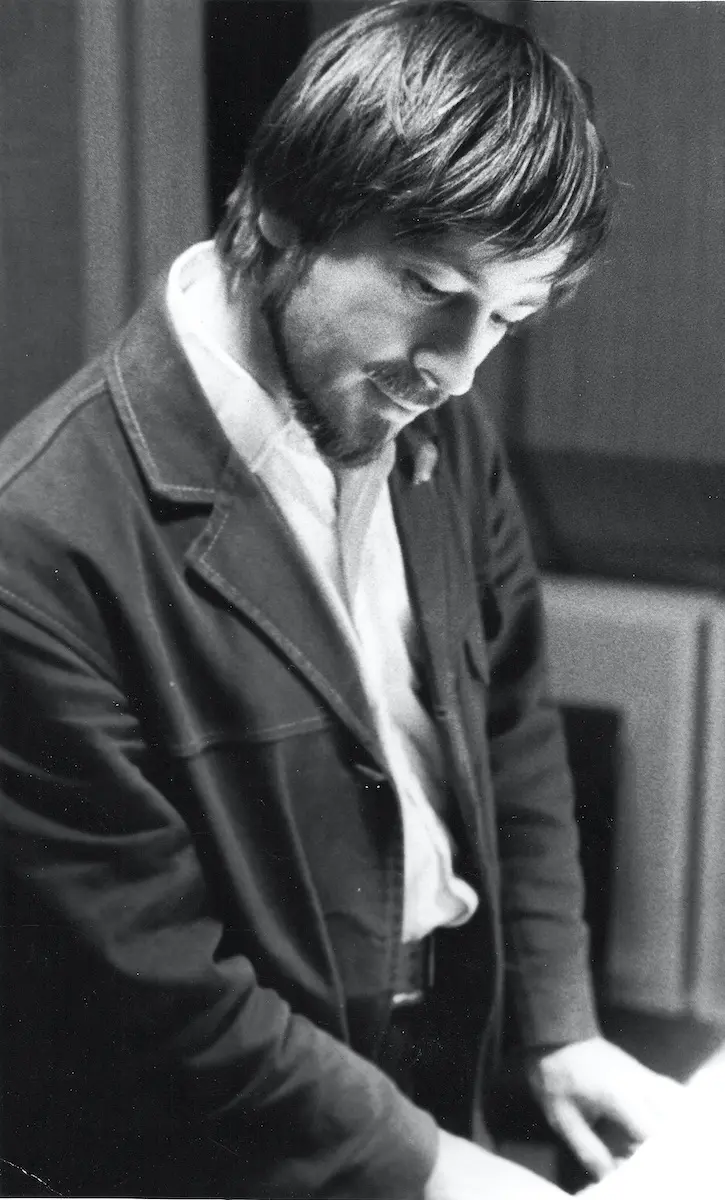
Jon Griffiths’ British jazz label My Only Desire has done it again, exhuming a treasure trove of two BBC radio shows gleaned from Radio 1’s Sounds Of Jazz featuring groups led by the pianist and composer Michael Garrick. These recordings are released on limited issue double vinyl plus CD and digital download with accompanying sleeve notes by Daniel Spicer.
Garrick was a key member of the much lauded Don Rendell-Ian Carr Quintet, playing on four of the RCQs five albums recorded for Denis Preston’s Lansdowne series. Garrick was responsible for penning some of the quintet’s most memorable tracks, such as Dusk Fire, Black Marigolds and Cold Mountain. But Garrick was already a rising star before teaming up with the RCQ. In the early 1960s he co-founded with Jeremy Robson the highly praised Poetry And Jazz In Concert series, featuring some of Britain’s best-known poets and jazz musicians and marking the start of Garrick’s decade long association with the Argo label. His album Promises (Argo, 1965) also featured Ian Carr and Dave Green from the RCQ. Given his considerable and significant oeuvre, it is odd that Garrick never quite achieved the same level of fame as such contemporaries as Mike Westbrook, Michael Gibbs and Ian Carr. He did belatedly receive recognition in the form of an MBE in 2010 but sadly he died a year later, aged 78.
Late Autumn Sunshine is neatly divided into two halves, aired five years apart and each represented by four tracks. Both sessions feature trumpeter Henry Lowther and vocalist Norma Winstone – regular contributors to Garrick’s ensembles as were saxophonist Art Themen, bassist Dave Green and drummer Trevor Tomkins. This cohort was also the lineup for Garrick’s Home Stretch Blues (Argo, 1972) albeit without saxophonist Don Rendell; the same personnel appeared on Troppo (Argo, 1974).
The opener, Sons Of Art, dedicated to Themen’s two boys, sees the saxophonist offering a typically fiery tenor solo. The elegant Lime Blossom is a glorious vocal spot for Winstone, who co-wrote the number with Garrick. Both tunes appeared on Troppo, recorded in October 1973, a month prior to this broadcast. On Lime Blossom and as on the studio version, Garrick is heard playing electric piano, not hitherto his instrument of choice. River Running only latterly appeared in Garrick’s studio releases, namely on the big-band album Meteors Close At Hand (Jazz Academy, 1994) so the two versions are noticeably different. The lively Galilee first appeared on vocalist Nette Robinson’s Time Remembered (Jazz Academy, 2010), recorded with Garrick’s trio, but here Winstone makes it her own. From the second set, the elegiac Songs Of The Ainur was new to the Garrick canon and only later appeared on Garrick’s Tone Poems (Jazz Academy, 2011). Return Of An Angel originally featured on October Woman (Argo, 1965) but was recorded then with just a trio. Two numbers, Robin’s Rest – adorned by Winstone’s trademark wordless vocals – and the strident title track, have never appeared before so their inclusion makes this release even more essential.
Discography
(1) Sons Of Art; River Running; Lime Blossom; Galilee (2) Robin’s Rest; Songs Of The Ainur; Return Of An Angel; Late Autumn Sunshine (57.27)
(1) Garrick (p, elp); Norma Winstone (v); Henry Lowther (t, flh); Art Themen (ts); Dave Green (b); Trevor Tomkins (d). London, 25 November 1973.
(2) as (1) except omit: Themen, Green, Tomkins and add: David Horler (tb); Tony Coe (ts, ss, cl); Alan Wakeman (ts, ss); Jeff Clyne (b); John Marshall (d). London, 3 December 1978.
My Only Desire Records MOD008CD