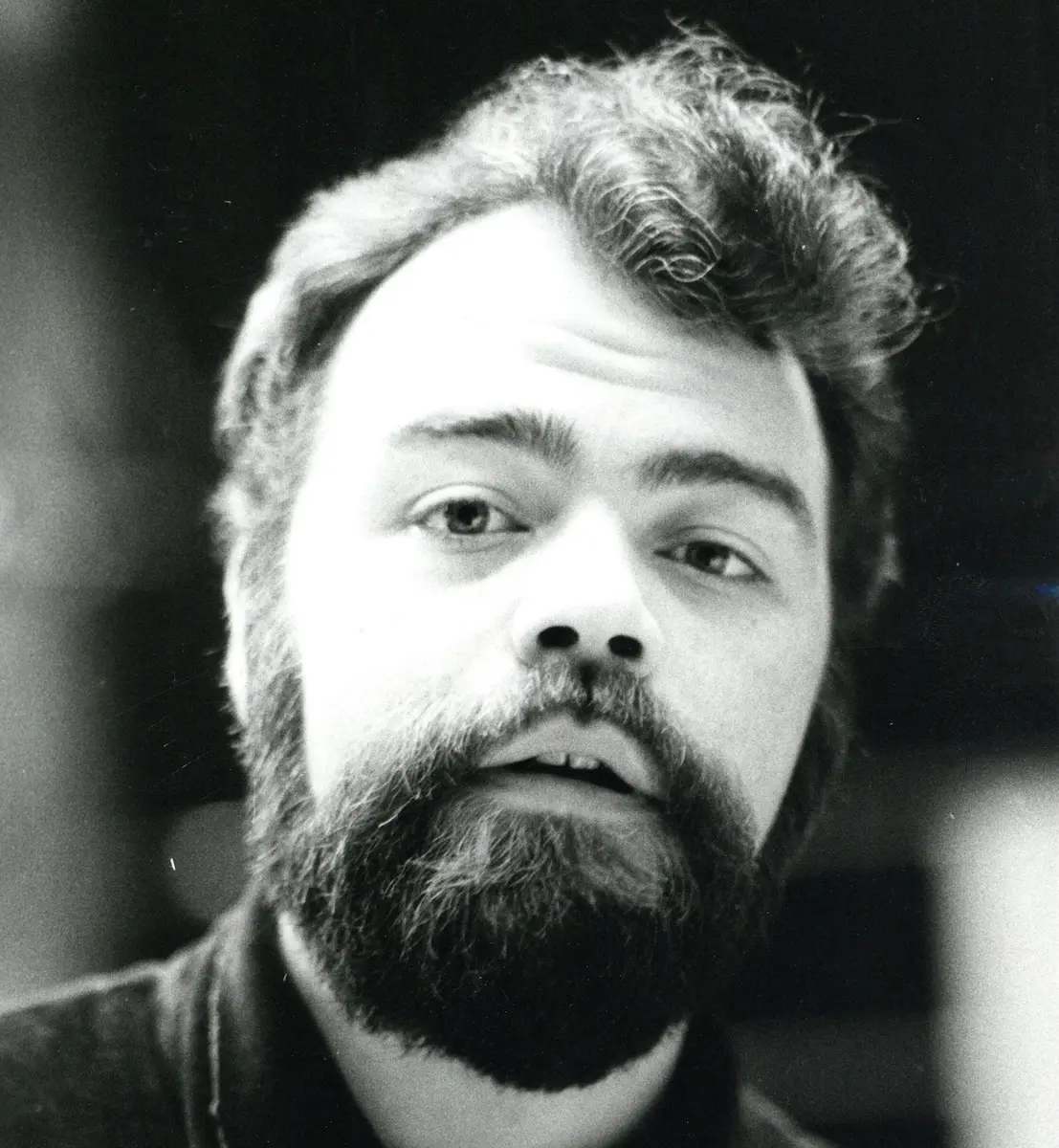
Mick Goodrick: In Pas(s)ing
First and foremost the late guitarist Mick Goodrick regarded himself as an educator and teacher rather than a musician in need of a gig. He only recorded half a dozen albums under his own name, although his outings as a sideman amounted to considerably more. Prior to his debut recording as a leader, In Pas(s)ing, he had been a regular member of the Gary Burton group and he can be heard on five albums from that unit, including four on ECM.
For this 1978 date, he had the considerable talents of three heavyweights to complement his naturally laid-back style. Surman moves comfortably around these five original compositions, delivering some purposeful moments on his three chosen horns. Gomez is suitably mobile and DeJohnette impeccable throughout.
What the guitarist brings to the session is a set of varied compositions, despite his natural aversion to writing tunes, that bring to life his naturally lyrical style, his statements never exaggerated or superfluous, never wasting a note, always worthy of close attention from the listener – his ability to interact with his fellow group-members is constantly apparent. Even the title track, which has been described as free-improv, shows none of the excesses of the genre, having a single chord at its centre, upon which the four weave their entirely appropriate patterns, never showing a suggestion of discord.
Many of Goodrick’s students, including John Scofield and Bill Frisell, will never forget the part he played in their development. The jazz public should be aware of his contribution to academia and to many musicians’ progress towards a prominence he seemed to shun.
Discography
Feebles, Fables and Ferns; In The Tavern Of Ruin; Summer Band Camp; Pedalpusher; In Passing (42.38)
Goodrick (g); John Surman (ss, bar, bcl); Eddie Gomez (b); Jack DeJohnette (d). Oslo, 1978.
ECM 1139
Orchestre National De Jazz: With Carla
The Orchestre National De Jazz came to fruition in 1986 at the behest of the French Ministry of Culture and has long been recognised as a mainstay of the European scene. Its personnel changes have led to opportunities for many musicians to gain considerable experience within the confines of a stable big-band environment, including British musicians Chris Biscoe and Harry Beckett. The unit is no stranger to embracing the works of respected figures; Duke Ellington, Robert Wyatt and Astor Piazzolla have featured in their far-ranging repertoire.
Eight of the compositions here are Carla Bley originals which are built upon in the arrangements of Remi Sciuto – for these are not slavish reproductions of the originals but described as “extensions”, carrying the spirit/purposes intended by the late composer and pianist. These are added to by three of Sciuto’s own pieces and Bley’s own arrangement of Carl Ruggles’ Exaltations.
The string section is immediately introduced on Musique Mecanique, which is presented here as a mélange of chamber music, Spanish-tinged melody and Helary’s excellent flute solo. Preludevi is indeed a prelude for Utviklingssang, having a prominent cello, surging ensemble work and a far-ranging alto solo from Sciuto. He emerges again on musical saw for Ups And Downs, which disappears as the piece takes in a couple of fine solos from trumpeter Quentin Ghomari and tenor player Hugues Mayot.
Generally the music unfolds in a manner similar to that of Bley’s originals. These new arrangements tend to avoid repetition in both rhythmic patterns and individual passages. Tempos change frequently, emerging passages often swiftly dispensed with only to be followed by another sequence which soon dissipates. Only the aforementioned Ups And Downs uses conventional swing more or less throughout.
In India has the strings opening what is a relatively sombre piece. Wrong Key Donkey is a pacey option carrying impressive solos from Meteier’s tuba and Simon’s trombone. The stately Hypotheses, one of Sciuto’s own, is a slow, gloriously rich ensemble-celebration. The hymn-like Hypotheses is opened by Hammond organ, leading us towards Religious Experience and Major, both including church music references. To conclude, End Of Vienna comes over as composition with classical roots, driven by cello, flute and piano.
This is a fitting tribute to Carla Bley’s legacy, strong in the areas she became famous for – the most important being creativity.
Discography
CD1: Musique Mecanique; Preludvi; Utviklingssang; Ups And Downs; …And Ups Again; In India (47.27)
CD2: Wrong Key Donkey; Hypotheses…; Exaltation; Religious Experience; Major; End Of Vienna (37.35)
Sylvaine Helary (f); Remi Sciuto (as, bar, cl, musical saw); Lea Ciechelski (as, f); Hugues Mayot (ts, bcl); Sylvain Bardiau (t); Quentin Ghomari (t, flh); Jessica Simon (tb); Mathilde Fevre (frh); Fanny Meteier (tu); Anne Le Pape (vn); Laure Frenz (vn); Guillaume Roy (vla); Juliette Serrad (clo, v); Antonin Rayon (p, org); Ilya Amar (vib, pc); Sebastien Boisseau (b); Mathias Allamane (b) Franck Vaillant (d). France, 2025.
ONJ Records 534444
Sun Ra: Sound Sun Pleasure!!
On this 180-gram vinyl release we get two Sun Ra albums, the first the 1959 Sound Sun Pleasure!!, the second We Travel The Space Ways, a collection of music mainly from 1960 supported by tracks from other years not specifically dated.
The six tunes from the late 50s which constitute the first side find the Arkestra addressing standards and a couple of compositions from trumpeter Hobart Dobson, who is featured on both – these are conventionally arranged and sit within the swing tradition. This was a 10-piece band, top heavy with saxophonists of some standing. Vocalist Hattie Randolph adds her voice to ’Round Midnight and Back In Your Own Backyard.
Again, We Travel The Space Ways has a degree of what one might refer to as Herman Blount music rather than Sun Ra, including solos of great clarity. Interplanetary Music and the title track are the exceptions: both tracks have the ensemble intoning their titles, with the latter being taken out by the sound of a mechanical robot. Ra sticks mainly to acoustic piano, which often sounds very much like a pub piano needing some tuning.
Both of these albums are highly thought of within the Sun Ra discography and mainly illustrate how so much of his music of the time was of an accessible nature.
Discography
’Round Midnight; You Never Told Me That You Care; The Hour Of Parting; Back In Your Own Backyard; Enlightenment; I Could Have Danced All Night (24.38 – Interplanetary Music; Eve; We Travel the Space Ways; Tapestry From An Asteroid; Space Loneliness; New Horizons; Velvet (23.47)
Sun Ra (p, cel); Marshall Allen (as, f); John Gilmore (ts, cl) James Spaulding (as, f); Pat Patrick (as, bar, f) and others. Chicago 1956-61.
Pan Am Records 9152340