Tomas Janzon: Jazz Diary
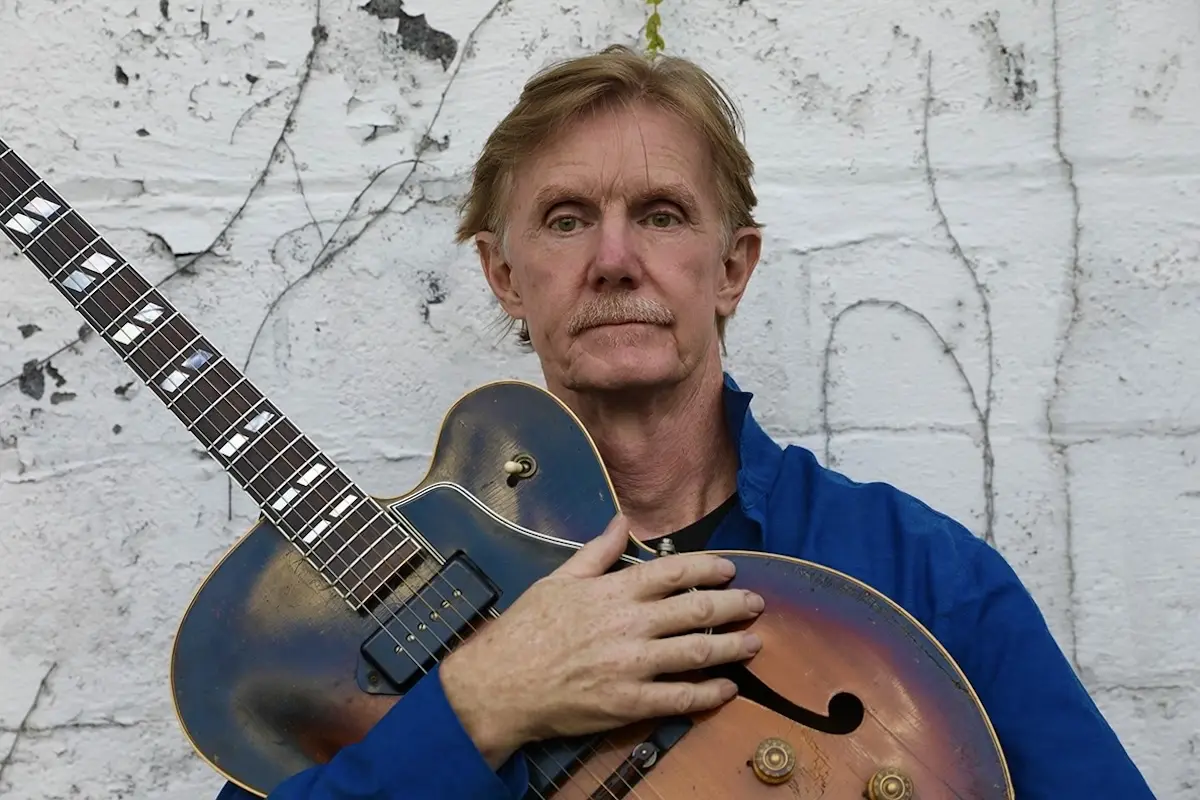
The concept behind the title of guitarist Tomas Janzon’s album is slightly misleading in that the ideas for the tunes heard here were gleaned from inspiration that came to him in the wee small hours where he hastily scribbled down one- or two-bar ideas. So more of a jazz aide-memoire than diary but even so, this daily ritual works for him. These fragments of notes he records are then used to generate vehicles for improvisation and sometimes transform into melodic statements.
Born in Stockholm, Janzon began playing the recorder aged seven, then at eight he learned the cello and by 12 was performing with the chamber orchestra Collegium Musicum. He moved to Los Angeles to study jazz guitar with Joe Diorio at the Guitar Institute Of Technology (GIT) which later became part of the Musicians Institute in Los Angeles. His academic prowess culminated in a master’s degree with honours in classical guitar from the University Of Southern California’s Thornton School Of Music. His training in both jazz and classical music has afforded Janzon the ability to fuse these genres together within the context of improvisation.
Janzon’s harmony and bold chordal patterns are interwoven with memorable heads enhanced by a sympathetic rhythm section in which drum duties move halfway through the album from Tony Austin to Chuck McPherson. Janzon’s bass player, the excellent Nedra Wheeler, accompanied him on his debut album X-Changes (Changes Music, 1999) on which Billy Higgins played drums. The haunting melody of the opener Spirit Secret or the languorous To Summer, the only non-original and based on a Swedish folk melody, encapsulate Janzon’s lissom playing which at times is reminiscent of Bill Frisell. The closer, Six On Five (a nod to Wes Montgomery?) where Janzon plays classical guitar, is a delicate duet with Wheeler recorded live in concert in May 2000.
Discography
(1) Spirit Secret; May Six; In One Day; Early Sunday; All Neighbors; She’s Listening; (2) Muddy Shoes; Did I Say; To Summer; All Neighbors (alt); (3) Six On Five (40.58)
(1) Janzon (elg, g); Nedra Wheeler (b); Tony Austin (d). Pasadena, 25 August 2025 and 12 November 2025.
(2) as (1) but Chuck McPherson (d). Pasadena, 31 December 2025.
(3) as (1) but Austin out. Los Angeles, May 2000.
Changes Music CM116
Dorothy Ashby: Plays For Beautiful People
The harp is a niche instrument in jazz and seems fiendishly difficult to play, especially when improvising. Perhaps for that reason there have been few exponents of the instrument in this genre. Alice Coltrane was famous for her spiritual jazz albums and in Britain, David Snell was known for his contributions to albums by Tubby Hayes and John Dankworth. Of the clutch of contemporary jazz harpists, the USA-based Brandee Younger is a leading protagonist as is Ukrainian-born, UK-based Alina Bzhezhinska, founder of the HipHarpCollective and a winner of a Parliamentary Jazz Award in 2024. In a case of nominative determinism, Maria-Christina Harper is a rising star on the UK jazz scene. However, the most renowned jazz harpist and innovator was undoubtedly Dorothy Ashby, who was born in Detroit in 1932 and died at the relatively young age of 53 in 1986.
During her life she released a dozen albums as leader and contributed to around the same number of recordings by such as Stanley Turrentine, Sonny Criss and Freddie Hubbard. Probably Ashby’s most renowned album is Afro-Harping (Cadet, 1968). Described as jazz-funk, it featured her unique electric harp.
This record is a considerable step change from her debut album The Jazz Harpist (Regent, 1957) which featured flautist Frank Wess and comprised standards and originals recorded in Rudy Van Gelder’s studio. Originally issued as In A Minor Groove (Prestige/New Jazz, 1958) this set was Ashby’s third album. Released in mono and again featuring Wess, it was reissued a decade later in reprocessed stereo as Plays For Beautiful People (Prestige, 1968). Now this Waxtime vinyl reissue offers one bonus track, Moonlight In Vermont.
The opener, Ashby’s memorable Rascality, sets the pace with swinging bass from Herman Wright and with Wess and Ashby alternating delicate solos. Cole Porter’s You’d Be So Nice To Come Home To is one of seven well-known standards and Wess’s sensitive, lissom flute clearly demonstrates why Ashby chose him for her first three recordings (her second album was Hip Harp, issued on Prestige in 1958). The contrapuntally rich quality of Ashby’s It’s A Minor Thing drives the bouncy number along, Ashby’s harp notes cascading over Wess’s flute. Oscar Pettiford’s Bohemia After Dark is invested with a compelling groove driven by Wright and Roy Haynes’ subtle drumming. The final track, the Howard Dietz and Arthur Schwartz ballad Alone Together, is a delightfully languorous affair concluding a perfect example of the genius of Ashby, the progenitor of modern jazz harp.
Discography
Rascality; You’d Be So Nice To Come Home To; It’s A Minor Thing; Yesterdays; Moonlight In Vermont (21.47) – Bohemia After Dark; Taboo; Autumn In Rome; Alone Together (23.20)
Ashby (hp); Frank Wess (f); Herman Wright (b); Roy Haynes (d). New Jersey, 1958.
Waxtime 772382
Alessandro Florio: Controra Avenue
Italian guitarist Alessandro Florio named his album after the hottest early afternoon hours of a south Italian day and a fictitious New York avenue. The recording brought together a group including three of New York’s finest jazz musicians playing on the scene today who have collaborated variously with the likes of Ed Cherry, Wynton Marsalis and Joey DeFrancesco. The warmth of Kyle Koehler’s Hammond B3 defines this album as an organ trio but there’s augmentation from Australian-born Troy Roberts on tenor saxophone, and on one track Laura Taglialatela supplies vocals. There’s also a tightness to the session with guitarist and leader Florio and Carmen Intorre Jr. on drums sounding like they’ve played together for decades.
The set kicks off with Florio’s arrangement of Reginella, a Neapolitan song composed in 1917 by Libero Bovio and Gaetano Lama, but this version exudes contemporary swing rather than sounding like it was written over a century ago. Florio’s rapid-attack single notes, as evident on Fratm’ Fa’, are redolent of the fleet-footed bop-infused staccato style of the great George Benson. Taneda, with Roberts’ sax in unison with Florio’s guitar, is an unequivocal foot tapper with the saxophonist taking the first serpentine solo followed by Florio. Taglialatela brings an airy charm to Mel Tormé’s Born To Be Blue.
Florio’s arrangement of Amando Gill’s Come Pioveva, a ballad which was an instant classic in Italy, is given a sensitive interpretation, Florio’s guitar backed by Koehler’s Hammond. By contrast a breezy version of Matt Dennis’s Will You Still Be Mine offers Roberts the opportunity to contribute a fulsome solo, swiftly followed by Florio’s coruscating guitar and some equally nimble organ work from Koehler; it ends with crackling drum interspersions from Intorre.
Stanley Turrentine’s bluesy Trouble #02 was never slated for the session but with the tape still running Roberts started playing the theme and the trio spontaneously joined him, the take so successful it was included on the album.
Discography
(1) Reginella; Fratm’ Fa’; Come Pioveva; Taneda; Will You Still Be Mine; (2) Born To Be Blue; (1) Punta Germano; Trouble #2 (41.11)
(1) Florio (elg); Kyle Koehler (org); Carmen Intorre Jr (d); Troy Roberts (ts). (2) as (1) add Laura Taglialatela (v). New Jersey, October 2025.
Independent