
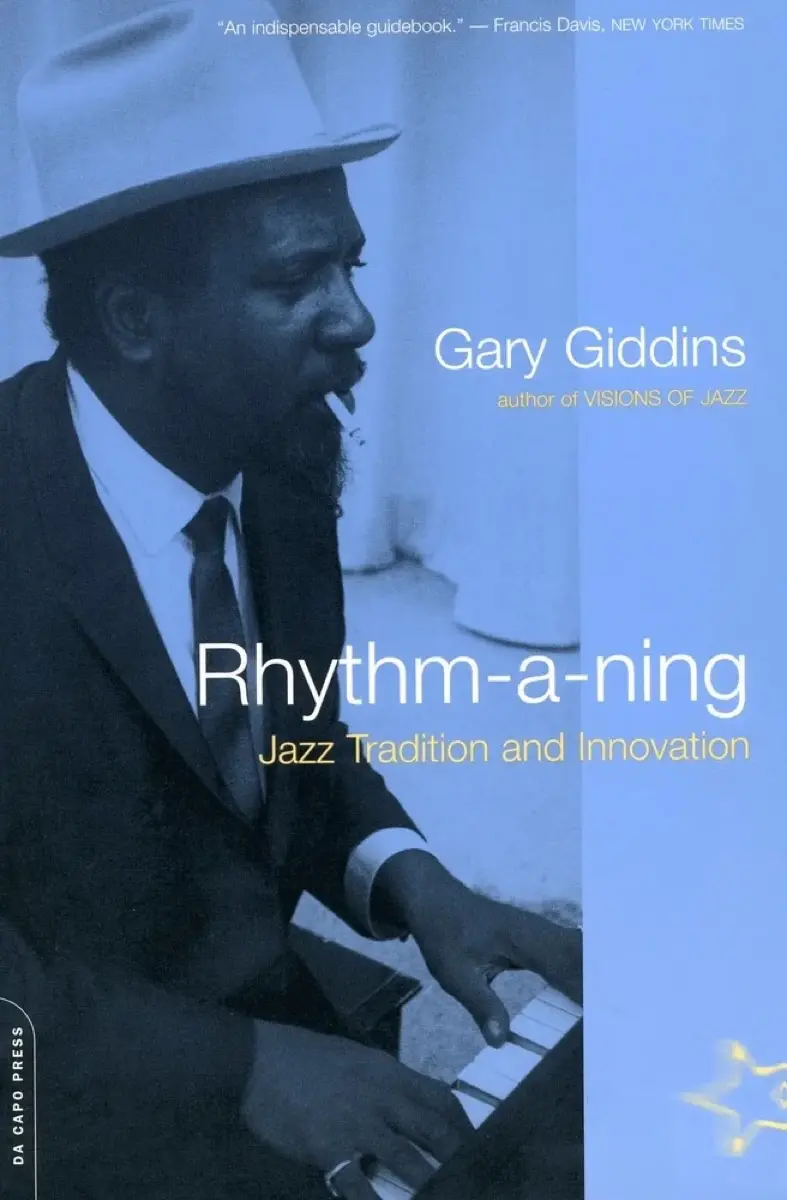
‘What if we’ve simply run out of geniuses?’ may be the most daunting question facing jazz right now in another of the idiom’s periods of consolidation. Giddins can no more answer it than any of us, but at least he has used this splendidly literate collection of essays to pose it. More – he continually pricks the skin of jazz and its satellite genres in the search for quality and to unmask sham.
Giddins describes his purpose carefully in the introduction: ‘I intend to help spread the news of the increasing accessibility of swing and melody and beauty in the jazz of the 80s…’ It is a noble aim, aided by an unswervingly evenhanded approach to the music one can hear at this time – most importantly, recognising that it allows all styles to coexist so that the phrase ‘jazz of the 80s’ means Joe Turner as well as David Murray; Pee Wee Erwin as well as Ornette Coleman; the late Count Basie as well as Miles Davis.
His coverage of the latest Miles Davis offerings is surprisingly sympathetic, given an uncompromising stand against ‘fusion’ which is woven through several pieces here. In one particularly telling essay, a 1983 piece on contemporary Getz, he notes its ‘stuffed rhythms, runny intonation, bloodshot melodies’; in another, he attacks its ‘middlebrow posturing’. It is indeed a disease, suffocating individuality and a particular reason why a new Jazz Messiah is needed to sweep it aside.
Among the most striking essays is a sensitive discussion of Lester Young’s career, drawing the ‘correct’ conclusions about its three (rather than two) phases despite a somewhat cavalier approach to discographical facts not uncommon among American writers. There is also a fine, loving study of David Murray’s achievements and pointed yet economical essays on such disparate musicians as Woody Herman, Andrew Cyrille, Roy Eldridge, Art Pepper, Bill Harris and Thelonious Monk – men who had one vital thing in common, uncompromising musical honesty.
I would disagree, however, that Monk was indebted to bop; it was rather the reverse. And I regret the exclusion of Giddins’ sterling Basie memorial, published in Village Voice (source for most of these essays) on June 26, 1984.
However, none of that should detract from a book that is bristling with views, written with wiry imagery, unselfconscious enthusiasm and candour. He makes no bones about being baffled by some of Cecil Taylor’s processes, yet, by describing the prestidigitation as he goes along, aids our understanding too.
The general amount of jazz literature is considerable these days, but that which is as literate and well-judged as this is not and so deserves all our attention.
Rhythm-A-Ning – Jazz Tradition And Innovation, by Gary Giddins. Published by Oxford University Press, New York 1985. 306pp including index. ISBN 0-19-504558-5, $17.95