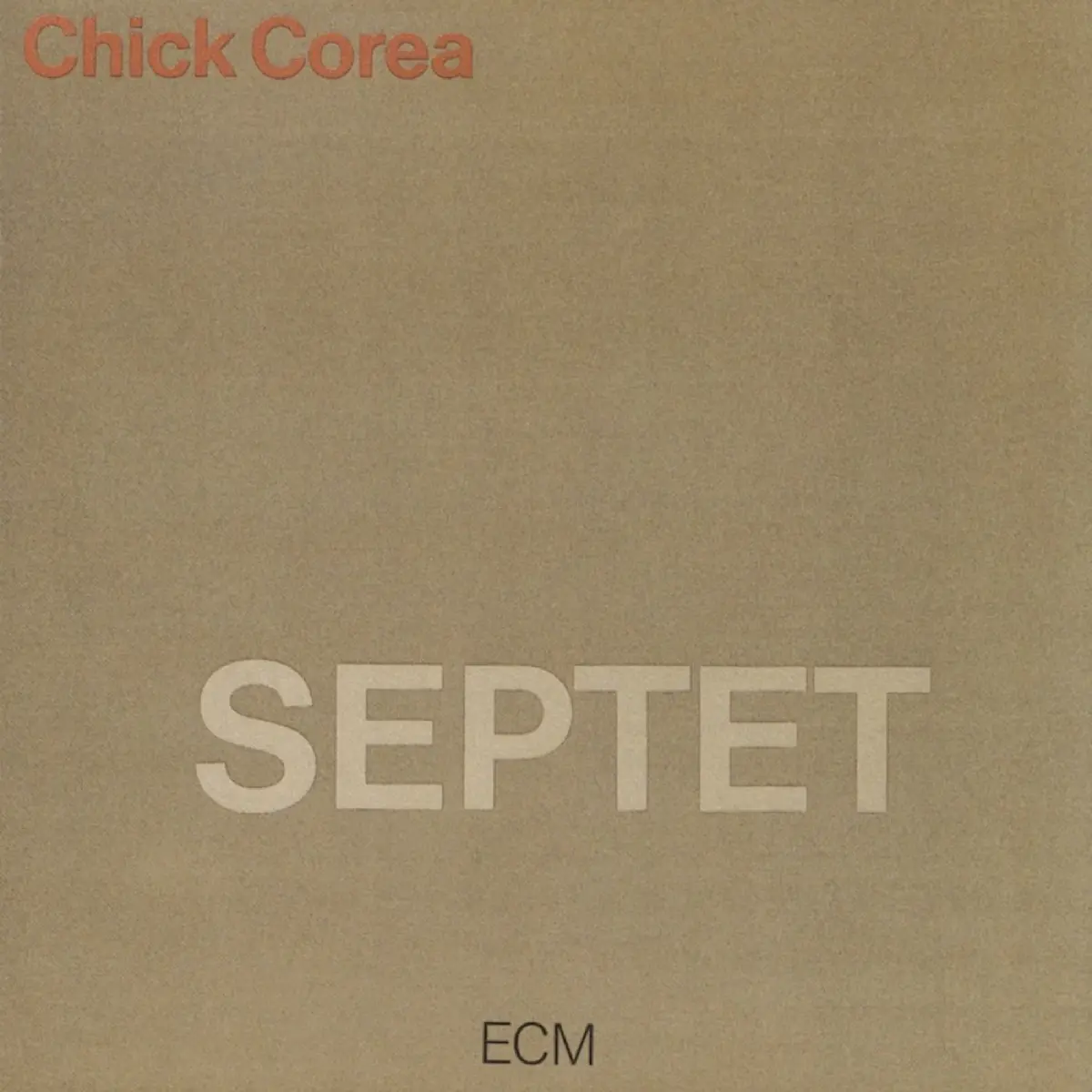
ECM is a jazz label (more or less), and Corea is a notable jazz pianist; but that’s about it in terms of this album’s jazz content. Although I’m nervous about my competence to judge Chick on these performances’ terms – i.e., as a straight classical composer – I find him arresting and melodious, with an unquestioned orchestral skill and a knowledgeable grasp of various late-classical idioms. The inner sleeve rightly mentions Stravinsky and the French impressionists as influences (Ravel is the most strongly felt of the latter), and I would add Bartok (especially in the jagged rhythmic effects) and even Benjamin Britten. And if that list seems to imply that the music is rather derivative, that is indeed the case: apart from some of Kujala’s lines and the piano interlude in 5th Movement, my abiding impression is that I’ve heard most of this music before one way or another. Having said that, the instrumentation is completely original so far as I know; and it is surely no bad thing for a prentice composer to be sub-Stravinsky or sub-Ravel, especially when the results are as lyrical and absorbing as these.
Temple is less impressive. Enjoyable and quite intriguing, it suffers from too many individual ‘effects’ and not enough centrally disciplined construction. The sleeve refers to the ‘influence of Spanish music’, but this Hispanic tinge is cosmetic, not organic, and degenerates into a mish-mash towards the end, when we are confronted successively by a snatch of Bechet’s Petite Fleur (transposed for French horn, by God!), some frenetic Palm Court Mexicana for the strings, and then a direct rip-off by Kujala of those spaghetti-western noises most famously associated with The Good, The Bad, And The Ugly. For myself, I like it; but jazz it ain’t, nor do I see it as a serious contribution to any other genre.
I still maintain that Chick’s Children’s Songs is a masterpiece (see JJI 9/84) which music lovers of all kinds should find profoundly satisfying; and despite my reservations I’d commend this to you too. But its values are so far removed from this magazine’s normal preserve that I’d best content myself with recording my own enjoyment of these pieces, and to suggest that Corea, derivative or not, is developing into a composer of considerable breadth and great charm. However, prospective buyers should not be fooled by Chick’s disingenuous claim on the inner sleeve that ‘I just kept on writing till I ran out of time and then I composed an ending’: Septet is densely structured and carefully worked out, and owes nothing to such contended improvisation.
Discography
Septet: 1st Movement; 2nd Movement; 3rd Movement; 4th Movement (17.36) – 5th Movement; The Temple Of Isfahan (23.49)
Chick Corea (composer, p); Ida Kavafian, Theodor Arm (vn): Steven Terenbom (via); Fred Cherry (do); Steve Kujala (f); Peter Gordon (Fr-h). LA, 10/84.
(ECM 1297)