Ben Rosenblum Nebular Project: The Longest Way Round
Composer, pianist and accordionist Ben Rosenblum has used a quote from James Joyce’s novel Ulysses as the title for this album, his third with the Nebular Project. Continuing an exploration of a wide range of musical styles that started with the previous albums – Kites And Strings and A Thousand Pebbles – this is a rich mix of sounds from around the world. It kicks off with a Dominican merengue, a bustling, exciting theme driven by pulsing rhythms, before we move to the lovely, hypnotic Sheridan’s Reel. This second track starts life sounding like a traditional Irish reel before morphing into something more bluesy and funkier. A suite of beautifully reflective songs forms Scenes Frozen In Time – the centrepiece of the album.
These compositions were written at key points and places in Rosenblum’s musical development, including a period of isolation in Berlin, reflections on years at high school and life at college. Accessible, yet layered and full of different emotions, this music has a cinematic quality and is reminiscent of some of the film scores written by Randy Newman. It is one of the most engaging suites of music drawing on a range of influences that I have heard for ages and is a wonderful listen.
As well as being a highly gifted composer, Rosenblum is interested in pushing the boundaries of what the accordion can do and how it can work in many musical settings. “It’s a very misunderstood instrument”, explains Rosenblum. Blending the accordion with horns, and using it to explore bop, classical-sounding themes, folk and more, he has really succeeded in exploiting the potential of the accordion in this ambitious and at times stunningly beautiful album.
Discography
Merengue x Fantasy; Sheridan’s Reel; Scenes Frozen in Time – Intro, Part 1: Berlin, Part 2: Old Friends, Part 3: Onslaught; Circulo; Albatross; Blue Water; Fool’s Gold; Last Call (58.07)
Rosenblum (p, acc); Wayne Tucker (t, flh); Jasper Dutz (ss, as, cl, bcl, f); Rafael Rosa (g); Marty Jaffe (b); Ben Zweig (d, pc); Gustavio Di Salva, Brad Dutz (pc). NRS Studios, 5-6 March 2024.
One Trick Dog Records 195269395506
Joe Harvey-Whyte, Geir Sundstøl: Langeleik
The pedal-steel usually conjures thoughts of heartbreak, failed relationships and bad luck somewhere out west, being the staple instrument of many a country ballad. On Langeleik, two pioneers of alternative pedal-steel use its haunting, distinctive sound to make a quite different kind of music. Norwegian multi-instrumentalist Geir Sundstøl and London-based pedal-steel player Joe Harvey-Whyte have teamed up to explore Norwegian geography – especially rivers, through music. Many of the album tracks are named after rivers, where sound and movement merge and constantly change.
Langeleik has an eerie, other-worldly feel at times, with the pedal-steel providing a shimmering melancholy and sense of mystery as the songs unfold and develop. Geir and Joe have very different approaches to making music, with Sundstøl often spending 18 months on an album, compared with Harvey-Whyte’s more spontaneous approach. On Langeleik, the compositions were mostly written in the studio and developed through mutual listening. Backed with brooding drums and waves of old synthesiser, there is often a Kraftwerk/Pink Floyd vibe to much of the music. Rorvikelva brings in haunting lyrics by poet Ivar Orvedal to add considerably to the impact of a track that was destined for the cutting room floor until both men found the addition of spoken words made it something special.
Mysterious, wistful and grounded in an interest in – and concern for – the natural world, it is no exaggeration to say that Langeleik is unlike any other pedal-steel led album I have heard before. Running at just over 30 minutes, it is a work of great but quiet power and deserves close attention. As Joe Harvey-Whyte states, “This is not an album of instant gratification. It encourages the same deep listening which was necessary for its creation. A companion for reverie.” As the final notes of the gorgeous final track Der Elvene Motes melt away, there seems only one possible response – to play the album in its entirety again.
Discography
Tana; Otra Mantra; Lea Dub; Ribbles; Rørvikelva; Bleikstranda; The Tyburn; Tista Lengter; Der Elvene Møtes; (31.00)
Harvey-Whyte (pedal-steel, g, optigan, shruti box); Sundstøl (g, pedal-steel, b, hca, md, kyb); Jo Berger Myhre (b); Anders Engen (d); Erland Dahlen (d, pc); Ivar Orvedal (v). Studio Intim, Oslo 2024.
Hubro CD2674
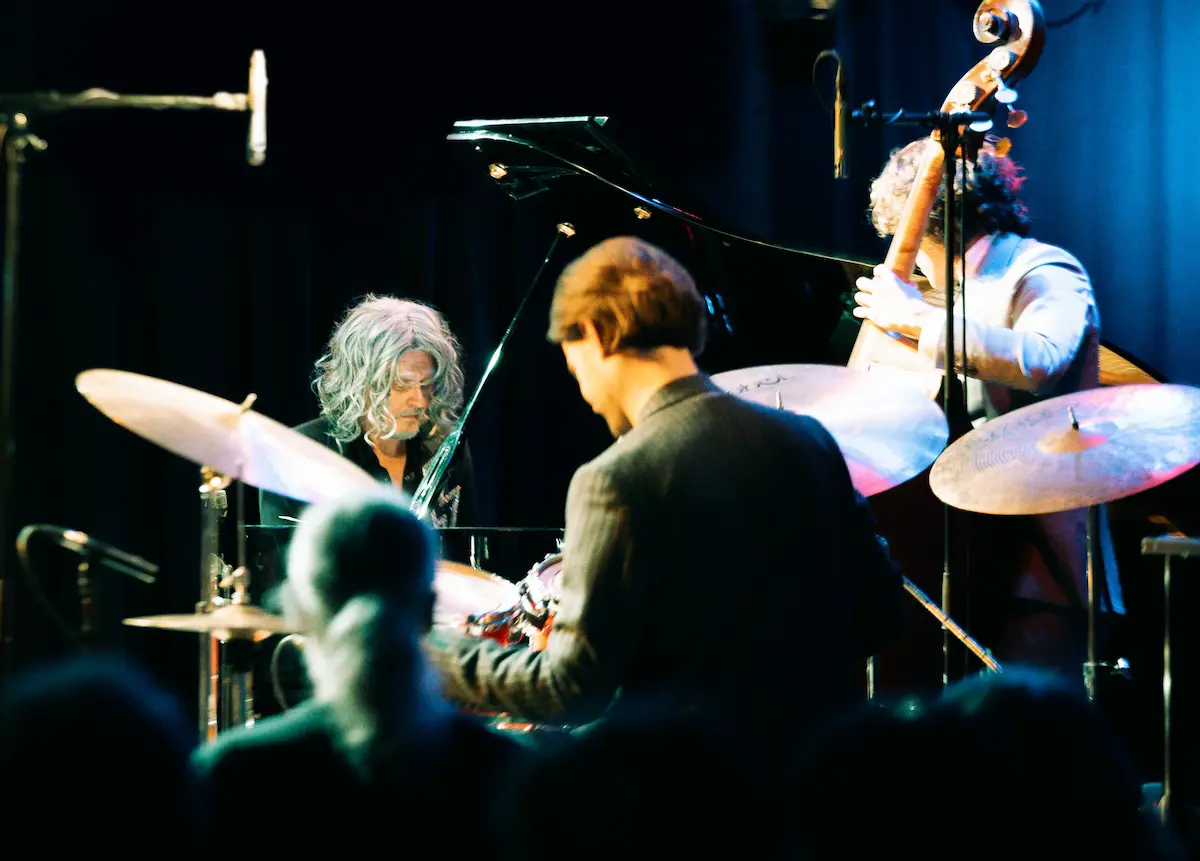
Jazz Sabbath: Jazz Sabbath Live
There is a whole backstory to Jazz Sabbath that can be found and enjoyed on the band’s website. It’s fun to read and clearly shows the level of inventiveness behind the band and the music they perform. Two of Jazz Sabbath’s albums have been reviewed in JJ, here and here, but this is their first official live album and a fine listen. Adam Wakeman (son of Rick, who played on Black Sabbath’s 1973 album Sabbath Bloody Sabbath) has the same wonderful musical talent as his father and seems endlessly inventive on piano as the trio works its way through a catalogue of Black Sabbath material to an appreciative audience in a club setting.
The band comes on stage to the sound of rain and the tolling of a bell but the music that follows is much lighter and more enjoyable than the source material might suggest. Not knowing many songs by Black Sabbath in detail, I could simply enjoy this album as an example of a fine trio jazz. Wakeman is ably supported with strong performances by Tustin and Newell. Given the bombast, drama and darkness of the original songs, I was really surprised at the light, melodic interpretations on this live session. Wakeman really is a superb pianist, able to convey drama without overdoing it, and creates some lovely melodic moments to enjoy. The phrasing and touch he brings to his playing is uncannily like his father’s, and as a huge fan of Wakeman senior, I got added listening pleasure from this. On Behind The Wall Of Sleep the trio really steps it up, with Jack Tustin walking the bass all over the song, accompanied by crisp drumming from Newell and Wakeman playing some wonderful blues lines, all of which makes this a standout track. The audience seems to agree.
Jazz interpretations of other musical genres can be so hit and miss that I approached reviewing Jazz Sabbath with both interest and trepidation. Jazz meets heavy metal just should not work. But it does and it’s terrific.
Discography
Black Sabbath; The Wizard; War Pigs; Behind The Wall Of Sleep; Iron Man; Fairies Wear Boots; Hole In The Sky; Paranoid; Into The Void; Rat Salad; Children Of The Grave (83.00)
Adam Wakeman (p); Jack Tustin (b); Arthur Newell (d). The Paradox Jazz Club, Netherlands, 20 March 2025.
Blacklake Records BL411405