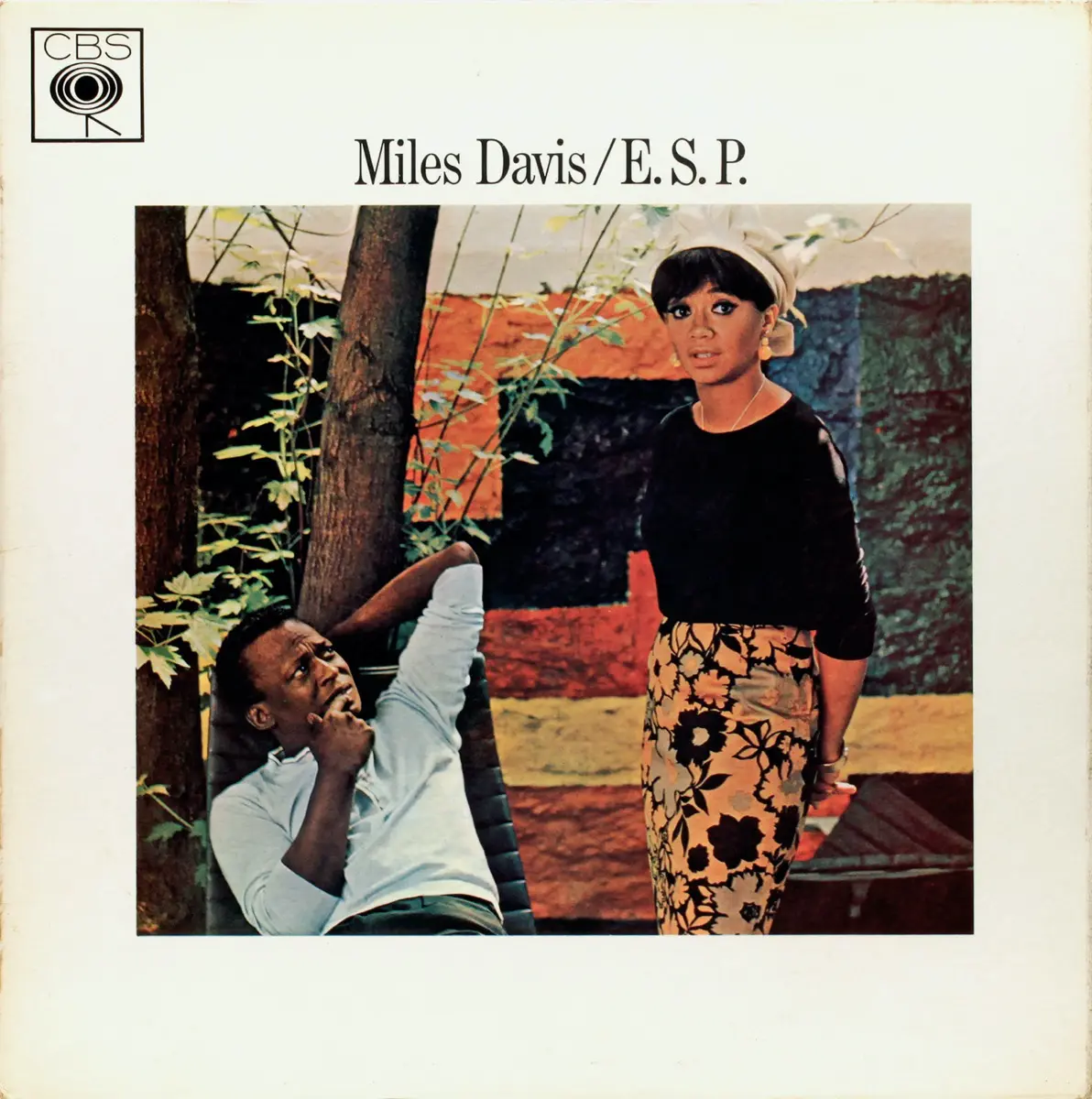
I refuse to believe that to be up to date and with it, it is necessary to go further into the void of ‘out’ than Miles Davis does. Maybe it is just that, in terms of age, my ears have reached the point of no return, but it does seem to me that he makes a nonsense of all the deliberately ugly players who, like bluebottles on a hot day, scurry about without direction in search of something new. It would, for instance, be offensive to me to mention Miles in the same breath as Albert Ayler. And yet here Miles is teamed with a tenor player, Wayne Shorter, who is a potential ugly. But Shorter has always indicated a spontaneous sense of form and reason in even his most outrageous solos, and here he makes the best foil for Miles since the old Coltrane days.
This is a fine record with, as one expects on Davis records, outstanding performances all round. Miles has his own bleak and melancholy way with ballads, and there are some fine solos in this vein here – one is tempted to coin the phrase ‘black ballads’ as in ‘black humour’, because there is an unreal and disturbing element in his work which sets it apart from that of any other musician. I think that it was Philip Larkin the poet (and excellent jazz critic) who first drew the analogy between Davis and Shakespeare’s tragic heroes. The comparison rings true here, with Miles much in a soul-searching and tormented Hamlet mood.
The setting for this album is serious, as opposed to the last, My Funny Valentine,a public performance where one felt Davis positively relaxing and communicating gaily with the audience. The material is uniformly good, with E.S.P. (extra-sensory perception?) being fast, and the tempo declining through Eighty-One and Little One, which has Davis roaming freely with a sympathetic and unobtrusive accompaniment. Shorter’s solo here again echoes the early days of Coltrane, sometimes too closely for comfort, and one feels a lack of continuity in this solo which is rare in his work – it may be by comparison with the Davis solo which precedes. R.J. opens abruptly with some strange Shorter sounds, before clicking into a buoyant and spritely Davis solo which heads in strange directions before it returns to a bouncy Shorter solo (ridiculously he reminds one of Pete Brown’s alto in its choppy and eccentric nature). Hancock here and elsewhere is restrained and yet powerful.
There is enough patently good work here for me to be able to recommend the album thoroughly, but there still remains much to emerge, and if you will excuse me, I will get back and listen again.
The sleeve note consists of an alleged poem by Ralph J. Gleason. I am constantly amazed by the way in which the American jazz critics attempt to be ‘artistic’ and only succeed in letting their pants fall down in public. It is a lesson to the rest of us to wear belt and braces.
Discography
E.S.P.; Eighty-One; Little One; R.J. (23 min) – Agitation; Iris; Mood (25 min)
Miles Davis (tpt); Wayne Shorter (ten); Herb Hancock (p); Ron Carter (bs); Tony Williams (d).
(CBS BPG 62577 33s. 1d.)