Arnie Somogyi & Mark Edwards: The Ellington Piano Project
Duke Ellington had in a sense outlived himself when he made his final recording at the unlikely location of Eastbourne in 1973. It was not so much late Ellington as survivor Ellington, his best work a matter of history and the man himself surging fitfully like a battery on the wane.
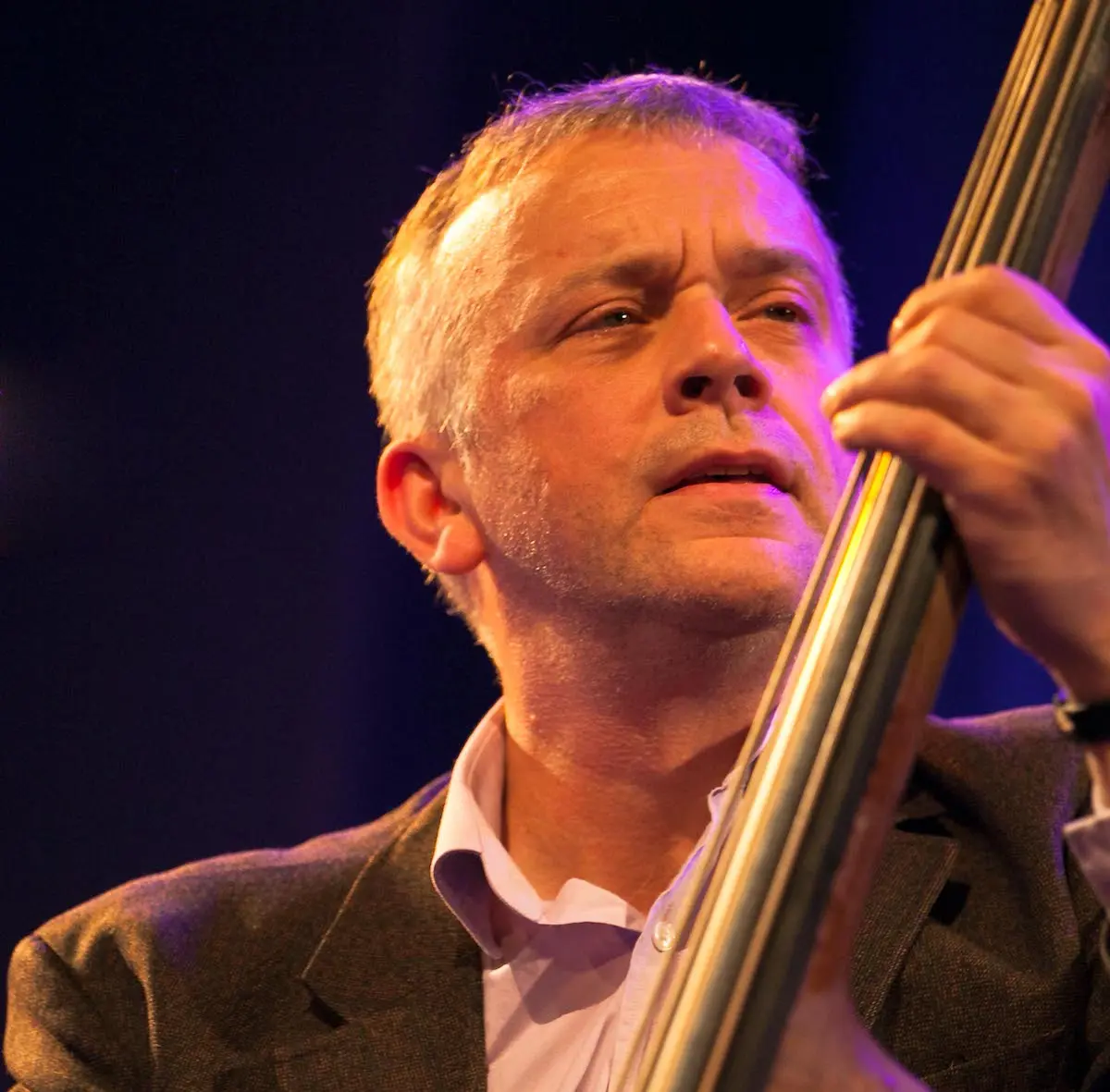
This outstanding album finds bassist Arnie Somogyi, pianist Mark Edwards and friends performing a recharge, taking that 52-year-old seaside gig as an event to inspire the reassertion of what Ellington meant to jazz as standard-bearing composer, bandleader and cultural luminary.
Some of the associations are graphic, Edwards’ use of the actual piano played by Ellington at Eastbourne’s Congress Theatre being paramount. Other connections are tenuous but re-creative: the quartet of Edwards, Somogyi, tenor saxophonist Gideon Tazelaar and drummer Matthew Holmes playing three improvisations on a theme from Duke’s Mercuria, The Lion; Somogyi’s A Little Tickle, inspired by a phrase of Ellington’s from The Piano Player; and Brake!, again by Somogyi, based on Ellington’s piano intro to Woods.
The brightest jewel is Don’t You Know I Care, a Somogyi/Edwards arrangement of the Ellington chart, sung here by guest Sara Oschlag, whose control of tone and tempo with languorous inflections and sinuous lines is a marvel. Note also the lengthy piano intro and the subtle employment of trombonist Ashley Slater. Oschlag also sings on an uptempo Love You Madly, scatting as though it were a newly discovered art, and on Somogyi’s Mr GT, joining the composer on the choral refrain for a chart motivated by an Ellington chord sequence, again from Mercuria.
Embrace also the Latin treatment of Black And Tan Fantasy with Edwards’ soothing background Hammond; the unhurried solo of Tazelaar on My Little Brown Book; the Ellingtonian swing of Tazelaar’s Groch; the late seismic rolling of Holmes on the brass-enhanced I Got It Bad (And That Ain’t Good) with Slater again, on both trombone and trumpet; Somogyi’s quick-scurrying bass on Broke!; and Creole Love Call, given both the hint of a New Orleans funeral march by Holmes and an early Cotton Club echo by Edwards’ banjo.
Discography
Prelude; Groch; Black And Tan Fantasy; My Little Brown Book; I Got It Bad (And That Ain’t Good); Love You Madly; Interlude; Brake!; Don’t You Know I Care; A Little Tickle; Creole Love Call; Mr GT; It Never Really Ends (66.33)
Somogyi (b, v); Edwards (p, pc, org, acc, bj); Gideon Tazelaar (ts); Matthew Holmes (d); Ashley Slater (t, tb); Jon Newey (pc); Sara Oschlag (v). Eastbourne, 28-29 October 2024.
Rubicon Jazz RJZ 1004
Théo Girard: La Rivière Coulera Sans Effort
Some American jazz musicians visited Europe to escape and to be lauded and often impressed by the counterparts they found there. French bassist and composer Théo Girard went to America and discovered in New York the kind of voluble intensity those expats had left behind at various times in jazz history.
He explored that history beyond the metropolis and formed the transatlantic quartet MOBKE to give his findings utterance, not in imitative simulacra but with energetic personal voicings collectively gathered. The name derives from geography – MOntreuil and BrooKlyn, the final E standing for Ensemble.
Girard’s discography reveals diverse musical interests, and this album’s title mirrors the effortless, riverine motion of its sounds – Girard wrote all but one of the eight tracks – and incorporates not only uninterrupted flow but also the swirls and eddies created when the ensemble breaks to allow individuals their say. As the term “straightahead” becomes for some emblematic of an oft-revisited past in jazz, there’s much meditative lingering here, particularly in the title track. But these days it’s not a revolutionary approach.
Discography
La Chose; On Se Lève, On Ce Casse; Un Chemin Tortueux N’Est Pas Forcément Plus Long; La Rivière Coulera Sans Effort; Presque; Plus Qu’Une Influence; Improvisation (46.48)
Girard (b); Sophia Domancich (p); Lesley Mok (d); Nick Lyons (as). France, 15 December 2022.
Discobole Records
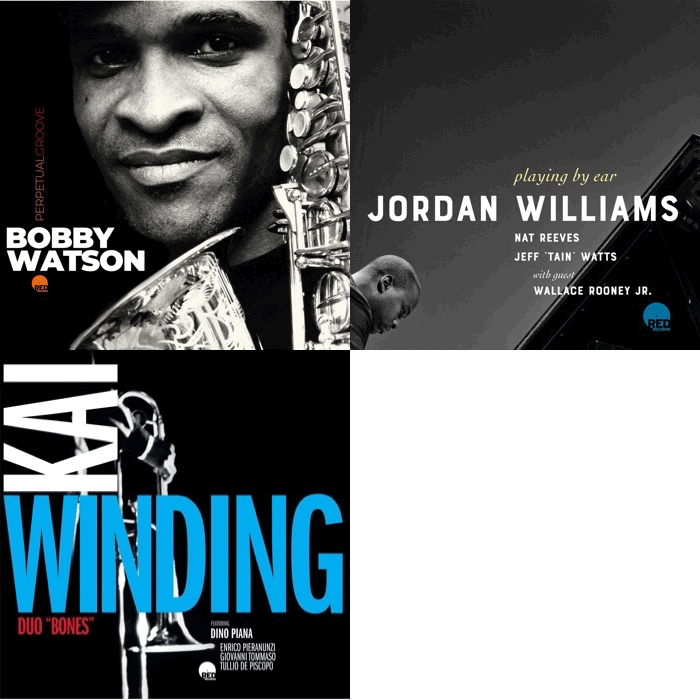
Jordan Williams: Playing By Ear
Pianist Jordan Williams’ debut album as leader for the Italian independent Red Records is a perfect demonstration of what’s needed for such an event and how to meet all its requirements. The Philadelphia-born New Yorker not only gathers about him new and established musicians but also makes space for his own playing to indicate where it’s coming from. All eight tracks bar two last over six minutes, and the arrangements and deployment of resources are spot on.
Williams’s rhythmic exuberance is evident from the start in Herbie Hancock’s One Finger Snap, a chart that introduces Wallace Roney Jr, bassist Nat Reeves and megastar drummer Jeff “Tain” Watts, whose long solo coda sets things up for the rest of the album.
Roney plays on four tracks, most lyrically on Horace Silver’s Peace, a chart that brings Reeves’ bass forward as if to emphasise how its reverberative depth can emphasise the pace. Williams shows his even-handedness and intelligence in encouraging the composer to open out downstage on Reeves’s two originals, Waltz For Ellis and Blue Ridge. Roney inserts the mute for Kenny Kirkland’s Steepian Faith, where Williams ups the ante in the gradual reveal of his influences, not all of them immediately contemporary. He’s notably self-assured on Buster Williams’s Tayamisha, and pays homage to Mal Waldron, composer of Left Alone, in a lengthy piano intro. An unruffled, even-keeled debut that suggests more’s in the offing.
Discography
One Finger Snap; Waltz For Ellis; Steepian Faith; Blue Ridge; Tayamisha; Peace; Ms Baja; Left Alone (49.50)
Williams (p); Wallace Roney Jr (t); Nat Reeves (b); Jeff “Tain” Watts (d). New Jersey, April 2025.
Red Records RR 123358-2