
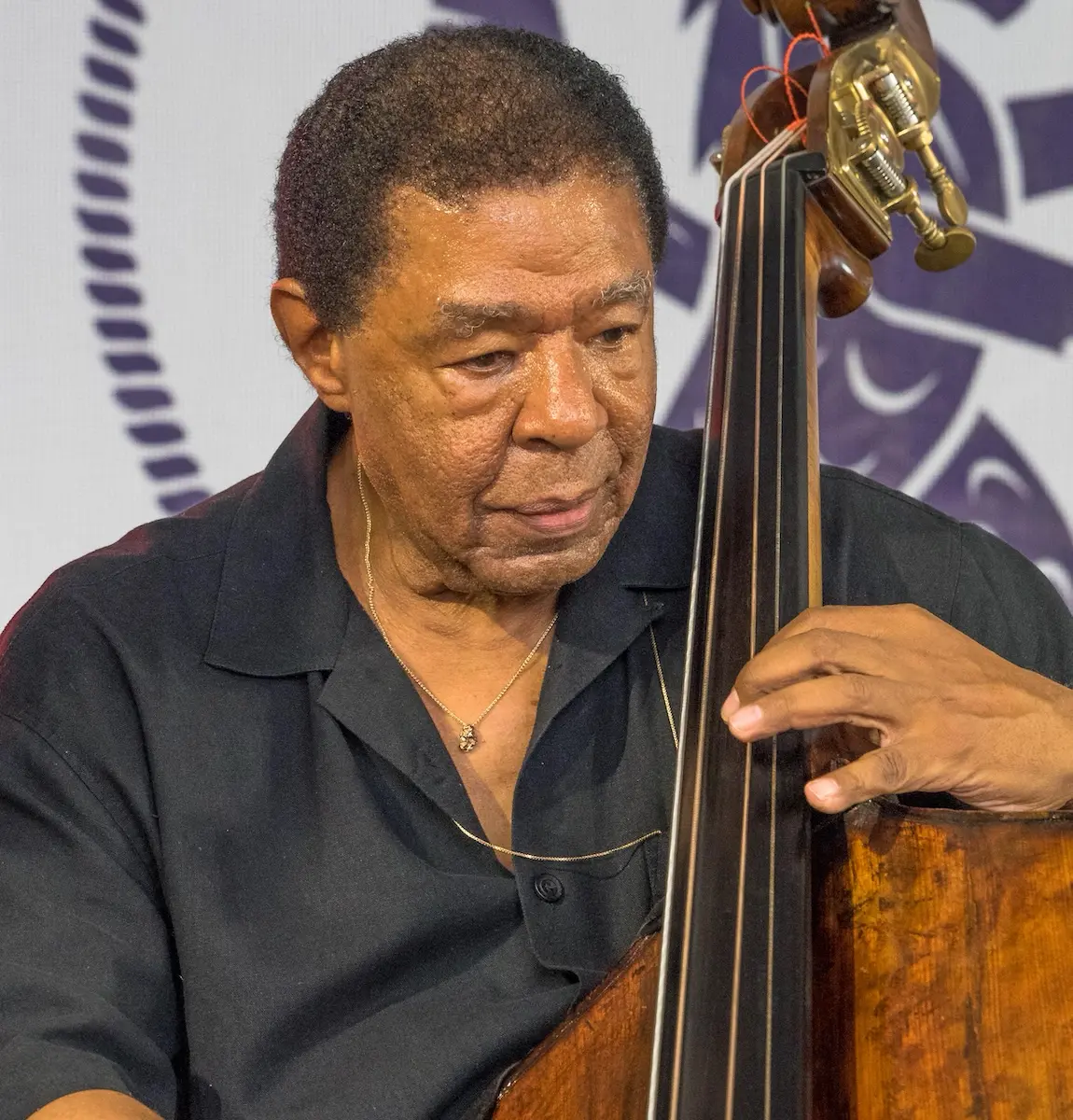
Buster Williams: Pinnacle
This is a vinyl reissue of bass player Buster Williams’ debut album as a leader, originally released on Muse in 1975, in which the concept is very much of the day, taking its lead from the “electrified” atmosphere of Miles Davis’s In A Silent Way and Bitches Brew from a few years earlier. Williams had been making a name for himself prior to this release, keeping company with name musicians and seeming to be a favourite among vocalists, Nancy Wilson being one in particular.
He used all his own material on the album, assembling a unit with fluctuating personnel. Sonny Fortune and Woody Shaw were probably the most distinguished and contribute to a couple of tracks each. The leader himself mainly sticks to acoustic bass, his solos bold enough, in a mix that includes electric piano, soprano saxophone and some of those effects in favour at the time. A vocal trio pop up on the title track and Noble Eagle, adding little of consequence with their repetitive statements.
Tempos generally have a rocky intent, the drums perhaps being too prominent on occasion. Diversion comes in the shape of Tayamisha, set in 4/4 and a welcome inclusion for a mid-70s experience. The album has been regarded by some as an important addition to the decade’s music. Others might believe it to be slightly lightweight and showing its age.
Discography
The Hump; Noble Eagle; Pinnacle; Tagamisha; Batuki (44.00)
Williams (b) with Woody Shaw (t); Sonny Fortune (ss, f); Billy Hart (d) plus others. 6, 7, 11 & 14 August 1975.
Time Traveler Recordings TT-MOO6
Phil Sargent: Solo Motions
Guitarist Phil Sargent is as well known in academic circles as he is on the US jazz scene, having been and currently, a respected music teacher at some of the august educational establishments in New England. This is not the first album under his own name but it would have been easy to have missed out on his previous two.
The material he has bought together for this solo project finds him tackling five jazz or popular standards, his own Kelita, Trent Reznor’s Hurt and, to round things off, American Tune by Paul Simon. It’s a well-chosen selection that illustrates his commitment to both the jazz tradition and the direction in which the guitar has been taken over the past few years. Melody is an important factor in all these performances but Sargent is far from becoming a slave to the obvious.
He restructures the mainly familiar themes, often delaying their introduction or only alluding to them at outset; they are dealt with as a set text for embellishment. The addition of sonic textures to his inventive lines validates the guitarist’s decision to make this a solo album. He favours slow to medium tempos, with only Monk’s Bemsha Swing getting anywhere near pacey but this approach never palls on a release with a very short playing time. In a crowded field of guitarists, the likes of Phil Sargent are often overlooked, despite their undoubted qualities and talent.
Discography
I Should Care; Kelita; There Will Never Be Another You; The Way You Look Tonight; Billie’s Bounce; Hurt: Bemsha Swing; American Tune (32.36)
Sargent (g). August 2025.
Independent
Immanuel Wilkins Quartet: Live At The Village Vanguard Vol. 1
Alto saxophonist Immanuel Wilkins arrived on the jazz scene having studied at Julliard, that breeding ground for so many top-flight musicians. Having led his own groups for over six years, he has contributed to nearly 20 albums as a sideman and this is his fourth under his own name.
The four extended tracks comprise three originals along with Charanam, an Alice Coltrane tune first unveiled on her 1982 album Turiya Sings. The latter is a fairly simple, repetitive melody that this quartet build upon, turning it into an exciting proposition that builds tension throughout – the alto saxophonist being in “spiritual” territory. This could be termed making a silk purse out of a sow’s ear.
On his own Warriors, the leader treats us to a turbulent introduction to the group. He unveils his considerable technique, accompanied by the kind of buoyant, shifting background we have come to expect from so many groups loosely described as post-bop. The antidote to this storming opener is Composition II, a wistful, balladic piece with a lyrical bass solo at its heart; it’s Wilkins in restrained mode.
The near 20-minute Eternal commences with an encouraging mobility that gives way to 13 minutes of a slow, 11-note phrase intended to be hypnotic; it could be regarded as self-indulgent and is likely to have stretched the patience levels of the Vanguard’s patrons (and certainly did of this reviewer). This negative aspect brings to a close what should be viewed as a very good album.
Discography
Warriors; Composition II; Charanam; Eternal (62.07)
Wilkins (as); Micah Thomas (p); Ryoma Takenaga (b); Kweku Sumbry (d). The Village Vanguard, New York, 15 & 16 May 2025.
Blue Note 00602488 1 70828