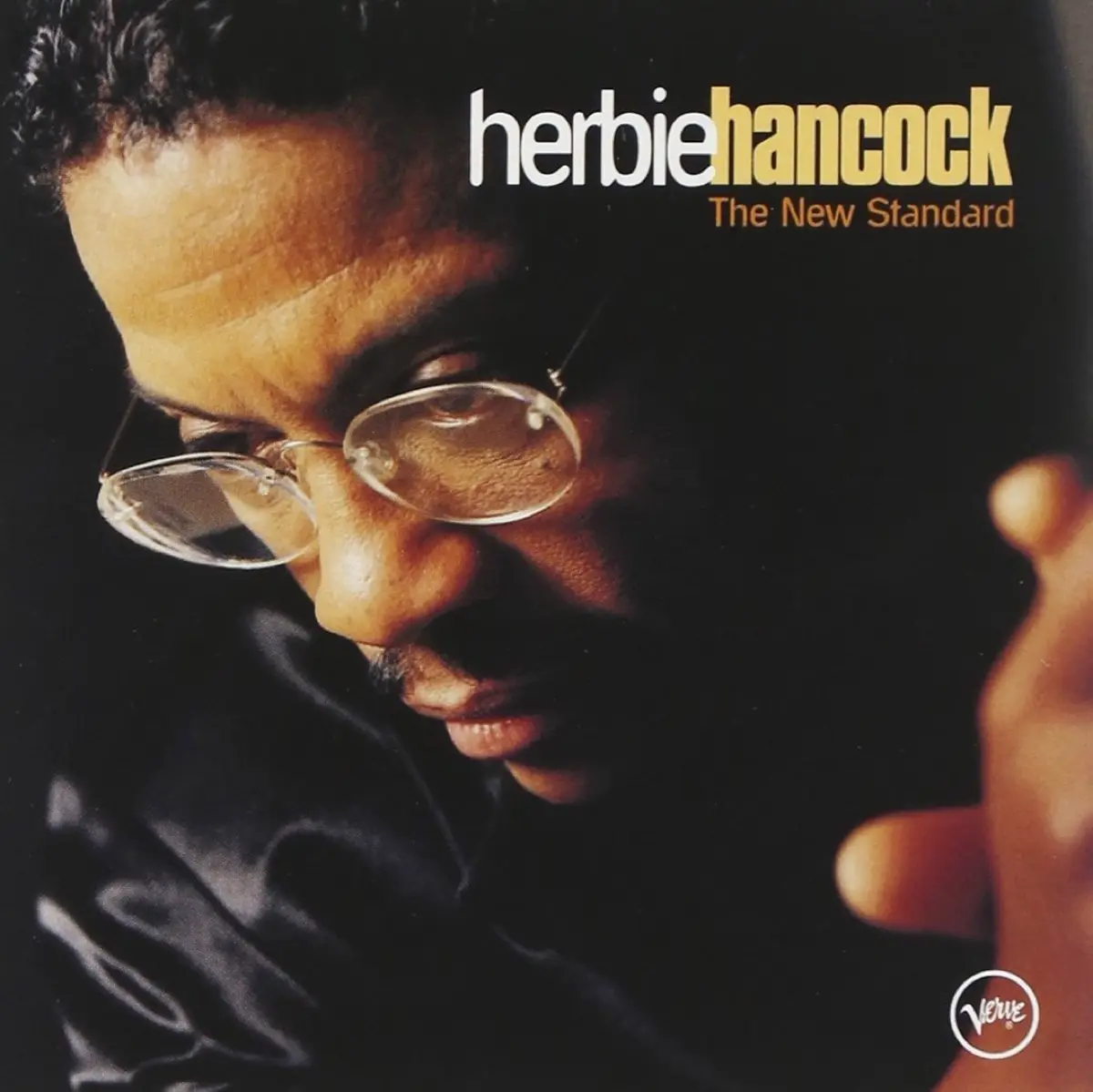
This ought to have been a momentous event – Hancock’s first ‘orthodox’ jazz record as leader for about 25 years. First impressions look, and sound, good: Hancock has chosen a state-of-the-art sextet, and Verve’s engineers have done him proud with a superlatively clean, sonorous recording. However, to these ears that initial promise is only fitfully delivered.
It is not easy to say why. The material is vigorous and contemporary, the playing as accomplished as you would expect, and mood and ethos are pleasingly varied. An immense amount of effort – before, during and after the performances – has gone into this music, and yet the results are only intermittently satisfying. Maybe Hancock imagined that an encounter between top-flight jazz musicians and superior rock material would automatically ensure a heady mix of inspiration and polyvalent flair, but it doesn’t happen.
Apart from Norwegian Wood (what on earth is a musician of Hancock’s calibre doing messing with such pap?), the repertoire itself is not at fault: there’s nothing infra dig about using songs by Prince, Gabriel, Steely Dan and so forth – provided it works. To do that the playing has got to transcend, or at the very least reinvigorate and illuminate the material, and in all honesty the originals are better. For example, the haunting delicacy of Paul Simon’s Scarborough Fair is reduced to anodyne warbling, and Wonder’s You’ve Got It Bad Girl is repetitive and busily dull. Some interesting things occur on Kurt Cobain’s All Apologies, and Hancock’s own Manhattan has considerable style; but in all this is a record very much less than the apparent sum of its parts.
Verve’s reissue programme is a thing to marvel at and give profound thanks for; its ‘new jazz’ policy has also been distinguished up till now. I hope this signally disappointing CD – and Wayne Shorter’s High Life, which Mark Gilbert found analogously moribund and formulaic in 1/96’s issue – are incidental aberrations; the idea that they might point to a full slump into narcissistic trendiness is too depressing to contemplate.
Discography
(1) New York Minute; (3) Mercy Street; Norwegian Wood; (2) When Can I See You; (1) You’ve Got It Bad Girl; (4) Love Is Stranger Than Pride; (1) Scarborough Fair; (2) Thieves In The Temple; (1) All Apologies; Manhattan; Your Gold Teeth II (77.22)
(1) Hancock (p, Idr); Michael Brecker (ts, ss); John Scofield (g, el sitar); Dave Holland (b); Jack DeJohnette (d); Don Alias (pc).
(2) add Lili Haydn, Margaret R Wooten (vn); Richard S Greene (vla); Cameron L Stone (clo).
(3) as (2); add Lester Lovitt, Oscar Brashear (t, flh); Suzanne Moriarty (frh); Maurice Spears (btb); Sam Riley, Gary Herbig, Gebe Cipriano, William E Green (reeds).
(4) as (3), but strings out. Hollywood, Ca. No date given.
(Verve 527 715-2)